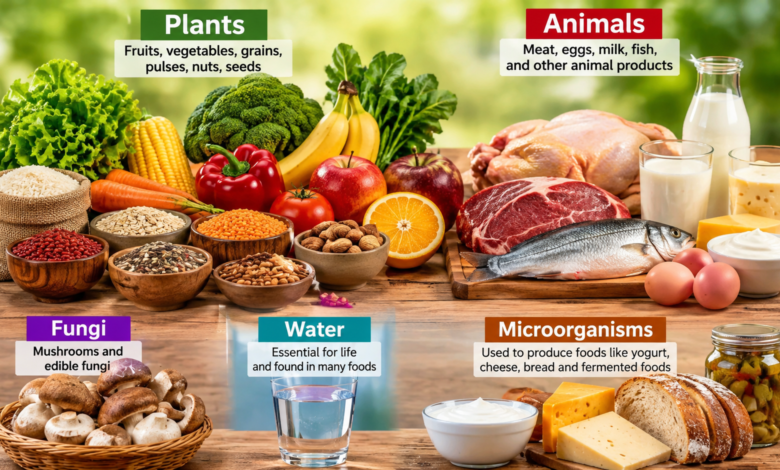
Sources of Food. Food is one of the basic necessities of life, but it is much more than something we eat when we feel hungry. Every meal gives the body energy, protein, vitamins, minerals, healthy fats, carbohydrates, water, and other nutrients needed for everyday life. The interesting part is that these nutrients come from many different sources. Some Sources of Food grow directly from plants, while others come from animals. There are also foods produced through processing, fermentation, cooking, or combinations of several natural ingredients.
Understanding the Sources of Food makes it easier to build a balanced diet. Instead of thinking only about individual nutrients, we can look at where our food comes from and what each source contributes to the body. Current dietary guidance emphasizes a variety of nutrient-dense foods, including vegetables, fruits, whole grains, protein Sources of Food, dairy, and healthy fats.
From rice and wheat to eggs, milk, beans, fruits, vegetables, fish, nuts, and seeds, our Sources of Food supply is remarkably diverse. Different cultures also rely on different staples depending on climate, agriculture, traditions, and availability. Learning about these sources can help us make smarter food choices without making eating complicated.
What Are the Main Sources of Food?
The two broad natural Sources of Food are plants and animals. Plant sources include cereals, fruits, vegetables, legumes, nuts, seeds, roots, tubers, and many edible leaves and stems. Animal sources include meat, poultry, fish, seafood, eggs, milk, and other dairy products.
Plants provide a huge portion of the Sources of Food people eat around the world. Wheat can become bread or pasta, rice can be served as a staple grain, and corn can be eaten fresh or processed into many different products. Fruits and vegetables provide fiber, vitamins, minerals, and numerous other compounds that support a healthy eating pattern. The World Health Organization recommends getting carbohydrates mainly from whole grains, vegetables, fruits, and pulses.
Animal Sources of Food provide important nutrients as well. Meat, eggs, seafood, and dairy products are well-known sources of protein and can provide nutrients such as iron, zinc, calcium, vitamin B12, and other vitamins and minerals. However, animal foods are not the only way to obtain protein. Beans, lentils, peas, soy foods, nuts, and seeds can also contribute significant amounts of protein.
A healthy diet does not require choosing only one source. In fact, variety is one of the most useful principles in nutrition. Combining Sources of Food from different sources helps increase the range of nutrients available in the overall diet.
Plant Sources of Food
Plant foods are among the most important sources of food for humans. They include grains, fruits, vegetables, legumes, nuts, seeds, roots, and tubers. Wheat, rice, maize, oats, barley, and millet are examples of grains that have supported human diets for thousands of years.
Grains are particularly important because they provide carbohydrates, which are a major source of energy. Whole grains also contain fiber and several vitamins and minerals. Examples include oatmeal, brown rice, whole-wheat bread, barley, bulgur, and whole-grain pasta. Whole grains contain the bran, germ, and endosperm, while refined grains have parts of the grain removed during processing.
Fruits and vegetables add another important dimension to plant-based foods. Apples, bananas, oranges, berries, mangoes, tomatoes, carrots, spinach, broccoli, peppers, and many other choices provide different combinations of vitamins, minerals, fiber, and naturally occurring plant compounds.
Plant foods are also incredibly flexible. A single ingredient can be eaten raw, cooked, dried, frozen, fermented, or combined with other foods. This flexibility explains why plant Sources of Food appear in traditional cuisines across nearly every part of the world.
Animal Sources of Food
Animal Sources of Food include foods obtained from animals, such as meat, poultry, fish, seafood, eggs, milk, yogurt, and cheese. These foods can be particularly useful sources of protein and certain micronutrients.
Meat and poultry provide complete proteins and can contribute iron, zinc, and B vitamins. Fish and seafood provide protein and, depending on the type, useful amounts of omega-3 fatty acids. Salmon, trout, sardines, and other oily fish are especially recognized for their omega-3 content. USDA guidance encourages variety among protein foods rather than relying on only one type.
Eggs are another convenient animal food. They provide protein along with several vitamins and minerals. Their versatility also makes them popular in breakfast dishes, baked foods, sandwiches, salads, and many traditional recipes.
Milk and dairy products have a different nutritional profile. Milk, yogurt, and cheese can provide protein and calcium, while also contributing other nutrients. Dairy is traditionally included as one of the major food groups in dietary guidance, although people who avoid dairy can use suitable alternatives such as fortified soy products.
Sources of Carbohydrates
Carbohydrates are found in many everyday foods and are especially common in plant-based foods. Grains, fruits, vegetables, beans, peas, lentils, and potatoes can all provide carbohydrates.
Rice, wheat, oats, corn, bread, pasta, potatoes, and other starchy foods are familiar carbohydrate sources. Fruits provide carbohydrates primarily through naturally occurring sugars, while legumes provide carbohydrates along with protein and fiber.
The quality of the carbohydrate source matters. Whole grains, fruits, vegetables, and pulses generally provide more nutritional value than foods dominated by refined carbohydrates and added sugars. WHO guidance recommends that carbohydrates come primarily from whole grains, vegetables, fruits, and pulses.
This does not mean every carbohydrate food needs to be avoided. Instead, it makes sense to focus on variety and choose minimally processed Sources of Food more often. A meal containing brown rice, vegetables, and beans, for example, provides a broader nutritional profile than a meal built mainly around refined starch.
Sources of Protein
Protein is needed for many important functions in the body. It contributes to muscles, skin, bones, blood, enzymes, hormones, and other tissues and biological processes. Fortunately, protein is available from both animal and plant sources.
Animal protein Sources of Food include fish, chicken, turkey, beef, lamb, eggs, milk, yogurt, and cheese. Plant protein sources include beans, lentils, chickpeas, peas, tofu, tempeh, nuts, seeds, and soy foods. USDA guidance specifically identifies seafood, meat, poultry, eggs, beans, peas, lentils, nuts, seeds, and soy products as protein foods.
Plant proteins are especially useful because they can bring other nutrients along with them. Lentils and beans, for instance, provide protein and fiber. Nuts and seeds provide protein along with unsaturated fats and minerals.
The best approach is usually variety rather than obsession over one protein source. Eating different protein foods throughout the week can make meals more interesting while providing a broader mix of nutrients.
Sources of Healthy Fats
Fat is another important component of food. The body needs dietary fat for energy and for several normal physiological functions. Some fats are also Sources of Food of essential fatty acids and help the body absorb fat-soluble vitamins.
Nuts, seeds, avocados, olives, and many vegetable oils are common plant Sources of Food of unsaturated fats. Fish can also provide omega-3 fatty acids. Foods such as walnuts, chia seeds, flaxseeds, olive oil, and oily fish can therefore fit naturally into a balanced eating pattern.
Not all sources of fat have the same nutritional profile. Dietary guidance generally encourages healthier unsaturated fat Sources of Food while limiting excessive intake of saturated fats and avoiding trans fats where possible. The overall food pattern matters more than labeling one individual food as simply “good” or “bad.”
Portion size is important, too. Nuts, seeds, oils, and other high-fat foods can be nutritious, but they are also energy-dense. Including reasonable portions allows people to enjoy their nutritional benefits without making the entire diet excessively calorie-heavy.
Sources of Vitamins and Minerals
Vitamins and minerals are required in relatively small quantities, but they play important roles throughout the body. Different Sources of Food provide different micronutrients, which is another reason variety matters.
Fruits and vegetables are well-known Sources of Food of vitamins, minerals, fiber, and plant compounds. Citrus fruits can contribute vitamin C, leafy green vegetables provide several vitamins and minerals, and orange vegetables such as carrots and sweet potatoes contain carotenoids.
Dairy foods can provide calcium and other nutrients, while meat and seafood can contribute iron, zinc, vitamin B12, and other micronutrients. Nuts, seeds, beans, and whole grains can also provide minerals such as magnesium and zinc.
There is no single food that supplies every nutrient in the right amount. Pakistan’s dietary guidelines similarly explain that foods are divided into major groups because a balanced diet requires foods from multiple categories.
Sources of Fiber
Dietary fiber comes mainly from plant foods. Fruits, vegetables, whole grains, beans, lentils, peas, nuts, and seeds are among the most useful sources.
Fiber supports normal digestive function and can help make meals more satisfying. Whole grains retain more of the grain’s natural structure than refined grains, while beans and lentils provide a combination of fiber, carbohydrates, and protein.
Adding fiber-rich foods does not have to involve a complicated diet plan. A person might eat oatmeal at breakfast, an apple as a snack, vegetables with lunch, beans or lentils at dinner, and a small serving of nuts or seeds during the day.
WHO recommends that people over age 10 aim for at least 25 grams of naturally occurring dietary fiber each day, while also emphasizing fruits, vegetables, pulses, and whole grains as major sources.
Sources of Water and Hydration
Water is sometimes forgotten when discussing food sources, but it is essential to life. People obtain water from beverages as well as foods, particularly fruits and vegetables that naturally contain a large amount of water.
Watermelon, oranges, cucumbers, tomatoes, strawberries, soups, and many other foods can contribute to overall fluid intake. However, plain drinking water remains a straightforward way to stay hydrated.
Hydration needs vary from person to person. Activity level, weather, diet, age, and other factors can influence how much fluid someone needs. People who exercise heavily or spend time in hot environments may need more fluids than someone living a sedentary lifestyle in a cool environment.
Good hydration also means thinking about what is being consumed alongside the water. Sugary drinks can add substantial amounts of added sugar without providing the same nutritional value as whole foods. Choosing water more often can be a simple improvement for many people.
Natural and Processed Sources of Food
Food can be classified not only by where it originates but also by how it is prepared or processed. Some foods are eaten close to their natural form, while others undergo processing to improve taste, safety, shelf life, convenience, or texture.
Frozen vegetables, canned beans, dried fruit, yogurt, whole-grain bread, and canned fish are examples of foods that have been processed but can still contribute useful nutrients. Processing itself is not automatically a sign that a food is unhealthy.
The bigger concern is often highly processed products that contain large amounts of added sugars, sodium, refined carbohydrates, or unhealthy fats. Current U.S. dietary guidance encourages nutrient-dense whole foods and recommends reducing highly processed foods.
This distinction is useful because real life is not always about cooking everything from scratch. A balanced diet can include convenient foods while still emphasizing vegetables, fruits, whole grains, protein foods, dairy or appropriate alternatives, and healthy fats.
Why Eating From Different Food Sources Matters
Eating from different food sources helps reduce nutritional gaps. A meal containing grains, vegetables, beans, and yogurt, for example, brings together several different nutritional contributions.
Variety also improves the eating experience. Different foods provide different colors, flavors, textures, aromas, and cooking possibilities. When meals are varied, healthy eating can feel less like a strict routine and more like normal enjoyable food.
Dietary diversity is also recognized as an important part of healthy eating. WHO emphasizes diversity, adequacy, balance, and moderation as core principles of a healthy diet.
There is also a practical benefit. If one particular food becomes unavailable or expensive, having several alternatives makes it easier to maintain a balanced diet. Beans can replace some meat, oats can replace other breakfast grains, frozen vegetables can supplement fresh produce, and nuts or seeds can add healthy fats to meals.
How to Choose Better Food Sources
Choosing better food sources does not require following a complicated set of rules. Start by looking at the overall plate. Try to include a mixture of vegetables or fruit, a protein source, and a nutrient-rich carbohydrate or whole grain.
Whole foods can often form the foundation of meals. Examples include fresh or frozen vegetables, whole fruits, beans, lentils, whole grains, eggs, seafood, lean meats, nuts, seeds, and unsweetened dairy products.
It is also useful to pay attention to food labels when buying packaged products. Comparing added sugars, sodium, saturated fat, fiber, and ingredient lists can help you identify options that fit better into a balanced diet.
Budget matters as well. Healthy eating does not have to mean buying expensive specialty foods. Beans, lentils, seasonal produce, oats, eggs, potatoes, whole grains, and locally available vegetables can provide substantial nutrition without requiring a premium grocery budget. Healthy eating guidance also recognizes that food choices should be compatible with personal preferences, culture, and budget.
Sources of Food in a Balanced Meal
A balanced meal does not have to look identical every day. The goal is to combine different food sources in sensible portions.
For breakfast, oatmeal with fruit and nuts can provide whole grains, carbohydrates, fiber, healthy fats, and plant nutrients. Another option might be eggs with whole-grain toast and vegetables. Both meals use different sources while providing a useful nutritional mix.
Lunch could include rice or whole-grain bread with beans, chicken, fish, or another protein source alongside vegetables. Dinner might combine lentils with vegetables and rice, or grilled fish with potatoes and a large salad.
Snacks can also contribute nutrition. Fruit, yogurt, nuts, seeds, vegetables with hummus, or other minimally processed choices can be more nutrient-dense than snacks dominated by added sugar or refined carbohydrates. The CDC similarly recommends emphasizing protein foods, vegetables, fruits, healthy fats, and fiber-rich whole grains while limiting highly processed foods and added sugars.
Conclusion: Understanding the Sources of Food
The sources of food are diverse, and that diversity is one of the greatest advantages we have when building a healthy diet. Plants provide grains, fruits, vegetables, legumes, nuts, seeds, roots, and many other foods. Animals provide meat, poultry, seafood, eggs, milk, yogurt, and cheese. Each category can contribute different nutrients.
Instead of searching for one perfect food, it is more useful to create a varied eating pattern. Whole grains can provide carbohydrates and fiber, beans and meat can provide protein, fruits and vegetables can supply vitamins and minerals, nuts and seeds can contribute healthy fats, and water supports hydration.
A balanced diet is ultimately about the bigger picture. Choosing a wide range of nutrient-dense foods, eating reasonable portions, and limiting excessive amounts of added sugar, sodium, unhealthy fats, and highly processed products can make everyday eating more nutritious.
Most importantly, healthy eating does not need to be boring or overly restrictive. Food is connected to culture, family, tradition, affordability, and personal taste. Understanding where food comes from simply gives us more knowledge to make thoughtful choices. When different food sources are combined wisely, everyday meals can be both enjoyable and nourishing.