Britannica: A Powerful Guide to Knowledge, History 1768 and 1771, and Reliable Information

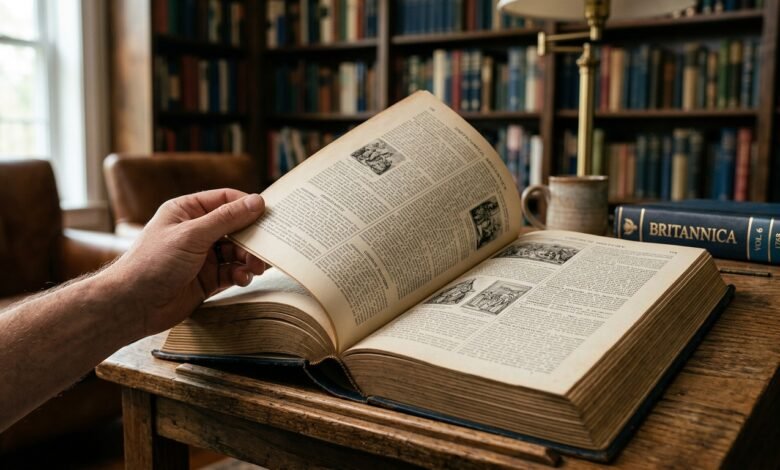
When people want to understand a topic quickly, one name has remained familiar for generations: Britannica. Known formally as Encyclopædia Britannica, it is one of the world’s most recognized general reference works. What makes Britannica especially interesting is not simply its huge collection of information, but the remarkable journey it has taken from heavy printed volumes in eighteenth-century Scotland to a modern digital knowledge platform.
Britannica began in Edinburgh between 1768 and 1771, during the Scottish Enlightenment. Its earliest edition was produced in three volumes, yet the project eventually developed into a major international reference source. Over time, new editions expanded its coverage, attracted expert contributors, and adapted to changing expectations about how people should access information.
Today, Britannica is primarily experienced online. Its digital presence gives readers access to information across history, science, geography, biographies, culture, literature, technology, and countless other subjects. The transition from paper to the internet was a major turning point, allowing Britannica to remain relevant in an age when people expect information to be available within seconds.
This article explores what Britannica is, how it began, why it became famous, how it changed with technology, and why it still matters in the modern information landscape.
What Is Britannica?
Britannica is a general knowledge encyclopedia designed to provide organized, informative explanations of subjects across many areas of human knowledge. Unlike a simple dictionary, which primarily focuses on word meanings, an encyclopedia aims to explain ideas, people, events, places, discoveries, and broader concepts in context.
The name Britannica is strongly associated with research and reference material. For generations, students, teachers, researchers, and curious readers have used its entries to build a basic understanding of complicated subjects. Its strength comes from presenting information in a structured format rather than requiring readers to piece together scattered facts.
The modern Britannica experience is largely digital. The main Britannica website provides encyclopedia content along with educational resources and multimedia material. The online service has evolved considerably from the early electronic editions that appeared during the rise of the internet.
What makes Britannica particularly notable is its longevity. Few reference publications have survived for centuries while continuing to adapt to changing technology and reading habits. That history gives the Britannica brand a unique place in the world of educational resources.
The Fascinating History of Encyclopaedia Britannica
The story of Britannica began in Edinburgh, Scotland, in the eighteenth century. Printer Colin Macfarquhar and engraver Andrew Bell were behind the original project, while William Smellie was engaged to compile and edit the first edition. The work was published in installments between 1768 and 1771.
The first edition contained three volumes and included hundreds of illustrations. Instead of treating every related concept as a tiny independent definition, Britannica experimented with longer discussions of subjects. This approach helped distinguish it from some earlier reference works and contributed to the encyclopedia’s developing identity.
As the encyclopedia gained recognition, later editions became larger and more ambitious. The second edition reached ten volumes, while the third expanded to eighteen volumes. As the publication grew, editors increasingly sought contributions from knowledgeable specialists.
That expansion was important because Britannica gradually moved beyond being simply a collection of compiled information. It developed into a major reference project that attempted to organize an increasingly complicated body of human knowledge for general readers.
Why Britannica Became So Famous
Britannica earned its reputation partly through consistency and editorial ambition. Creating a serious encyclopedia requires more than collecting facts. Information must be organized, reviewed, explained, and presented in a way that readers can understand.
The publication also benefited from its long history. Each new generation inherited an established reference source that had already built recognition among libraries, schools, academics, and families. Over time, the name Britannica became associated with formal research and educational reading.
Its reputation was strengthened by the participation of knowledgeable writers and specialists. As Britannica developed, it increasingly sought contributions from experts in different disciplines. That helped broaden its coverage while improving the depth of many subjects.
Another important factor was its ability to evolve. Britannica did not remain frozen in the eighteenth or nineteenth century. It repeatedly changed its structure, editorial approach, format, and distribution methods. That willingness to adapt became especially important once computers and the internet transformed the reference industry.
Britannica and Its Famous Editions
Britannica’s history is closely connected to its editions. Each edition reflected the knowledge, technology, and editorial priorities of its period. Early editions expanded dramatically in size as editors attempted to cover more subjects and provide deeper explanations.
Among the many historical editions, the ninth and eleventh editions are particularly famous among scholars and historians. The eleventh edition, published in the early twentieth century, has become an important historical reference in its own right because it captures how educated readers and editors viewed the world at that time.
The fifteenth edition introduced a distinctive organizational structure. Britannica divided material into different components intended for different reading purposes. Shorter articles could help readers locate basic information, while longer treatments offered deeper discussion of major subjects.
This structure demonstrated an important principle of encyclopedia design: not every reader wants the same level of information. Someone checking a quick fact needs speed, while someone studying a topic may want context, background, and detailed analysis.
The Move From Print to Digital Britannica
For much of its history, Britannica was famous for its physical books. Large sets of encyclopedia volumes became symbols of serious home libraries and educational institutions. However, the arrival of computers changed the economics and convenience of reference publishing.
Britannica began moving into electronic formats before the modern web became dominant. Its online encyclopedia eventually became a major part of the company’s strategy. The Library of Congress catalog describes Britannica Online as an electronic encyclopedia accessible through the World Wide Web.
The internet transformed the experience completely. Instead of searching through alphabetical volumes, readers could type a subject into a search box and immediately reach a relevant entry. Multimedia could also be added without requiring another physical volume.
In 2012, Britannica announced that it would stop producing the traditional print edition of the encyclopedia. The decision represented the end of an extraordinary 244-year period of printed publication and marked a decisive shift toward digital delivery.
What Can You Find on Britannica?
One of Britannica’s biggest strengths is the variety of subjects it covers. Readers can explore areas such as science, history, geography, politics, literature, philosophy, arts, mathematics, technology, and biographies.
A student researching an important historical event may use Britannica to understand its background before looking at more specialized academic sources. Someone interested in astronomy can explore explanations of planets, stars, galaxies, and space exploration. A reader researching a famous person can find biographical information alongside historical context.
Britannica also includes educational resources beyond traditional encyclopedia articles. Depending on the service and access level, digital resources can include multimedia, reference tools, country information, biographies, primary sources, and materials designed for learners.
This broad coverage makes Britannica useful for both casual curiosity and structured learning. A person can start with a simple question and then follow related subjects to develop a much deeper understanding.
Britannica for Students and Teachers
Education has always been an important part of Britannica’s identity. Students frequently need information that is understandable without being excessively simplistic. A good reference article can provide that middle ground between a basic web search and a highly technical academic paper.
Teachers can also use encyclopedia resources when introducing a new subject. Before discussing a complicated historical period, scientific discovery, or geographical region, students can use reference material to establish essential background knowledge.
Digital Britannica resources can include tools designed specifically for educational environments. Some library and educational services provide access to multimedia, subject browsing, biographies, world atlases, country comparisons, primary sources, and research-oriented materials.
For students, perhaps the biggest benefit is organization. The internet contains an enormous amount of information, but quantity does not automatically produce understanding. Britannica can provide a structured starting point before a student moves toward more specialized sources.
Britannica vs. Other Online Information Sources
The modern internet offers countless ways to research a topic. Search engines can produce thousands of results, while websites, blogs, academic databases, news outlets, and online encyclopedias all provide different kinds of information.
Britannica occupies a particular position within that ecosystem. It is designed primarily as a reference source rather than as a social platform or open publishing community. Its editorial model aims to provide organized explanations rather than simply displaying whatever information happens to appear online.
This does not mean Britannica should automatically replace every other source. Academic research often requires primary documents, peer-reviewed studies, government publications, specialist books, and other authoritative materials. Britannica can be particularly useful for developing background knowledge before consulting those sources.
The smartest approach is therefore to treat Britannica as part of a wider research process. It can help answer the question, “What is this topic and how does it fit together?” More specialized sources can then help answer narrower questions requiring deeper evidence.
Why Reliable Reference Information Matters
The internet has made information incredibly accessible, but accessibility creates another challenge: determining which information deserves trust. A search result can contain useful facts, outdated material, opinions, advertisements, or completely incorrect claims.
Reference works can help readers establish a foundation before they move deeper into a subject. Britannica’s long editorial history is part of the reason it remains recognizable as a reference brand.
Reliable information is particularly important for students. If the first explanation they encounter is inaccurate, they may build their entire understanding around a flawed idea. A carefully edited reference source can reduce that risk.
However, responsible research still requires checking sources. Even respected reference works should be used alongside appropriate primary and specialist material when the subject demands it. Good research is not about trusting one website blindly; it is about understanding where information comes from and how strong the evidence is.
Britannica in the Age of Search Engines and AI
The information landscape has changed dramatically since Britannica first went online. Search engines now provide instant access to enormous amounts of content, while artificial intelligence systems can generate explanations and summaries in seconds.
That shift creates both opportunities and challenges for traditional reference publishers. Readers increasingly expect information to be immediate, conversational, and personalized. Britannica has responded by expanding its digital offerings and experimenting with newer technologies.
The company has also introduced digital products and features designed for modern users. Its website has developed beyond a simple collection of encyclopedia articles into a broader educational platform containing multimedia and other learning resources.
The rise of AI makes editorial quality arguably even more important. AI-generated answers can sound convincing while still containing errors. Human-edited reference material can provide an important benchmark against which automatically generated information can be evaluated.
The Lasting Value of Britannica
Britannica’s greatest achievement may be its ability to remain recognizable across radically different eras. The world that existed when the first edition appeared in eighteenth-century Edinburgh was completely different from today’s digital environment.
Yet the basic human need behind the encyclopedia has remained surprisingly stable. People want to understand things. They want explanations that connect facts rather than simply presenting disconnected pieces of information.
Britannica has served that need through printed volumes, electronic products, websites, educational databases, and digital learning tools. The format changed, but the fundamental purpose remained centered on organized knowledge.
Its history also shows how publishing businesses must adapt. A company that once depended on enormous physical books eventually had to embrace computers, websites, multimedia, online subscriptions, and new digital technologies. That transformation is one of the most interesting parts of the Britannica story.
Is Britannica Still Useful Today?
Yes, Britannica can still be useful, particularly when readers need a structured introduction to a topic. It is valuable for understanding historical background, learning terminology, exploring biographies, and getting a broad overview before moving into more specialized research.
Its usefulness is especially clear when a topic is unfamiliar. Instead of beginning with hundreds of random search results, a reader can start with a well-organized reference explanation and then identify the important concepts that deserve further investigation.
Students can also benefit from using Britannica as an early research step. It can help them understand a subject before they consult scholarly articles, books, government publications, or primary sources.
At the same time, Britannica should not be treated as the only source for every assignment or research project. The appropriate source depends on the question. For complex academic work, readers should compare information and consult original or specialist sources whenever possible.
Final Thoughts on Britannica
Britannica is much more than an old encyclopedia. It represents centuries of changing ideas about how knowledge should be collected, organized, edited, published, and shared. Beginning in Edinburgh in the eighteenth century, it grew from a modest three-volume project into an internationally recognized reference institution.
Its journey from printed books to digital platforms illustrates how technology can completely reshape an established form of publishing. The end of the traditional print edition in 2012 was a major milestone, but it was not the end of Britannica. Instead, it marked another stage in its long evolution.
For modern readers, Britannica remains most valuable when used thoughtfully. It can provide context, explain unfamiliar subjects, and create a reliable starting point for deeper research. In a world overflowing with information, the ability to organize knowledge clearly is still incredibly useful.
Ultimately, the enduring appeal of Britannica comes down to something simple: people will always need trustworthy ways to understand the world. The technology may change, the format may change, and the way people search may change, but that fundamental need is unlikely to disappear.
Frequently Asked Questions About Britannica
What is Britannica?
Britannica, formally known as Encyclopædia Britannica, is a major general knowledge encyclopedia. It covers subjects ranging from science and history to geography, biographies, literature, arts, and technology.
When was Britannica first published?
The first Britannica was published in Edinburgh in installments between 1768 and 1771. The completed first edition consisted of three volumes.
Is Britannica still available?
Yes. Britannica continues primarily as a digital reference service. Its online platform provides encyclopedia content and a range of educational resources.
Did Britannica stop printing its encyclopedia?
Britannica discontinued its traditional print encyclopedia after the 2010 edition. The company announced the move in 2012 after more than two centuries of printed publication.
Is Britannica good for students?
Britannica can be a useful starting point for students because it provides organized background information across many subjects. Students should still consult specialized and primary sources when their assignments require deeper research.
Is Britannica the same as a dictionary?
No. An encyclopedia explains subjects, concepts, people, places, and events in context, while a dictionary primarily provides information about words, meanings, pronunciation, and usage.
Why is Britannica important?
Britannica is important because of its extraordinary history, broad subject coverage, editorial tradition, and ability to adapt from print publishing to modern digital education.
Where can I access Britannica?
The main online Britannica service is available through the official Britannica website, while some libraries and educational institutions also provide access to Britannica resources.