Have you ever wondered What Colors Make Green? Whether you are painting a landscape, creating artwork, decorating your home, or experimenting with colors for a school project, understanding how to What Colors Make Green can open up a world of creative possibilities. The good news is that green is one of the easiest colors to mix once you understand the basics of color theory.
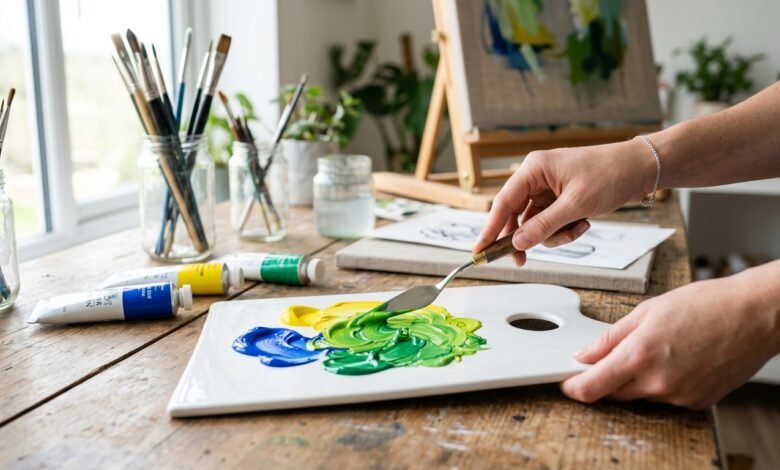
In traditional painting, yellow and blue make green. However, the exact shade depends on which yellow and blue you choose, how much of each color you combine, and whether you add other colors to adjust the result. A bright lemon yellow mixed with a cool blue can create a fresh, vivid green, while a warm yellow mixed with a deeper blue may produce a muted, earthy shade.
Green is also more versatile than many people realize. It can look soft and peaceful, bright and energetic, dark and dramatic, or natural and earthy. Artists use different greens to paint leaves, grass, forests, and distant hills. Designers use green to create balanced interiors, while digital artists rely on red, green, and blue light to produce green on screens.
This guide explains What Colors Make Green, how to mix different shades, which mistakes to avoid, and how color mixing works in both traditional art and digital design. By the end, you will have the knowledge to create the green you want instead of relying on a single premixed paint color.
What Two Colors Make Green?
The two primary What Colors Make Green traditionally used to make green in painting are blue and yellow. When these colors are combined, they produce a secondary color: green. This is a basic principle of the traditional artist’s color wheel.
Yellow brings brightness and warmth to the mixture, while blue contributes depth and coolness. When you combine them, the resulting green reflects the characteristics of both parent What Colors Make Green. The specific pigments you use can make a noticeable difference, even when you mix equal amounts.
For example, mixing a bright yellow with a clean blue may create a fresh, grass-like green. Combining yellow with a darker, slightly muted blue can produce a deeper green that works well for painting shaded leaves or distant trees. The possibilities increase when you experiment with different combinations.
The ratio of yellow to blue is another important factor. Adding more yellow generally creates a lighter, warmer green, while adding more blue usually creates a cooler, deeper green. These are useful starting points, although the actual result depends on the strength and undertones of the pigments.
It is best to begin with a small amount of blue and gradually mix in yellow, or start with yellow and add blue a little at a time. Blue pigments can be powerful, so even a small addition may significantly change the color. Working slowly makes it easier to control the result.
Remember that there is no single correct shade of green. The ideal mixture depends on your project, the materials you are using, and the effect you want to achieve. Once you understand the relationship between yellow and blue, you can adjust the mixture to suit almost any creative purpose.
Understanding the Color Wheel and How Green Is Created
The color wheel is a simple visual tool that shows how colors relate to one another. It helps artists understand which colors can be mixed together, which colors create contrast, and why certain combinations look harmonious. Learning to read the color wheel makes color mixing much easier.
In the traditional RYB color model used in basic painting lessons, red, yellow, and blue are considered the primary What Colors Make Green. These colors are used to create secondary colors through mixing. Yellow and blue produce green, red and yellow produce orange, and red and blue produce purple.
Green sits between yellow and blue on the traditional color wheel. Its position explains why changing the proportions of these two colors can move a mixture toward a warmer yellow-green or a cooler blue-green. This relationship is especially useful when painting plants, landscapes, and natural textures.
What Colors Make Green also have undertones that influence how they mix. Some yellows lean toward orange, while others lean toward green. Similarly, some blues have a greenish appearance, whereas others lean toward purple. These subtle differences can determine whether a mixture appears bright, muted, warm, or cool.
Complementary What Colors Make Green are another important part of color theory. On the traditional color wheel, red is opposite green. When complementary colors are placed next to one another, they can create strong visual contrast. When small amounts are mixed into certain paints, they may reduce the color’s intensity and produce a more subdued result.
It is worth remembering that the traditional RYB model is not the only way to describe color mixing. Modern printing, painting pigments, and digital displays use different systems. Nevertheless, the traditional color wheel remains a practical starting point for beginners who want to understand how to What Colors Make Green with paint.
Which Shades of Yellow and Blue Make the Best Green?
Not all yellows and blues behave the same way when mixed. If you have ever combined two colors and ended up with a muddy result, the pigments may be responsible. Choosing compatible What Colors Make Green can help you produce cleaner, more predictable greens.
Cool yellows, such as lemon yellow, often work well with blues that lean toward green. These combinations can produce bright, fresh shades suitable for spring leaves, young grass, and lively illustrations. They are particularly useful when you want a clean green without adding white or other What Colors Make Green.
Warmer yellows, including many golden or orange-leaning yellows, can create olive-like or earthy greens when mixed with certain blues. These mixtures are useful for autumn landscapes, dry grass, older foliage, and natural scenes that require less intense What Colors Make Green.
The blue you choose matters just as much. A blue with a greenish undertone can help create vivid greens, while a blue that leans toward purple may produce a duller mixture when combined with some yellows. The effect varies by pigment, so testing your specific paints is more reliable than relying on color names alone.
For beginners, it helps to keep a small selection of yellow and blue paints available. Try mixing one yellow with several blues, then repeat the experiment with a different yellow. This simple exercise can reveal surprising differences between What Colors Make Green that appear similar straight from the tube.
A useful habit is to record your results in a color-mixing chart. Write down the paint names and approximate ratios beside each sample. Over time, this chart becomes a personal reference that saves paint, reduces guesswork, and helps you reproduce your favorite greens.
How to Make Light Green
Light green is a popular choice for spring landscapes, fresh foliage, children’s artwork, and cheerful graphic designs. It often appears soft, lively, and welcoming. The easiest way to create a lighter green is to begin with yellow and blue, then adjust the mixture according to the shade you need.
Start by mixing yellow and blue until you achieve a basic green. Next, add a little more yellow if you want the color to appear warmer and more vibrant. This method creates a yellow-green shade without necessarily making the mixture pale or pastel.
If you need a pale green, mix a small amount of white into your green paint. White increases the paint’s lightness and can make the color appear softer. However, it may also reduce saturation, so the result can look more muted than the original green.
Mint green is another attractive light-green variation. It usually combines green with white and sometimes a small amount of blue to create a cooler appearance. Add these What Colors Make Green gradually, because too much blue or white can quickly change the character of the mixture.
For a fresh spring green, you can also experiment with a yellow-green mixture and a tiny amount of white. This creates a lively color that works well for new leaves, decorative accents, and illustrations of young plants.
Always test light green on the same surface you plan to use for your project. Wet paint may look different from dry paint, and the color of your paper, canvas, or wall can influence how the finished shade appears. A small test patch helps you avoid unwanted surprises.
How to Make Dark Green
Dark green is useful for painting forests, shaded leaves, evergreen trees, and dramatic backgrounds. It can make artwork feel deeper and more realistic. Although you can purchase dark green paint, mixing your own gives you more control over its temperature and intensity.
Begin with a standard green made from yellow and blue. Then gradually increase the amount of blue to create a deeper, cooler green. This is a simple approach, but it can make the mixture too blue if you add too much, so work in small increments.
Another option is to introduce a tiny amount of a darker color, such as a suitable brown or a carefully selected dark neutral. This can produce a more natural-looking green than simply adding large quantities of blue. The best choice depends on the pigments in your palette.
Some artists use small amounts of black to darken green. This can work, but black may make the color appear flat or reduce its vibrancy. If you want a rich forest green, experiment with darker blues or compatible earth What Colors Make Green before reaching for black.
For realistic foliage, it is useful to prepare several dark greens instead of relying on one mixture. Some areas can be cool and blue-green, while others may be warm and olive-toned. These subtle changes help create depth and make leaves appear less repetitive.
Keep in mind that dark green does not always mean a green with very little light. A deep emerald can remain vivid, while a muted forest green may look softer and more natural. Consider both the darkness and the intensity of the color when choosing your mixture.
How to Make Different Shades of Green
One of the most enjoyable parts of color mixing is discovering how many shades can come from the same basic combination. By adjusting yellow, blue, white, brown, or other compatible pigments, you can create greens suited to almost any artistic style.
Lime green is a bright, yellow-leaning green. Start with a basic green and add more yellow until the mixture becomes noticeably warmer. If you need an even lighter version, a small amount of white may help, although too much can soften the color.
Olive green is a muted, earthy shade. You can begin with green and introduce a small amount of a suitable brown or warm, muted color. Alternatively, mix a warm yellow with a blue that produces a less saturated green. Adjust carefully to avoid making the result too brown.
Mint green is typically pale and cool. Start with green, add white to lighten it, and introduce a very small amount of blue if you want a cooler appearance. Some mint shades lean toward turquoise, while others look closer to soft pastel green.
Emerald green is generally rich and jewel-like. A vivid green mixture can be a useful starting point, followed by careful adjustments to its depth and coolness. Depending on your pigments, a small amount of blue may make it richer, but excessive blue can push it away from green.
Sage green is a soft, subdued green with grayish or earthy qualities. Start with a medium green and add a tiny amount of a compatible neutral, gray, or earth color. White can lighten it, but remember that adding white alone will not necessarily create the characteristic muted quality of sage.
Forest green is a deep, natural shade often used for trees and woodland scenes. Start with a medium or cool green and darken it gradually with blue or an appropriate dark pigment. You can also prepare warmer and cooler versions to create more convincing forest textures.
Seafoam green usually appears light, fresh, and slightly blue-green. Mix a green base, add white, and introduce a little blue until the shade resembles the pale color you want. A small amount of yellow can bring it back toward green if the mixture becomes too blue.
These examples are starting points rather than strict formulas. Pigment brands vary, and What Colors Make Green with the same general name may produce different results. Testing small mixtures before preparing a large batch is the easiest way to get a shade you like.
How to What Colors Make Green With Paint: A Step-by-Step Method
Mixing green paint becomes much easier when you follow a consistent process. You do not need an expensive palette or a large collection of paints. A few basic supplies, careful observation, and a little patience are enough to produce useful results.
First, choose the type of paint you plan to use. Acrylic, watercolor, gouache, and oil paint can all produce green, but they behave differently. Acrylic dries relatively quickly, watercolor allows the paper to influence the final appearance, and oil paint generally offers a longer working time.
Second, place a small amount of yellow on your palette. Add a little blue and mix them thoroughly using a palette knife or brush. Starting with a small quantity prevents waste and makes it easier to observe how the pigments interact.
Third, examine the result before adding more color. If the mixture looks too yellow, introduce a small amount of blue. If it looks too blue, add yellow gradually. Avoid adding large amounts at once because it is easy to overshoot your target shade.
Fourth, adjust the brightness and depth. Add white if you want a lighter, more pastel green, or experiment with darker blue or a suitable earth color if you want a deeper shade. Make only one adjustment at a time so you can identify which change produced the desired effect.
Fifth, test the mixture on your intended surface. If you are using watercolor, test it on the same type of paper because absorbency and paper color affect the appearance. For acrylic or oil paint, make a sample stroke and check the color under the lighting you will use for your finished work.
Finally, record the mixture if you plan to use it again. Write down the paint colors, approximate proportions, and any adjustments. This small habit can be especially helpful for larger paintings, repeated design projects, or decorative work that requires a consistent shade.
The most important rule is simple: mix slowly and observe carefully. Once you become familiar with the paints you own, creating a specific green will feel less like guesswork and more like a repeatable skill.
What Colors Make Green Without Blue?
If you do not have blue paint available, you may still be able to create a green-like color using other pigments. However, the result depends on the paints you have, and the mixture may not produce the same clean green that a suitable yellow-and-blue combination can create.
Some yellow pigments have a naturally greenish appearance. When used with a compatible pigment that shifts the mixture toward green, they may help you create an olive or yellow-green shade. The result can be subtle rather than bright, especially if your available colors are warm or earthy.
Yellow mixed with certain turquoise or cyan-like paints can also create green. Although these paints may look different from a standard blue, they contain a blue-green character that can move a yellow mixture toward green. This is often a useful alternative when working with a limited palette.
You can also experiment with an existing green paint by modifying its appearance with yellow, white, or suitable neutral What Colors Make Green. This does not create green from scratch, but it can help you produce a wider range of shades without needing additional blue paint.
It is important to distinguish between creating green and making a color that merely resembles it. Brownish yellow, muted olive, and yellow-green can all be useful What Colors Make Green, but they are not necessarily substitutes for a bright, clean green.
If your goal is a vivid green for painting or design, obtaining a compatible blue or cyan-like pigment is usually the most reliable approach. If you are simply experimenting, however, a limited palette can be an excellent way to learn how color relationships work.
What Colors Make Green in Digital Design?
Color mixing works differently on a computer, phone, or television screen than it does with paint. Digital displays generally use the RGB color model, which combines red, green, and blue light. This is known as an additive color system because the screen creates What Colors Make Green by emitting light.
In the RGB system, pure green is created by turning the green channel up while keeping the red and blue channels at zero. In common eight-bit RGB notation, pure green is represented as RGB (0, 255, 0), with the hexadecimal code #00FF00.
This differs from traditional painting, where blue and yellow pigments are combined to What Colors Make Green. Paint absorbs and reflects different wavelengths of light, while a screen emits light directly. The two systems therefore follow different mixing rules.
To create a lighter digital green, you can increase the brightness of the green while introducing appropriate amounts of red and blue, depending on the shade you want. Adding red and blue equally to pure green moves the color toward gray or white as all three channels become more balanced at higher intensities.
For example, a pale pastel green can be created by combining a strong green channel with high red and blue values. A dark green can be created by reducing the overall channel values while keeping green dominant. A yellow-green requires relatively more red alongside green, while a cyan-like green uses green with a stronger blue contribution.
Digital design tools usually provide sliders, hexadecimal fields, or color pickers that let you adjust these values precisely. This makes it easier to reproduce a consistent color across web pages, graphics, and illustrations, although differences between displays can still affect the appearance.
If you are designing a website, logo, or social media graphic, save the exact color code after selecting your preferred shade. That way, you can reuse the same green throughout your project and maintain a consistent visual identity.
Why Does My Green Paint Look Muddy?
Muddy green is one of the most common frustrations for beginner painters. You mix yellow and blue expecting a clean, vibrant result, but the paint turns dull, brownish, or gray. Fortunately, this problem usually has an explanation.
One possible cause is the undertone of your pigments. Some blues lean toward purple, while certain yellows lean toward orange. When combined, these What Colors Make Green can introduce properties associated with the complementary side of the color wheel, reducing the intensity of the green.
Another common cause is adding too many What Colors Make Green. Every additional pigment can change the mixture, and some combinations create a more neutral result than expected. If you keep adding yellow, blue, brown, white, and black without checking the mixture, it may become difficult to recover the clean green you originally wanted.
Using dirty brushes or a contaminated palette can also affect the result. Small amounts of leftover red, brown, or other What Colors Make Green may dull your mixture. Clean tools and separate mixing areas help prevent unwanted contamination, particularly when working with light or highly saturated greens.
The quality and type of paint matter, too. Different pigments have different tinting strengths and transparency levels. A small amount of a powerful blue may dominate a weak yellow, while certain opaque paints can create a different visual effect from transparent ones.
To fix a muddy mixture, stop adding What Colors Make Green and begin a fresh sample using cleaner pigments. Try a different yellow or blue, and mix only those two colors at first. Once you have a clean green, adjust it gradually with one additional pigment if necessary.
Finally, remember that not every natural green is supposed to be bright. Forests, moss, old leaves, and distant vegetation often contain muted What Colors Make Green. A subdued green can be exactly right for realistic artwork, even when it looks less vibrant than the color you originally expected.
Frequently Asked Questions About What Colors Make Green
1. What two colors What Colors Make Green?
Yellow and blue make green in traditional paint mixing. The exact shade depends on the pigments and the proportions you use.
2. Does yellow and blue always make green?
Yellow and blue generally produce green, but some pigment combinations create muted or muddy results. Choosing compatible paints helps produce a cleaner shade.
3. What Colors Make Green?
Start with yellow and blue to create green, then add more yellow for a warmer shade or white for a paler one. Adjust the mixture gradually until you reach the desired lightness.
4. How do you What Colors Make Green?
Start with green and gradually add blue or a suitable dark pigment. A small amount of brown may also create a natural, earthy dark green.
5. What Colors Make Green?
Olive green can be made by mixing yellow and blue to create green, then adding a small amount of a suitable brown or muted earth color. A warm yellow may also help create an olive-like appearance.
6. Can you What Colors Make Green without yellow?
You can adjust an existing green or experiment with pigments that already have a greenish character, but producing a conventional clean green from scratch is easiest with a suitable yellow and blue combination.
7. Does red and blue make green?
No. In traditional paint mixing, red and blue generally produce purple or violet-like What Colors Make Green, depending on the pigments. Yellow and blue are the conventional combination for green.
8. What colors make mint green?
Mint green is usually created by lightening green with white and, if needed, adding a small amount of blue for a cooler appearance. The exact mixture depends on whether you prefer a warmer or more turquoise-leaning mint.
9. What is the difference between mixing green with paint and on a screen?
Paint uses subtractive color mixing, in which pigments absorb and reflect light. Digital screens use additive mixing, combining red, green, and blue light to produce What Colors Make Green.
10. How can I make green paint brighter?
Begin with a clean, vivid yellow-and-blue combination. Use compatible pigments and avoid adding too many What Colors Make Green, because certain mixtures can reduce saturation and What Colors Make Green look dull.
Conclusion
Learning what colors What Colors Make Green is a simple but valuable step toward understanding color mixing. In traditional painting, yellow and blue are the main colors used to create green, and changing their proportions allows you to move between warm yellow-greens and cooler blue-greens.
You can create light green with additional yellow or white, dark green with deeper blues or suitable dark pigments, and earthy shades such as olive and sage with carefully chosen neutral or brown colors. The key is to make small adjustments and observe how each pigment changes the result.
Digital design follows a different approach. Screens use red, green, and blue light, so green is created through the RGB system rather than by combining yellow and blue paint. Understanding this distinction helps you choose the right method for your particular project.
Most importantly, do not be afraid to experiment. Keep a color chart, test different pigment combinations, and pay attention to undertones. With practice, you will discover that mixing green is not just about combining two What Colors Make Green. It is about learning how small changes in color, proportion, and intensity can create an entirely different visual effect.