Martin O’Neill: Biography, Football Career, Achievements, Personal Life, and Legacy

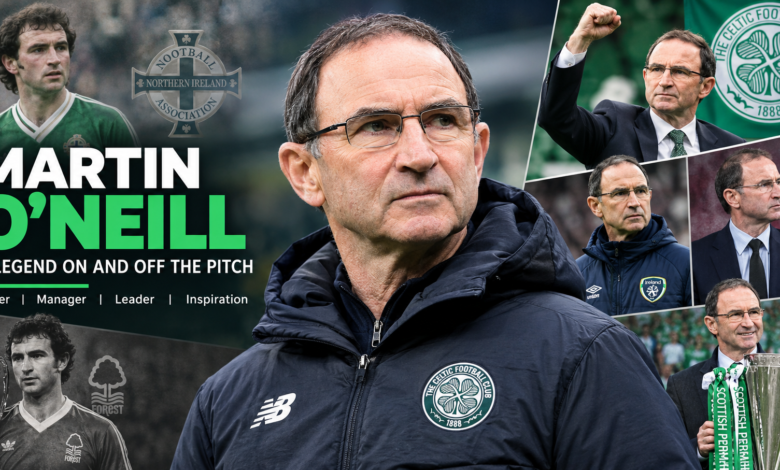
Introduction: Who Is Martin O’Neill?
Martin O’Neill is one of the most respected and recognizable figures in British and Irish football. Known for his passionate personality, strong leadership, and impressive managerial achievements, he has enjoyed a remarkable career as both a professional footballer and a football manager. Over several decades, he has worked with some of the biggest clubs and national teams in the sport, earning admiration from players, supporters, and fellow professionals.
Born on March 1, 1952, in Kilrea, County Londonderry, Northern Ireland, Martin Hugh Michael O’Neill developed an interest in football at a young age. His journey began in Northern Ireland before taking him to England, where he established himself as a talented midfielder. His playing career included a successful period with Nottingham Forest, one of England’s most famous football clubs.
However, Martin O’Neill eventually became even more widely recognized for his achievements in management. He built his reputation through successful spells at Wycombe Wanderers and Leicester City before reaching another level of prominence at Celtic. His ability to motivate players, organize competitive teams, and deliver important victories made him a highly respected manager.
One of the defining moments of his career came during his first spell at Celtic between 2000 and 2005. He transformed the team’s competitive mentality, won multiple domestic trophies, and guided the club to the UEFA Cup final in 2003. That European campaign remains one of the most memorable periods in Celtic’s modern history.
His managerial career also included important experiences at Aston Villa, Sunderland, Nottingham Forest, and the Republic of Ireland national team. Each position presented different challenges, allowing him to demonstrate his adaptability and understanding of football at various levels.
In 2025 and 2026, O’Neill attracted renewed attention after returning to Celtic during a difficult period for the club. His successful return eventually resulted in a permanent managerial appointment for the 2026–27 season. His story demonstrates how experience, determination, and leadership can create a lasting influence in professional football.
Early Life, Childhood, and Family Background
Martin O’Neill was born on March 1, 1952, in Kilrea, a small village in County Londonderry, Northern Ireland. Growing up in a close-knit community helped shape his personality and outlook on life. His early surroundings were very different from the large football stadiums and international competitions he would eventually experience.
Martin O’Neill grew up in a large family and was one of nine children. His childhood was influenced by local sporting traditions, particularly Gaelic football. Like many young people in Northern Ireland, he developed an appreciation for competitive sport through community activities and school competitions.
Before becoming known as a professional association football player, O’Neill participated in Gaelic football. He represented local teams and developed the physical strength, competitive instincts, and teamwork that would later benefit his football career. His involvement in different sporting environments helped him become a versatile athlete.
Education was another important part of his early life. He attended St. Columb’s College in Derry before continuing his studies at St. Malachy’s College in Belfast. During this period, he became increasingly interested in association football and began attracting attention for his ability on the pitch.
His early football development included playing for Rosario and Lisburn Distillery. These experiences provided opportunities to develop his technical skills and compete against stronger opponents. Although he was still young, his performances suggested that he had the potential to pursue football professionally.
Martin O’Neill background also gave him a strong connection to Northern Ireland’s sporting culture. His experiences growing up in Kilrea remained part of his identity throughout his career. Rather than forgetting his beginnings after achieving success, he continued to represent his Northern Irish roots with pride.
Martin O’Neill’s Professional Football Playing Career
Martin O’Neill began his professional football journey in Northern Ireland, where he played for Distillery. His performances eventually attracted interest from English clubs, opening the door to a much bigger opportunity. Moving to England represented an important turning point because it allowed him to compete at a higher level.
In 1971, Martin O’Neill joined Nottingham Forest, where he would spend the most significant portion of his playing career. The club became an important part of his footballing identity. During his decade at Forest, he developed into a dependable midfielder and experienced some of the most successful seasons in the club’s history.
Nottingham Forest achieved remarkable success under manager Brian Clough. The team won promotion to the First Division in the 1976–77 season before capturing the league championship in 1977–78. O’Neill was part of the squad that helped establish Forest as a major force in English football.
The club’s European achievements made that period even more special. Nottingham Forest won the European Cup in 1979 and successfully defended the trophy in 1980. These victories placed the club among Europe’s elite, and O’Neill gained valuable experience competing in high-pressure matches against leading international opponents.
His time at Forest also exposed him to Brian Clough’s distinctive management approach. Clough was famous for his confidence, communication skills, and ability to build strong relationships with players. Working under such an influential manager provided O’Neill with lessons that would later influence his own managerial philosophy.
After leaving Nottingham Forest in 1981, Martin O’Neill continued his playing career with Norwich City, Manchester City, and Notts County. He also spent time with other clubs toward the end of his playing journey. Across his senior career, he made more than 400 appearances and scored approximately 65 goals.
International Career With Northern Ireland
Alongside his club career, Martin O’Neill represented Northern Ireland at international level. Playing for his country was a significant achievement, particularly because Northern Ireland has a relatively small population compared with many major footballing nations.
Martin O’Neill earned 64 international caps between 1971 and 1984, scoring eight goals. His performances demonstrated his consistency and ability to compete against international opposition. He became an important member of the national team and eventually took on leadership responsibilities.
One of the most memorable experiences of his international career came during the 1982 FIFA World Cup in Spain. Northern Ireland qualified for the tournament and produced several outstanding performances. Their participation became a historic achievement for the country.
Northern Ireland famously defeated hosts Spain 1–0 during the group stage. The result was particularly impressive because Spain were playing on home soil and were among the tournament’s major talking points. O’Neill was part of the team that helped create this memorable footballing moment.
His international career also involved competing in the British Home Championship. Northern Ireland won the competition in 1979–80 and 1983–84, adding further achievements to O’Neill’s playing record. These experiences helped him understand the importance of teamwork, national pride, and preparation.
By the time his international career ended in 1984, O’Neill had developed extensive experience at both club and international levels. These experiences provided a strong foundation for his next professional challenge. His transition from player to manager would eventually become one of the most successful parts of his football journey.
Martin O’Neill’s Managerial Career and Major Club Achievements
After retiring from professional football because of injury, Martin O’Neill moved into management. His first managerial experiences came with smaller clubs, including Grantham Town and Shepshed Charterhouse. These early appointments allowed him to understand the responsibilities of managing players, planning training sessions, and building competitive teams.
His major breakthrough arrived with Wycombe Wanderers in 1990. At the time, Wycombe were competing outside the Football League, but O’Neill gradually helped the club become a much stronger side. His leadership produced impressive results, and the team developed a reputation for organization and determination.
Wycombe achieved promotion to the Football League in 1993 after winning the Conference title. The club also enjoyed success in the FA Trophy, winning the competition in 1991 and 1993. These achievements demonstrated O’Neill’s ability to build successful teams without the financial resources available to larger clubs.
In 1995, O’Neill briefly managed Norwich City before joining Leicester City later that year. His appointment at Leicester became another major turning point. The club was competing in the First Division and wanted to establish itself among England’s strongest teams.
At Leicester, O’Neill created an organized and competitive squad that consistently challenged more established clubs. His team became particularly effective in cup competitions. Leicester reached three League Cup finals during his tenure, winning the competition in 1997 and 2000.
His achievements at Leicester helped establish his reputation as one of Britain’s most effective managers. He demonstrated that tactical discipline, strong team relationships, and effective recruitment could help clubs compete beyond their financial expectations. His success also attracted attention from major European clubs.
Martin O’Neill’s Historic First Spell at Celtic
Martin O’Neill joined Celtic in 2000, beginning one of the most successful managerial periods in the club’s modern history. His arrival generated considerable excitement among supporters, who hoped he could restore the club’s position as Scotland’s leading team. He quickly demonstrated that he understood the expectations associated with managing such a famous institution.
His first major challenge was improving Celtic’s performances against their biggest rivals, Rangers. The rivalry between the two Glasgow clubs is among football’s most intense. O’Neill made an immediate statement by leading Celtic to a memorable 6–2 victory over Rangers in August 2000.
That result became an important symbol of the transformation taking place at Celtic. The team displayed attacking confidence, physical strength, and tactical organization. Supporters quickly embraced O’Neill’s personality and management style, while the players responded positively to his leadership.
His first season was particularly successful. Celtic won the Scottish Premier League, Scottish Cup, and Scottish League Cup, completing a domestic treble. It was the club’s first treble in more than three decades, making the achievement especially significant.
O’Neill continued delivering silverware during the following seasons. Celtic won further league championships in 2001–02 and 2003–04. The team also remained highly competitive in domestic cup competitions, establishing itself as a powerful force in Scottish football.
Perhaps the most memorable European achievement came during the 2002–03 UEFA Cup campaign. Celtic defeated several difficult opponents, including Liverpool, to reach the final in Seville. Although they eventually lost 3–2 to José Mourinho’s Porto after extra time, reaching the final represented a major achievement for the club.
O’Neill’s first Celtic tenure ended in 2005. During his five seasons, he won seven major trophies and helped restore the club’s confidence and competitiveness. Celtic’s official historical account records his impressive 76 percent win rate during that period, highlighting the consistency of his achievements.
Aston Villa, Sunderland, and Republic of Ireland
After leaving Celtic in 2005, Martin O’Neill took some time away from football before returning to management with Aston Villa in August 2006. The Premier League club wanted to become more competitive, and O’Neill was considered an experienced manager capable of improving its position.
At Aston Villa, he developed an ambitious team featuring several talented players. The club became increasingly competitive under his leadership and regularly challenged for European qualification. His ability to improve the squad helped Villa establish itself as a strong Premier League side.
One of his most impressive achievements was guiding Aston Villa to three consecutive sixth-place finishes in the Premier League. The team also reached the 2010 League Cup final, although it ultimately lost to Manchester United. These results demonstrated that O’Neill could build competitive teams in England’s top division.
O’Neill left Aston Villa in August 2010 following disagreements about the club’s financial and transfer arrangements. His departure marked the end of an important chapter, but he remained interested in returning to football management.
In December 2011, he became Sunderland manager. His appointment generated optimism among supporters, and the team initially responded positively. However, maintaining consistent performances proved difficult, and O’Neill left the club in March 2013 after a challenging period.
Later in 2013, O’Neill accepted a new challenge by becoming manager of the Republic of Ireland national team. He worked alongside former Manchester United and Ireland captain Roy Keane, who served as his assistant. Their partnership attracted considerable attention because both men were known for their strong personalities.
The most significant achievement of their time together came when Ireland qualified for UEFA Euro 2016. Ireland defeated world champions Germany during qualifying, producing one of the most memorable results in the country’s recent football history. The team then reached the knockout stage of the tournament before losing to France.
O’Neill remained in charge until November 2018. Although his international tenure included difficult moments, qualification for Euro 2016 represented a major achievement. His experience demonstrated his ability to manage national teams as well as major club sides.
Return to Celtic in 2025 and Permanent Appointment in 2026
After leaving Nottingham Forest in 2019, Martin O’Neill spent several years away from full-time management. During this period, he remained connected to football through media appearances, analysis, and his broader interest in the sport. Many supporters assumed that his managerial career had reached its conclusion.
However, football often produces unexpected opportunities. In October 2025, O’Neill returned to Celtic after Brendan Rodgers departed the club. Celtic were experiencing a difficult period, and the club needed an experienced manager capable of restoring confidence and improving results.
His return immediately attracted attention because he had previously enjoyed such a successful relationship with Celtic supporters. Despite being away from the dugout for several years, he understood the club’s expectations and the pressure associated with managing one of Scotland’s biggest teams.
O’Neill made an impressive start to his interim appointment. He won all eight domestic matches during that initial spell, helping Celtic regain stability. His results demonstrated that his motivational skills and football knowledge remained valuable despite the time he had spent away from management.
Celtic subsequently appointed Wilfried Nancy, but the new managerial arrangement did not produce the desired results. Following a difficult run of performances, Nancy departed, and O’Neill returned to the position in January 2026.
His second spell proved successful. He guided Celtic to another Scottish Premiership championship and helped the club secure the Scottish Cup, completing an important domestic double. The league success was especially notable because it represented another championship approximately 22 years after his previous third league title with Celtic.
On June 11, 2026, Celtic announced that O’Neill had been appointed permanent manager for the 2026–27 season. He signed a one-year contract with an option for an additional year. The appointment confirmed that his successful return had developed into a new managerial chapter rather than a temporary rescue mission.
His return is an unusual and inspiring example of a veteran manager making a meaningful contribution later in his career. It also strengthened his relationship with Celtic supporters, who continue to associate him with some of the club’s greatest modern achievements.
Martin O’Neill’s Management Style and Football Philosophy
Martin O’Neill is widely associated with a management style built around motivation, discipline, communication, and competitive determination. He believes that football teams need more than technically talented players to achieve consistent success. They also require strong relationships, confidence, and a clear understanding of their responsibilities.
One of his greatest strengths is his ability to motivate players. Throughout his career, he has managed teams with different levels of financial support and individual talent. His success at Wycombe Wanderers, Leicester City, and Celtic demonstrates that he can create a winning mentality in different football environments.
Tactical organization is another important part of his approach. O’Neill generally values teams that are difficult to play against, especially in important matches. His sides have often demonstrated strong defensive structure, quick transitions, and an ability to make the most of attacking opportunities.
His experiences under Brian Clough also influenced his understanding of football management. Clough was known for his confidence and ability to communicate with players. O’Neill has developed his own approach over the years, but his experience working with such an influential manager clearly became an important part of his professional education.
O’Neill also understands the psychological side of football. Managing a major club involves handling pressure from supporters, media organizations, club executives, and players. His experience at Celtic, Aston Villa, and the Republic of Ireland helped him develop the ability to operate in demanding environments.
His leadership style is not without its critics. His teams have sometimes been criticized for relying too heavily on physicality or direct football. Nevertheless, his record suggests that his methods have frequently produced results, particularly in competitions where consistency and mental strength are essential.
His book, The Changing Game, published in 2025, offers further insight into his experiences and understanding of football. It explores influential managers, tactical developments, player relationships, agents, injuries, and the changing structure of the modern game.
Martin O’Neill’s Personal Life, Wife, and Family
Although Martin O’Neill has spent much of his professional life in the public eye, he has generally maintained a relatively private personal life. Unlike some modern football personalities, he does not regularly share extensive details about his family or private activities through social media.
O’Neill is married to Geraldine, and the couple have two daughters, Aisling and Alana. His family has remained an important part of his life throughout his long career in football. Managing major clubs often requires significant time and travel, making family support particularly valuable.
His early life in Northern Ireland also continues to influence his personal identity. He has spoken about his background and experiences in football, while his connections to the communities where he grew up remain an important part of his story.
Outside football management, O’Neill has demonstrated a strong interest in reading and intellectual subjects. His interest in criminology has been mentioned in biographical accounts, reflecting a side of his personality that extends beyond football.
His experience also includes writing and sharing his knowledge of the sport. His 2025 book, The Changing Game, provides an opportunity for readers to understand how he views football’s development across several decades.
Despite his long career and numerous achievements, O’Neill remains particularly associated with his footballing work rather than celebrity culture. His public identity has largely been built through his performances as a player, manager, and football commentator.
Martin O’Neill’s Major Achievements and Career Honours
Martin O’Neill’s career includes achievements at club, international, and individual levels. His success as a player and manager makes him an interesting figure because he has experienced major football competitions from both sides of the touchline.
As a Nottingham Forest player, he was part of the team that won the English First Division championship in 1977–78. He also helped the club win back-to-back European Cups in 1979 and 1980, achievements that remain among the most important moments in Forest’s history.
His managerial achievements at Wycombe Wanderers were equally meaningful. Winning the Football Conference in 1992–93 and reaching the Football League demonstrated his ability to develop a successful club outside the traditional top levels of English football.
At Leicester City, O’Neill won the League Cup in 1997 and 2000. These victories were important because Leicester competed against several financially stronger clubs. His success helped establish the club as a respected Premier League competitor.
Celtic became the club most closely associated with his managerial legacy. During his first spell, he won three Scottish league championships, three Scottish Cups, and one Scottish League Cup. He also guided the team to the 2003 UEFA Cup final.
His later return added further silverware to his record. The Scottish Premiership and Scottish Cup double in 2025–26 demonstrated that he could still deliver results at the highest level of Scottish domestic football.
O’Neill also received individual recognition. He was appointed an Officer of the Order of the British Empire (OBE) in 2004 for services to sport. His career achievements have also been recognized through football awards and Hall of Fame-related honours.
Here is a simplified overview of some of his most notable achievements:
| Club or Team | Major Achievement |
|---|---|
| Nottingham Forest | European Cup winner, 1979 and 1980 |
| Nottingham Forest | English First Division champion, 1977–78 |
| Wycombe Wanderers | Football Conference champion, 1992–93 |
| Leicester City | League Cup winner, 1996–97 and 1999–2000 |
| Celtic | Three league titles during his first spell |
| Celtic | Scottish domestic treble, 2000–01 |
| Celtic | UEFA Cup finalist, 2002–03 |
| Aston Villa | Three consecutive sixth-place Premier League finishes |
| Republic of Ireland | Qualified for UEFA Euro 2016 |
| Celtic | Scottish Premiership and Scottish Cup double, 2025–26 |
Martin O’Neill’s Legacy and Influence on Modern Football
Martin O’Neill’s legacy is based on much more than the number of trophies he has won. His career demonstrates how strong leadership, football knowledge, and the ability to motivate players can create lasting success. He has worked in different leagues, managed national teams, and experienced the pressures associated with major football institutions.
His contribution to Nottingham Forest’s history is significant. As a player, he experienced the club’s remarkable European success under Brian Clough. Those achievements placed him among a generation of footballers who helped establish Forest as one of Europe’s most successful teams during the late 1970s and early 1980s.
His managerial achievements at Leicester City also deserve recognition. He helped the club compete against stronger opponents and created a team capable of winning important cup competitions. His work demonstrated that effective management can make a significant difference even when financial resources are limited.
For Celtic supporters, however, his influence is especially important. His first spell transformed the club’s competitive position, while his European achievements created memories that remain central to its modern identity. His successful return in 2025 and 2026 added another remarkable chapter to that relationship.
His international work also contributed to his reputation. Leading the Republic of Ireland to Euro 2016 qualification demonstrated his ability to manage the unique challenges of international football. The victory over Germany during qualifying remains a particularly memorable achievement.
O’Neill’s experiences have also given him an interesting perspective on how football has changed. He has witnessed the evolution of coaching methods, player recruitment, sports science, media coverage, and the commercial side of the game. His writing provides an opportunity to share these observations with a wider audience.
Ultimately, Martin O’Neill represents a generation of football managers whose careers were built through experience, resilience, and consistent performance. His story continues to attract interest because it combines major sporting achievements with an unusual late-career return to one of his most successful clubs.
Frequently Asked Questions About Martin O’Neill
1. Who is Martin O’Neill?
Martin O’Neill is a Northern Irish former professional footballer and football manager. He is best known for managing Celtic, Leicester City, Aston Villa, and the Republic of Ireland national team. He also enjoyed a successful playing career with Nottingham Forest.
2. How old is Martin O’Neill?
Martin O’Neill was born on March 1, 1952. As of October 2026, he is 74 years old.
3. Where was Martin O’Neill born?
He was born in Kilrea, County Londonderry, Northern Ireland. His upbringing in the region played an important role in shaping his sporting interests and early football development.
4. Is Martin O’Neill still managing Celtic?
Yes. Celtic appointed Martin O’Neill as their permanent manager on June 11, 2026, for the 2026–27 season. His contract includes an option for an additional year.
5. How many trophies has Martin O’Neill won with Celtic?
During his first spell at Celtic, O’Neill won seven major trophies. His later return brought additional silverware, including the 2025–26 Scottish Premiership and Scottish Cup.
6. Did Martin O’Neill play for Nottingham Forest?
Yes. O’Neill played for Nottingham Forest between 1971 and 1981. He was part of the squad that won the English league championship and two European Cups.
7. Did Martin O’Neill manage the Republic of Ireland?
Yes. He became Republic of Ireland manager in November 2013 and remained in the position until November 2018. His biggest achievement was guiding the team to UEFA Euro 2016.
8. Is Martin O’Neill married?
Yes. Martin O’Neill is married to Geraldine. They have two daughters, Aisling and Alana.
9. What is Martin O’Neill’s most famous managerial achievement?
His successful first spell at Celtic is widely considered one of the defining periods of his managerial career. Winning the domestic treble in 2000–01 and reaching the 2003 UEFA Cup final were particularly significant accomplishments.
10. Has Martin O’Neill written any books?
Yes. His book The Changing Game was published in September 2025. It explores football management, influential teams, tactical developments, and his experiences across several decades in professional football.
Conclusion
Martin O’Neill has enjoyed an extraordinary journey through professional football. From his early beginnings in Northern Ireland to European success with Nottingham Forest, his playing career provided the foundation for a remarkable future in management.
His achievements at Wycombe Wanderers, Leicester City, Celtic, and Aston Villa demonstrate his ability to build competitive teams in different environments. His work with the Republic of Ireland also produced an important international achievement through qualification for Euro 2016.
Nevertheless, Celtic remains the most recognizable part of his managerial story. His first spell established him as a club legend, while his successful return in 2025 and 2026 demonstrated that his leadership qualities remained valuable.
At 74, O’Neill continues to bring decades of football experience to the Celtic dugout. His career is a reminder that football success is not simply about tactics or individual talent. It also depends on confidence, discipline, communication, and the ability to bring people together around a common goal.