Trek to Yomi: A Powerful Samurai Adventure Filled With Honor, Revenge, and Stunning Japanese Storytelling

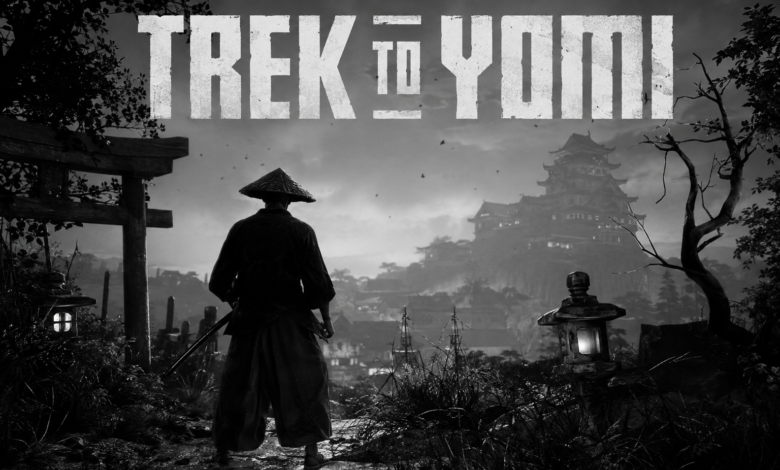
Trek to Yomi is one of those games that immediately stands out because of its atmosphere. Instead of relying only on fast combat or massive open-world exploration, the game focuses on storytelling, samurai culture, cinematic presentation, and a deeply emotional journey. Developed by Leonard Menchiari and Flying Wild Hog and published by Devolver Digital, X takes players into a dramatic version of feudal Japan.
From the first few minutes, the game feels more like an interactive samurai film than a conventional action game. Its black-and-white visual style, dramatic camera angles, traditional Japanese environments, and carefully designed soundscape create a distinctive identity. Every village, temple, battlefield, and forest seems designed to support the story rather than simply provide another place to fight enemies.
The central character is Hiroki, a young samurai who grows from an inexperienced warrior into a man burdened by responsibility, loss, and difficult choices. His journey is not simply about becoming stronger with a sword. It is about understanding duty, confronting grief, and deciding what kind of person he wants to become.
For players who enjoy historical settings, cinematic games, samurai stories, and atmospheric adventures, Trek to Yomi offers an experience that is easy to appreciate. It may not be the longest action game available, but its focused design helps keep the story moving without unnecessary distractions.
What Is Trek to Yomi?
Trek to Yomi is a side-scrolling action-adventure game inspired heavily by classic Japanese cinema. The game follows Hiroki, a young warrior who is trained under the guidance of his village’s samurai protector. As the story progresses, Hiroki faces violence, political conflict, personal tragedy, and supernatural forces.
The title itself refers to Yomi, the realm of the dead in Japanese mythology. This becomes particularly important as the narrative develops because the game gradually moves beyond a straightforward samurai revenge story. The boundary between the living world and the afterlife becomes part of Hiroki’s journey.
One of the most interesting aspects of Trek to Yomi is the way it combines historical inspiration with mythology. The game does not attempt to function as a strict historical simulation. Instead, it creates a stylized interpretation of feudal Japan where realistic villages and warriors can exist alongside supernatural elements.
The result is a compact adventure with a strong cinematic personality. Rather than giving players hundreds of side quests, enormous maps, and endless collectibles, Trek to Yomi concentrates on its central story and atmosphere.
The Story and Journey of Hiroki
Hiroki begins his journey as a young boy who is learning the responsibilities of a samurai. His early experiences establish the importance of protecting his village and caring for the people around him. These moments are crucial because they provide the emotional foundation for everything that follows.
As Hiroki grows older, his peaceful life is eventually disrupted by violence. The village comes under attack, forcing him to confront enemies and circumstances far beyond what he originally expected. This event changes Hiroki permanently and pushes him toward a path filled with difficult decisions.
The story gradually becomes more personal. Hiroki is not simply fighting because someone ordered him to do so. His actions are shaped by memories, loyalty, grief, and his understanding of honor. This makes the character more interesting because his motivations develop alongside the events of the game.
The journey also introduces questions about life, death, responsibility, and sacrifice. As Hiroki gets closer to Yomi, the story becomes increasingly supernatural. The transition gives the game a different emotional tone while maintaining its central samurai theme.
Trek to Yomi’s Unique Visual Style
The visual presentation is arguably one of Trek to Yomi’s biggest strengths. The developers chose a black-and-white cinematic style that immediately separates the game from most modern action titles. Instead of bright colors and elaborate visual effects, the game uses shadows, contrast, silhouettes, and carefully composed environments.
The visual direction is strongly influenced by classic Japanese samurai cinema. Many scenes look as though they could have been taken from an old black-and-white film. The camera frequently creates dramatic compositions around Hiroki and his enemies, making even relatively simple environments feel cinematic.
The monochrome presentation also works surprisingly well for the game’s darker themes. Villages, forests, temples, battlefields, and supernatural locations all benefit from the restricted color palette. Fog and lighting become especially important because they create depth without relying on bright colors.
This artistic choice could have become a gimmick, but it works because the entire game is designed around it. The environments, animations, lighting, and camera work all contribute to the same visual identity.
Combat System and Swordplay
Trek to Yomi uses a straightforward sword-based combat system. Hiroki relies on his katana to attack enemies, block incoming strikes, dodge attacks, and create openings. The controls are relatively easy to understand, which makes the combat accessible even for players who do not normally play difficult action games.
Timing is more important than simply pressing the attack button repeatedly. Enemies can block attacks and punish careless movements, so players need to observe their opponents. Learning when to attack, defend, and dodge can make encounters much smoother.
Different enemies require slightly different approaches. Some opponents rely on swords, while others use spears, ranged weapons, or more unusual abilities. As the game progresses, enemy encounters become more demanding and require better awareness.
The combat is not as mechanically deep as some dedicated action games, but that is not necessarily a weakness. Trek to Yomi is designed around its cinematic experience. The combat supports the story rather than becoming the entire reason to play.
Exploration and Collectibles
Although Trek to Yomi is primarily a linear adventure, exploration still plays a meaningful role. Players can occasionally move away from the main path to discover hidden areas, resources, upgrades, and collectibles.
Exploration encourages players to slow down and examine their surroundings. A seemingly ordinary path may contain a small side area with useful supplies or an item that provides additional context about the game’s world.
Collectibles also reward curious players. Finding everything is not required to complete the main story, but exploring can make the experience feel more rewarding. It gives players an incentive to look beyond the obvious route.
The limited exploration also helps preserve the game’s pacing. There is no enormous map filled with repetitive activities. Instead, the developers keep the journey focused while giving players occasional opportunities to investigate their surroundings.
Japanese Mythology and the World of Yomi
One of the most fascinating elements of Trek to Yomi is its use of Japanese mythology. The concept of Yomi gives the story a supernatural dimension that becomes increasingly important as Hiroki’s journey continues.
In Japanese mythology, Yomi is associated with the land of the dead. The game’s interpretation uses this concept to explore themes of mortality and the consequences of human choices. It gives the later sections of the adventure a dreamlike and unsettling quality.
The supernatural environments contrast nicely with the game’s more grounded villages and battlefields. Players gradually feel that Hiroki is moving away from the ordinary world and toward something much more mysterious.
This combination of samurai drama and mythology gives Trek to Yomi an identity that goes beyond a simple revenge story. The supernatural material also helps the developers explore ideas that would be difficult to represent through historical realism alone.
Sound, Music, and Atmosphere
Visuals are only part of Trek to Yomi’s atmosphere. Sound design and music play an equally important role in creating the game’s emotional tone.
Sword clashes, footsteps, environmental sounds, distant voices, and other effects make the world feel alive. Combat sounds are especially important because they give sword strikes a sense of weight and impact.
The music complements the cinematic presentation without constantly demanding attention. Instead, it often works quietly in the background, allowing important scenes and environmental sounds to carry the emotional weight.
The combination of monochrome visuals, traditional Japanese influences, atmospheric sound, and cinematic camera work makes the game remarkably immersive. Even when the gameplay itself is relatively simple, the presentation can make an ordinary walk through an environment feel significant.
Characters, Honor, and Personal Conflict
Hiroki is at the center of Trek to Yomi, but the supporting characters are important because they influence his understanding of duty and responsibility. His relationships help explain why protecting others matters so much to him.
The idea of honor appears throughout the story, but the game does not treat it as a simple concept. Hiroki repeatedly faces situations where doing what seems morally right may come with painful consequences.
This creates a more mature interpretation of the samurai archetype. Being a warrior is not presented simply as being strong or skilled with a sword. Hiroki has to deal with fear, grief, loyalty, and the consequences of his decisions.
The emotional conflicts also help prevent the story from becoming a collection of action scenes. The battles matter because of what they represent to Hiroki and the people connected to his journey.
Difficulty and Gameplay Experience
Trek to Yomi offers several difficulty options, allowing players to choose an experience that matches their preferences. Players who mainly want to enjoy the story and atmosphere can select a more accessible setting, while those looking for greater combat pressure can choose a tougher challenge.
The difficulty becomes particularly noticeable when facing groups of enemies. Positioning matters because Hiroki can become vulnerable if opponents surround him. Blocking and dodging at the correct time can make a major difference.
Resource management also adds another layer to the experience. Players need to pay attention to health and other useful resources while moving through dangerous areas. Careless fighting can make later encounters more difficult.
Overall, the gameplay is best suited to people who enjoy a focused action adventure rather than a complex combat simulator. The game keeps its mechanics understandable so that players can concentrate on the story and atmosphere.
How Long Is Trek to Yomi?
Trek to Yomi is relatively short compared with large modern action-adventure games. That can actually be an advantage for players who prefer experiences that respect their time.
A typical playthrough can be completed within several hours, depending on difficulty, exploration, and how thoroughly the player searches for collectibles. Completionists can spend additional time revisiting areas or looking for everything they missed.
The shorter length also means the game rarely feels overloaded. There are no massive skill trees demanding dozens of hours of grinding, and there is no huge open world filled with repetitive objectives.
For players who have limited free time, Trek to Yomi can be an attractive choice. It provides a complete narrative experience without requiring a month-long commitment.
Is Trek to Yomi Worth Playing?
Whether Trek to Yomi is worth playing depends largely on what you expect from a game. If you want a massive open world with hundreds of activities, this probably is not the right choice.
However, if you enjoy cinematic storytelling, samurai themes, Japanese mythology, atmospheric environments, and focused action gameplay, Trek to Yomi has plenty to offer.
Its greatest strength is the way all of its elements work together. The black-and-white presentation supports the samurai-film inspiration. The music strengthens the atmosphere. The combat reinforces Hiroki’s identity as a warrior, while the mythology expands the story beyond ordinary historical fiction.
The experience is especially appealing to players who value presentation and narrative. Even though some gameplay systems are relatively simple, the overall package feels carefully designed and purposeful.
Trek to Yomi for Samurai Game Fans
Fans of samurai games have many choices, ranging from historically inspired adventures to fantasy-heavy action titles. Trek to Yomi takes a different route by delivering a compact, cinematic experience.
Rather than focusing entirely on open-world exploration or extremely technical swordplay, the game prioritizes mood and storytelling. This makes it feel closer to an interactive samurai movie than a traditional role-playing game.
The black-and-white visual design is also a major selling point. Players who appreciate classic cinema will likely recognize the influence behind the presentation, while newcomers may simply appreciate how distinctive the game looks.
For someone searching for a samurai game that can be completed relatively quickly, Trek to Yomi is an interesting option. It offers enough action to remain engaging while keeping the story at the center of the experience.
Final Thoughts on Trek to Yomi
Trek to Yomi succeeds because it knows exactly what kind of experience it wants to provide. It does not attempt to compete with enormous open-world games or highly complex combat titles. Instead, it delivers a focused samurai adventure built around atmosphere, storytelling, and cinematic presentation.
Hiroki’s journey combines personal tragedy, warrior traditions, revenge, responsibility, and supernatural mythology. The story becomes more interesting as it moves between the world of the living and the mysterious realm of Yomi.
The black-and-white visuals remain one of the game’s most memorable features. Combined with Japanese-inspired environments, dramatic camera work, atmospheric music, and sword-based combat, they create a distinctive identity that is difficult to confuse with another game.
Ultimately, Trek to Yomi is best viewed as a short but memorable adventure. It may not provide hundreds of hours of content, but it does not need to. Its strength comes from delivering a carefully crafted journey with a clear artistic vision.
For players looking for an atmospheric samurai story with a cinematic feel, Trek to Yomi is absolutely worth considering. It is a stylish, emotional, and unusual adventure that demonstrates how strong art direction and focused storytelling can make a relatively compact game stand out.