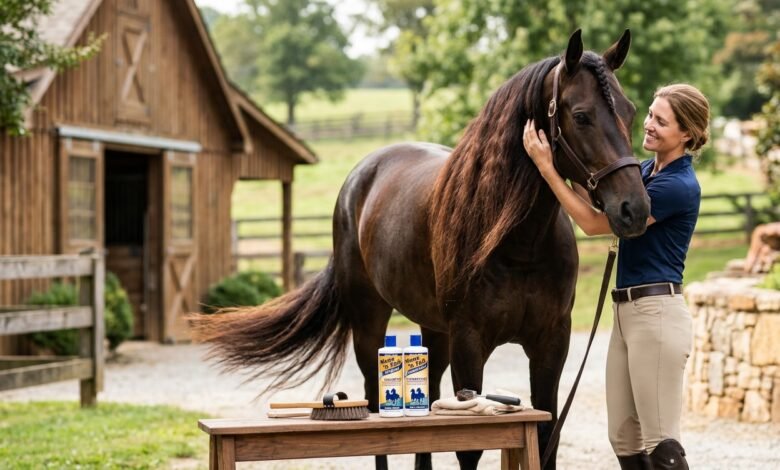
Introduction to Mane and Tail Shampoo
Mane and Tail shampoo has become a popular choice among people looking for a simple way to keep their hair clean, soft, and manageable. Originally developed for horses, the product gained attention in the human hair-care market because of its cleansing properties and reputation for helping hair feel smoother and easier to style. Today, many people consider it an alternative to conventional shampoos, particularly when they want a thorough cleanse without an overly complicated hair-care routine.
The name Mane ’n Tail is closely associated with shampoos and conditioners designed to clean hair and improve its overall appearance. The brand’s original equine products were created for horses’ manes and tails, which require regular washing and grooming to remain manageable. Over time, people began using certain products from the range on their own hair, helping the brand develop a wider audience beyond the equestrian community.
One reason for its popularity is its straightforward approach to hair care. Rather than promising an elaborate salon treatment, Mane and Tail shampoo focuses on cleansing the scalp and removing the dirt, sweat, and product residue that can build up throughout the day. Clean hair is generally easier to comb, style, and maintain, especially when shampoo is paired with a suitable conditioner.
However, popularity does not automatically mean that a shampoo works equally well for everyone. Hair texture, scalp condition, washing habits, and the ingredients in a particular formula can all influence the results. A shampoo that leaves one person’s hair feeling silky may make another person’s hair feel dry or heavy.
It is also important to distinguish between improving hair’s appearance and changing its biological growth rate. A shampoo can help reduce tangling and breakage when it suits your hair, but that does not necessarily mean it makes hair grow faster or creates new hair follicles. Understanding this difference helps you set realistic expectations before purchasing a product.
In this guide, we will explore what Mane and Tail shampoo is, how it works, its potential benefits, possible drawbacks, and the best ways to use it. Whether you have long, short, curly, straight, thick, or fine hair, learning about the product can help you decide whether it belongs in your regular hair-care routine.
What Is Mane and Tail Shampoo?
Mane and Tail shampoo is a cleansing product associated with the Mane and Tail Shampoo brand, which originally developed grooming products for horses. Horses often need regular Mane and Tail Shampoo care because their hair can collect dust, dirt, sweat, and environmental debris. The original products were intended to support this grooming process by helping clean the hair and make it easier to manage.
As interest in the products expanded, some people began using the human-market versions as part of their personal grooming routines. The brand subsequently became familiar to shoppers looking for alternatives to more traditional shampoos. Its reputation has been supported largely by consumer experiences, word of mouth, and interest in the unusual origins of the product.
The shampoo is designed to remove excess oil, dirt, and everyday buildup from the hair and scalp. Depending on the specific formula, it may also contain conditioning ingredients intended to improve softness and manageability. The exact formulation matters, so it is always wise to check the packaging rather than assuming that every product carrying the Mane ’n Tail name contains identical ingredients.
Some versions are marketed specifically for human use, while others are formulated for horses. These products should not automatically be treated as interchangeable. If you intend to use the shampoo on your own hair, choose a product clearly labeled for human use and follow the manufacturer’s directions.
Another important consideration is that shampoo primarily performs a cleansing function. It helps remove unwanted substances from the scalp and hair, but it is not a substitute for medical treatment when hair loss, persistent itching, inflammation, or another scalp problem has an underlying cause.
Ultimately, Mane and Tail shampoo is best understood as a hair-cleansing option rather than a miracle growth treatment. It may suit certain hair types and routines, but its value depends on the particular formula, your scalp’s needs, and how your hair responds to regular use.
How Does Mane and Tail Shampoo Work?
The main purpose of Mane and Tail shampoo is to clean the hair and scalp. During the day, the scalp naturally produces sebum, an oily substance that helps protect the skin and hair. Sweat, environmental particles, styling products, and dead skin cells can also accumulate, making regular cleansing useful for many people.
Shampoo contains cleansing agents called surfactants. These ingredients help loosen oil and dirt so that water can rinse them away. The type and concentration of surfactants influence how effectively a shampoo cleans, how much foam it produces, and how the hair feels after washing.
When you apply shampoo to wet hair, the formula spreads across the scalp and hair strands. Gentle massage helps distribute the product and loosen buildup. Rinsing then carries away the shampoo along with the dirt and excess oil it has helped remove.
The cleansing process can make hair appear fresher and feel lighter, especially when it has become greasy or coated with styling products. Removing excess buildup may also help hair look more voluminous because the strands are no longer weighed down by oil and residue.
Conditioning ingredients, when included in a particular formula, can improve the feel of the hair after cleansing. They may help reduce friction between strands, making detangling easier and reducing the force needed during brushing. This can be especially useful for long hair that tends to knot easily.
Still, the result depends on the formula and the individual. A strong cleanser may work well for someone with an oily scalp but leave dry or chemically treated hair feeling rough. Someone with sensitive skin may also react to fragrance or other ingredients. The best approach is to choose a product suited to your needs and monitor how your scalp and hair respond over time.
Key Benefits of Mane and Tail Shampoo
One potential benefit of Mane and Tail shampoo is its ability to remove everyday dirt and excess oil. When your hair feels greasy or looks dull because of accumulated residue, an effective shampoo can help restore a cleaner appearance. This is useful for people who exercise regularly, spend time outdoors, or use styling products frequently.
Another possible advantage is improved manageability. When a shampoo cleanses effectively and works well with your hair type, your strands may feel easier to comb and style. If you follow it with a suitable conditioner, you may also notice less tangling and a smoother finish.
The product may appeal to people who prefer a straightforward hair-care routine. You do not necessarily need a large collection of specialized products to maintain healthy-looking hair. For many people, a suitable shampoo, a conditioner when needed, and gentle handling provide a practical starting point.
Some users report that their hair feels fuller after using Mane and Tail Shampoo products. This experience may result from removing oil and residue that weigh the hair down. However, a fuller appearance is not the same as an increase in the number of hair strands or a measurable improvement in hair growth.
A further benefit may be convenience. If a particular formula cleans your scalp comfortably and leaves your hair manageable, it can become a useful everyday or occasional cleansing option. The right washing frequency depends on your scalp, lifestyle, hair texture, and the product’s instructions rather than a universal schedule.
Finally, the brand’s popularity gives shoppers a recognizable option to investigate when comparing hair-care products. Even so, the most useful comparison is not between famous names alone. Consider the ingredient list, price, bottle size, intended use, and your own results before deciding whether Mane and Tail shampoo offers good value.
Does Mane and Tail Shampoo Help Hair Grow Faster?
Hair growth is one of the most common reasons people become interested in Mane and Tail shampoo. Many shoppers hope that using a different shampoo will help them grow longer, thicker hair. Although a good cleansing routine supports scalp care, it is important to understand what shampoo can realistically accomplish.
Hair grows from follicles located beneath the skin. The rate of growth is influenced by factors such as genetics, age, hormones, nutrition, general health, and the natural hair-growth cycle. A cleansing product generally works on the scalp’s surface and the hair shaft, so it cannot be assumed to change these underlying biological processes.
A shampoo may nevertheless help you retain more of the length you grow. When hair becomes tangled, dry, or fragile, brushing and styling can cause breakage. A suitable shampoo, combined with conditioning and gentle handling, may make strands easier to manage and reduce avoidable mechanical damage.
For example, imagine two people whose hair grows at a similar natural rate. One regularly detangles wet hair aggressively and uses excessive heat, while the other handles hair gently and limits damaging styling practices. The second person may retain more length over time, even though the shampoo itself has not accelerated follicle growth.
There is no strong reason to assume that Mane and Tail shampoo will produce faster growth simply because it was originally designed for horses. Claims about dramatic increases in hair length, density, or growth speed should be treated cautiously unless supported by reliable clinical evidence for the specific formula and intended use.
If you are experiencing sudden shedding, visible thinning, bald patches, or ongoing hair loss, changing shampoos may not address the underlying problem. A dermatologist can help identify possible causes, including scalp conditions, nutritional deficiencies, hormonal changes, or other medical factors. Early evaluation can be particularly helpful when hair loss is persistent or progressing.
Mane and Tail Shampoo for Different Hair Types
Choosing a shampoo based on your hair type can make a noticeable difference in comfort and results. Mane and Tail Shampoo products may suit some people well, but there is no single formula that works perfectly for every texture. Your scalp’s oil production, hair’s porosity, and history of chemical treatment are all worth considering.
For oily hair, a shampoo that removes excess sebum can be helpful. If your roots become greasy quickly, a thorough but comfortable cleanse may leave your hair feeling fresher. Pay attention to how your scalp feels after washing, because excessive dryness or irritation can be a sign that the formula is not suitable for you.
For dry hair, cleansing strength becomes especially important. Dry hair can be more prone to roughness and breakage, so a shampoo that leaves it feeling stripped may not be the best choice. Consider a gentler formula and apply conditioner mainly to the mid-lengths and ends to improve softness and reduce tangling.
For curly and coily hair, natural oils often have difficulty traveling along the bends and curves of each strand. As a result, these textures can be more susceptible to dryness. If a Mane and Tail Shampoo formula leaves your curls rough or less defined, consider a moisturizing shampoo designed for curly hair instead, followed by a suitable conditioner.
For fine hair, product weight matters. Heavy residue or rich conditioning ingredients may make fine strands look flat, while a compatible cleansing formula can help preserve volume. Start with a modest amount of shampoo and rinse thoroughly rather than assuming that using more product will deliver better results.
For thick or long hair, detangling may be a major concern. Thoroughly wetting the hair before shampooing, concentrating cleansing on the scalp, and using conditioner afterward can help reduce knots. Work gently through the lengths rather than piling the hair on top of your head and rubbing it aggressively.
For color-treated, bleached, or chemically processed hair, a shampoo specifically formulated for treated hair may be a safer starting point. These strands can be more vulnerable to dryness, and some cleansing formulas may affect color longevity or leave damaged hair feeling rough. Check the product’s labeling and discontinue use if you notice an undesirable change in texture, color, or scalp comfort.
Ingredients to Check Before Buying Mane and Tail Shampoo
Reading the ingredient list is one of the simplest ways to make a more informed hair-care decision. Product names and advertising can create expectations, but the ingredients reveal more about how a particular formula is designed to work. Because formulations can vary, check the exact bottle you intend to purchase.
Start by looking at the cleansing agents. Surfactants are responsible for loosening oil and dirt so that they can be rinsed away. Different surfactants have different cleansing characteristics, and their overall effect depends on the formulation. If your scalp is sensitive or your hair is very dry, consider whether the product is described as gentle and how your hair responds after washing.
Next, examine any conditioning ingredients. Depending on the formula, these may help improve slip, softness, and manageability. Conditioning agents can reduce friction between hair strands, making it easier to detangle the hair without excessive pulling. They do not repair every form of structural damage, but they can improve how damaged or dry hair feels.
Fragrance is another ingredient category worth considering. A pleasant scent can make washing more enjoyable, but fragrance can irritate some people, particularly those with sensitive skin or a history of contact allergies. If you frequently experience itching or redness after using scented products, a fragrance-free alternative may be worth exploring.
Preservatives and other supporting ingredients also play a role in shampoo formulation. Preservatives help protect water-containing products against microbial contamination during normal use. Their presence should not automatically be treated as a warning sign; instead, consider the complete formulation, product labeling, and any known sensitivities you may have.
Finally, pay attention to warnings and intended-use instructions. A bottle labeled for horses should not automatically be used as a human shampoo. Choose a formula explicitly intended for people, follow its directions, and avoid contact with the eyes. If an ingredient list is unavailable or the packaging is unclear, select a product with more transparent labeling rather than guessing about its suitability.
How to Use Mane and Tail Shampoo Correctly
Using shampoo correctly can improve your results without requiring an expensive or complicated routine. Begin by thoroughly wetting your hair with lukewarm water. This helps distribute the shampoo evenly and allows it to spread across the scalp without needing excessive product.
Apply a modest amount of shampoo to your hands, following the directions on the bottle. The amount you need depends on your hair’s length, thickness, and level of buildup. Using more shampoo than necessary does not automatically produce cleaner hair, and excessive product can be difficult to rinse out completely.
Massage the shampoo gently into your scalp with your fingertips. Avoid scratching with your fingernails, since this can irritate the skin. Concentrating on the scalp is generally more useful than aggressively scrubbing the full length of your hair, because the scalp is where most oil and everyday buildup accumulate.
Rinse thoroughly with lukewarm water. Leftover shampoo may contribute to an uncomfortable scalp or an unpleasant hair texture. If your hair contains a substantial amount of styling product or feels particularly dirty, a second wash may occasionally help, provided the product instructions permit it and your scalp tolerates it.
After cleansing, apply conditioner if your hair needs additional softness or detangling support. Focus on the mid-lengths and ends, particularly if your roots become oily quickly. Leave the conditioner on for the recommended time and rinse according to its instructions.
Finish by gently squeezing excess water from your hair with a soft towel. Avoid vigorous rubbing, which can increase friction and contribute to breakage. Use a wide-tooth comb when appropriate, start detangling from the ends, and allow your hair to air-dry when practical. These simple habits can help you maintain manageable hair regardless of which suitable shampoo you choose.
Possible Side Effects and Disadvantages
Although many people use shampoo without problems, no hair-care product is suitable for everyone. Mane and Tail Shampoo may cause dryness, irritation, or an undesirable texture in some users, depending on the formula and individual sensitivity. Paying attention to your scalp’s response is more useful than relying entirely on other people’s reviews.
Dryness is one possible disadvantage. If the cleansing agents remove more oil than your hair needs, the strands may feel rough, tangled, or difficult to style. This can be particularly noticeable in curly, bleached, chemically treated, or naturally dry hair. Switching to a gentler shampoo and using an appropriate conditioner may help.
Scalp irritation is another concern. Some people react to fragrance, preservatives, or other ingredients in hair-care products. Symptoms may include itching, redness, burning, or a rash. Stop using the product if these symptoms develop, and seek medical advice if the reaction is severe, persistent, or accompanied by swelling.
The product may also fail to deliver the results you expect. For example, someone buying shampoo primarily to treat thinning hair may be disappointed if the only noticeable change is improved cleanliness. Shampoo can support routine scalp care, but it should not be presented as a proven treatment for every cause of hair loss.
Another disadvantage is that the experience can vary according to hair texture and washing habits. A formula that works well for an oily scalp may not provide enough conditioning for someone with very dry hair. This is why comparing ingredients and intended uses can be more helpful than assuming that a popular product is universally effective.
Finally, using a product intended for horses on human hair introduces an avoidable uncertainty. Equine grooming products are formulated for their stated purpose, and their suitability for human skin should not be assumed. For personal hair care, select a version labeled for human use and follow the manufacturer’s directions.
Mane and Tail Shampoo vs. Regular Human Shampoo
One major difference between Mane and Tail Shampoo and conventional human shampoos is the product’s history and positioning. Mane ’n Tail became well known through its equine grooming origins, whereas many mainstream shampoos are developed specifically for human hair and scalp needs. However, the brand’s history alone does not determine whether a formula is better or worse.
Regular human shampoos are available in many specialized formulations. You can find products designed for oily scalps, dry hair, dandruff, color-treated hair, curls, fine strands, and sensitive skin. This variety can make it easier to select a product that matches a particular concern, although marketing claims still need to be evaluated carefully.
Mane and Tail Shampoo products may appeal to consumers who like their cleansing performance or find that their hair feels manageable after use. However, individual experiences are not proof that the product outperforms other shampoos. Comparisons should consider ingredients, cleansing strength, conditioning effects, cost per use, and suitability for the user’s scalp.
Another factor is the difference between shampoo and treatment products. A cosmetic shampoo is mainly designed to cleanse hair and improve its appearance or feel. If your primary concern is dandruff, persistent inflammation, or significant shedding, a targeted product or professional assessment may be more appropriate than simply changing to another general-purpose shampoo.
Price is also worth considering. A shampoo that appears inexpensive may not offer the best value if you need additional products to manage dryness or tangling. Conversely, a reasonably priced shampoo that suits your scalp may be a practical choice even if it does not promise specialized results.
Ultimately, neither Mane and Tail Shampoo nor a conventional human shampoo is automatically the best option for everyone. Choose a product intended for human use, compare the ingredients, and judge its performance by how comfortably it cleans your scalp and how well it suits your hair.
Who Should Consider Using Mane and Tail Shampoo?
People who want a straightforward cleansing product may consider a human-use Mane and Tail Shampoo formula if its ingredients and instructions suit their needs. Someone with a scalp that tolerates the product well and hair that remains manageable afterward may find it a reasonable option within a basic routine.
Individuals with oily hair may also be interested in trying it if they need effective removal of excess sebum and everyday residue. However, the shampoo should leave the scalp comfortable rather than excessively dry or tight. If frequent washing causes irritation, a gentler alternative may be more suitable.
People with long hair that tangles easily should consider the entire routine rather than shampoo alone. A suitable conditioner, gentle detangling, and reduced heat exposure can make a meaningful difference in managing knots. If a shampoo consistently leaves the lengths rough, switching formulas may be more useful than continuing to use it in the hope that the results will improve.
Those with curly, coily, bleached, or damaged hair should be especially attentive to moisture and breakage. A product that cleans well but leaves the hair difficult to detangle may not be the best fit. A shampoo designed for these hair types could provide a better balance between cleansing and conditioning.
People with sensitive skin should review the ingredient list and be cautious when introducing any new product. A small-area test may help identify an immediate reaction, although it cannot guarantee that irritation or an allergy will not develop later. If you have a known ingredient allergy, avoid products containing that ingredient.
Finally, anyone experiencing significant hair loss should avoid treating shampoo as the entire solution. A change in hair density can have many causes, and the appropriate response depends on the underlying issue. A healthcare professional or dermatologist can help determine whether further investigation or treatment is needed.
Frequently Asked Questions About Mane and Tail Shampoo
Is Mane and Tail shampoo safe for human hair?
A product explicitly labeled for human use can be considered according to its instructions and ingredient list. Do not assume that a formula intended for horses is interchangeable with a human shampoo. Stop using the product if it causes irritation or an uncomfortable change in hair texture.
Does Mane and Tail shampoo make hair grow faster?
There is insufficient evidence to conclude that Mane and Tail shampoo makes human hair grow faster. It may help keep hair clean and manageable, and a suitable routine can reduce avoidable breakage. Those benefits should not be confused with an increased rate of follicle growth.
Can I use Mane and Tail shampoo every day?
That depends on the particular formula, your scalp, and your hair type. Some people with oily scalps prefer frequent washing, while others need less frequent cleansing. Follow the product directions and adjust your routine if you notice dryness, irritation, or excessive tangling.
Is Mane and Tail shampoo suitable for curly hair?
It may work for some people with curly hair, but results depend on the formula and the individual’s needs. Curly hair can be prone to dryness, so choose a shampoo that cleans without leaving your strands rough. Conditioner and gentle detangling are also important.
Does Mane and Tail shampoo make hair thicker?
The shampoo may help hair look fuller if it removes oil and residue that weigh down the strands. However, that cosmetic effect does not demonstrate an increase in hair density or strand diameter. Persistent thinning should be assessed separately.
Should I use conditioner after Mane and Tail shampoo?
Conditioner can be helpful if your hair becomes tangled, dry, or difficult to comb after washing. Apply it according to the label, usually concentrating on the lengths and ends. The best routine depends on your hair texture and how it responds to the shampoo.
Can Mane and Tail shampoo cause hair loss?
There is no basis for assuming that every user will experience hair loss from the product. However, irritation or an allergic reaction may affect scalp comfort, and excessive dryness or rough handling can contribute to breakage. Discontinue use if you notice a concerning reaction, and consult a dermatologist if shedding persists.
How long does it take to see results?
You may notice a difference in cleanliness and manageability after the first wash. Longer-term outcomes depend on your hair-care routine, scalp condition, and whether the product suits you. Claims of rapid growth or dramatic increases in thickness should be approached cautiously.
Final Thoughts on Mane and Tail Shampoo
Mane and Tail shampoo is an interesting option in the hair-care market because of its equine grooming origins and its subsequent popularity among human consumers. For people who choose a formula intended for human use, it may provide effective cleansing and help hair feel manageable. However, its suitability depends on the individual formula and the needs of your scalp and hair.
The most important thing to remember is that clean, healthy-looking hair does not necessarily require an expensive routine or a widely promoted product. Choosing an appropriate shampoo, conditioning when necessary, rinsing thoroughly, and handling your hair gently can all support better hair care.
It is equally important to keep expectations realistic. Mane and Tail shampoo should not be treated as a proven hair-growth treatment, a guaranteed solution for thinning, or a replacement for professional care when scalp problems arise. Hair growth is influenced by biological factors that ordinary cleansing products do not necessarily change.
Before buying, check the intended use, ingredient list, directions, and any relevant warnings. Start with a sensible routine and pay attention to how your hair and scalp respond. If you experience persistent irritation or unexplained shedding, seek professional advice instead of continuing to experiment with shampoos.
Ultimately, the best shampoo is the one that cleans your scalp effectively, suits your hair type, and leaves your hair comfortable without unwanted side effects. Mane and Tail shampoo may be worth considering for some people, but a thoughtful comparison with other human hair-care products will help you make a decision based on your actual needs rather than hype alone.