Kendamil Organic: A Complete Guide to Ingredients, Benefits, Stages, and What Parents Should Know

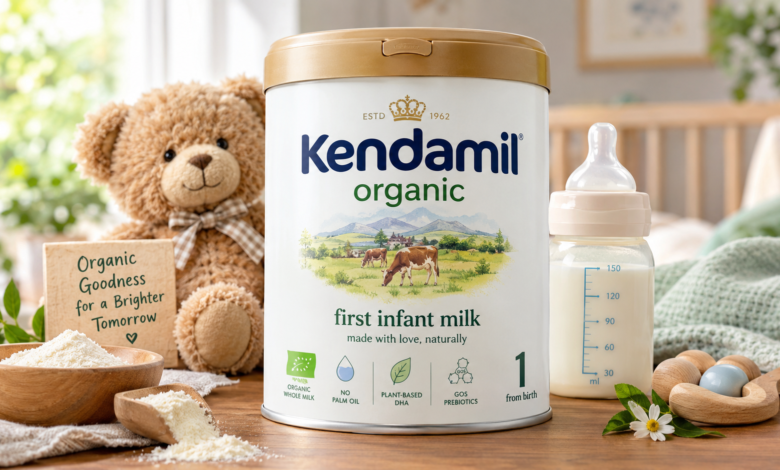
Kendamil Organic has become a familiar name among parents looking for organic infant formula with a different approach to traditional formula recipes. The brand focuses heavily on whole milk, organic ingredients, and a formula that avoids palm oil, fish oil, and soya. Its products are made in Europe, with the UK range using organic milk from British family farms.
But what actually makes Kendamil Organic different? Is it suitable for every baby? What ingredients does it contain, and how does its organic formula fit into a baby’s feeding routine? These are sensible questions because choosing infant formula is not simply about picking the product with the most attractive label.
In this guide, we will take a closer look at Kendamil Organic, including its ingredients, whole-milk recipe, organic certification, different stages, nutritional features, practical considerations, and important things parents should check before making a feeding decision.
What Is Kendamil Organic?
Kendamil Organic is a range of organic infant and follow-on formulas produced by Kendamil. The company describes itself as a family-owned European manufacturer with more than 60 years of experience in infant nutrition. Its recipes are developed in the Lake District, and the UK Organic First Infant Milk is certified organic by the Soil Association.
One of the most noticeable features of the range is its use of organic whole milk. Rather than relying entirely on vegetable oils for its fat blend, Kendamil uses whole milk as a major source of fat. The company says this also naturally provides milk fat globule membrane, commonly known as MFGM.
The organic range is designed to provide the nutrients babies need from infant formula while following organic production standards. Depending on the specific product and market, the recipe can contain ingredients such as organic whole milk, whey, skimmed milk, vegetable oils, lactose, GOS, vitamins, minerals, DHA, ARA, and other nutrients.
It is worth remembering that “organic” does not automatically mean that a formula is medically better for every baby. Organic certification primarily concerns how agricultural ingredients are produced and processed under relevant standards. Your baby’s individual nutritional and medical needs are a separate consideration.
The Whole-Milk Difference in Kendamil Organic
Whole milk is arguably the feature most closely associated with Kendamil’s formula philosophy. The brand uses organic whole milk as a major ingredient and source of fat. This gives the formula a naturally creamy composition and reduces the amount of added vegetable oil needed in the recipe.
Kendamil also highlights naturally occurring MFGM, or Milk Fat Globule Membrane, which is associated with the fat structure of milk. MFGM is a complex membrane surrounding milk fat droplets, and it is naturally present in dairy milk. Kendamil’s use of whole milk means the ingredient can be retained naturally within the formula’s milk-based formulation.
The formula does not depend exclusively on milk fat, however. Infant formula needs particular fatty acids in appropriate amounts, so Kendamil also uses vegetable oils. The Organic First Infant Milk ingredient list includes organic sunflower, coconut, and rapeseed oils. These provide essential fatty acids that complement the naturally occurring milk fats.
This is an important distinction when reading the label. A whole-milk formula is not the same thing as simply giving a baby ordinary cow’s milk. Infant formula is specifically formulated to meet regulated nutritional requirements, while ordinary cow’s milk is not suitable as the main drink for young infants.
What Ingredients Are in Kendamil Organic?
The exact ingredient list depends on the product and country, but Kendamil Organic First Infant Milk includes several major components. The UK product lists organic whole milk, organic demineralised milk whey, organic skimmed milk, organic vegetable oils, and organic galacto-oligosaccharides among its ingredients.
Lactose is another important component in the formula. In the UK Organic First Infant Milk formulation, lactose is listed alongside milk-derived ingredients, while the brand’s broader product information describes lactose as the primary carbohydrate source. Carbohydrates provide energy, which is particularly important during the rapid growth of infancy.
The recipe also contains vitamins and minerals, including iron, calcium, zinc, iodine, vitamin D, vitamin C, vitamin A, vitamin K, and several B vitamins. These nutrients are added in carefully controlled amounts because infant formula is designed to provide nutritionally complete feeding when used as directed.
Kendamil Organic also includes GOS, or galacto-oligosaccharides. GOS is a type of prebiotic ingredient used in infant formula. Some versions of the formula also include DHA and ARA, fatty acids commonly included in modern infant formulas. Because formulas can be reformulated, parents should always check the ingredient panel on the actual container they have purchased.
Why Does Kendamil Organic Avoid Palm Oil?
One of Kendamil’s most frequently mentioned features is its no-palm-oil formulation. The company states that it has never used palm oil in its formulas. Instead, its recipes use ingredients such as whole milk, sunflower oil, coconut oil, and rapeseed oil to provide the required fat profile.
The brand has two main arguments behind this approach. First, whole milk supplies naturally occurring milk fat, meaning the recipe does not have to depend as heavily on added vegetable oils. Second, Kendamil has expressed concerns about the environmental impact of palm oil and has chosen not to include it in its formulas.
However, parents should avoid treating the absence of palm oil as proof that one formula is universally healthier than another. Infant formulas sold legally in regulated markets must meet nutritional standards, and different manufacturers can use different combinations of fats to achieve an appropriate nutritional profile.
The practical point is simpler: if avoiding palm oil is important to your family, Kendamil Organic provides an option that aligns with that preference. The company’s official ingredient information confirms that its Organic range does not use palm oil.
Kendamil Organic and Plant-Based DHA
DHA is another interesting part of Kendamil’s formula. DHA, or docosahexaenoic acid, is a long-chain omega-3 fatty acid that is commonly included in infant formula because of its role in normal development.
Kendamil says it sources its DHA from sustainably farmed marine algae rather than fish oil. This approach allows the formula to provide DHA without using fish oil as the source. The brand also connects this choice with its vegetarian-friendly formulation.
The ingredient list for Kendamil Organic includes oil from Schizochytrium microalgae in several formulations. This is the source used for DHA in those recipes. Some market-specific versions may display the ingredient and nutritional information differently, so checking the package remains important.
This also explains why Kendamil describes its formula as vegetarian friendly. The brand states that it avoids fish oil and animal rennet, although parents should still check the certification and labeling of the exact product they are purchasing, particularly when buying from an international retailer.
Kendamil Organic Stages Explained
Kendamil Organic products are available in different stages designed for different points in a baby’s feeding journey. The Organic First Infant Milk is the Stage 1 product in the UK range and is described by Kendamil as suitable from birth.
The next product is Organic Follow-On Milk, which is intended for babies from six months as part of a varied diet. Kendamil’s product information describes the Stage 2 formula as containing organic whole milk, GOS, vitamin D, DHA, and other nutrients.
The distinction between stages matters because infant feeding requirements change as babies grow. A formula intended for older infants should not automatically be treated as interchangeable with a first infant formula simply because both products carry the Kendamil Organic name.
Parents should also pay close attention to the instructions printed on the specific package. Formulas can differ between countries, and the same brand may have different formulations, serving instructions, package sizes, or labeling requirements in different markets.
Is Kendamil Organic Suitable for Every Baby?
Kendamil Organic can be an option for families who choose formula feeding, but it is not designed to solve every feeding problem. The standard Organic range contains milk ingredients, so it is not appropriate for babies who need a cow’s-milk-protein-free formula unless a qualified healthcare professional specifically recommends an appropriate product.
This is particularly important because “organic” and “hypoallergenic” mean very different things. Organic describes production standards and ingredients, while specialized formulas are designed for particular nutritional or medical circumstances.
The standard formula also should not be confused with a lactose-free product. Kendamil’s Organic formulas contain lactose, and parents should not switch to them simply because they believe a baby may have a feeding intolerance without discussing the issue with a healthcare professional.
If your baby has persistent vomiting, blood in the stool, significant diarrhea, poor weight gain, severe eczema, breathing difficulties, or another concerning symptom, speak with a pediatrician or other qualified healthcare professional rather than experimenting with formula changes yourself. Kendamil itself advises professional guidance when changing feeding arrangements.
Kendamil Organic: Benefits and Things to Consider
One clear feature of Kendamil Organic is its organic whole-milk base. For parents specifically looking for an organic formula made with whole milk, this is central to the product’s appeal. The UK Organic First Infant Milk is certified organic by the Soil Association, while the US product is marketed as both EU Organic and USDA Organic.
Another potential advantage is the absence of palm oil, fish oil, and soya in the brand’s standard formula philosophy. Kendamil says it uses plant-based DHA and avoids those ingredients across its recipes. For parents who specifically want these characteristics, the formulation may fit their preferences.
The formula also contains a broad range of vitamins, minerals, fatty acids, and other nutrients. Its ingredient list is not simply organic milk powder; it is a carefully formulated infant nutrition product containing numerous nutrients required to make an infant formula nutritionally appropriate.
On the other hand, the product may not be suitable for every infant. Milk allergies, specific nutritional requirements, feeding difficulties, premature birth, or other medical circumstances can change which formula is appropriate. Cost and availability can also vary considerably depending on where you live.
How to Choose Kendamil Organic for Your Baby
Start by identifying the correct stage rather than choosing based only on the brand name. For example, Kendamil Organic First Infant Milk is intended for use from birth, while the Organic Follow-On Milk is intended for babies from six months as part of a varied diet.
Next, look carefully at the ingredients and allergy information. Milk is clearly relevant because Kendamil Organic is a dairy-based formula. If your baby has been diagnosed with an allergy or has symptoms that concern you, get professional advice before switching products.
It is also sensible to compare the exact product available in your country. The UK, US, and other international versions can have different labeling and, in some cases, different formulations. For example, the US product page updated in March 2026 lists organic whole milk, organic reduced-minerals whey, organic vegetable oils, GOS, DHA-source microalgae oil, and numerous vitamins and minerals.
Finally, consider practical issues such as availability, price, preparation instructions, and storage. Formula should always be prepared exactly according to the manufacturer’s instructions. Improper preparation can create health risks, so this is one area where following the label matters far more than online reviews.
Final Thoughts on Kendamil Organic
Kendamil Organic stands out because it takes a whole-milk approach to infant formula and combines it with organic certification, plant-based DHA, GOS, and a no-palm-oil formulation. The brand’s UK Organic First Infant Milk is made with organic whole milk from grass-fed cows on British farms and is certified organic by the Soil Association.
Its ingredient philosophy is fairly easy to understand. Whole milk provides a significant part of the fat base, while carefully selected vegetable oils help supply essential fatty acids. Whey, lactose, GOS, DHA, vitamins, and minerals round out the nutritional formulation.
For parents, the biggest takeaway is that Kendamil Organic is a specific type of infant formula, not a universal solution for every feeding situation. Its organic credentials and ingredient choices may be attractive, but the most suitable formula depends on your baby’s age, nutritional needs, tolerances, and advice from an appropriate healthcare professional.
As with any infant formula, always read the packaging for the most current ingredients and preparation instructions. Product recipes can change, and formulations can differ between countries. If you’re considering changing your baby’s formula, particularly because of symptoms or a medical concern, discuss the change with your pediatrician, doctor, dietitian, pharmacist, midwife, or other qualified infant-feeding professional.
