Nikkah Nama: A Complete Guide to the Islamic Marriage Contract, Its Importance, Clauses, and Legal Value

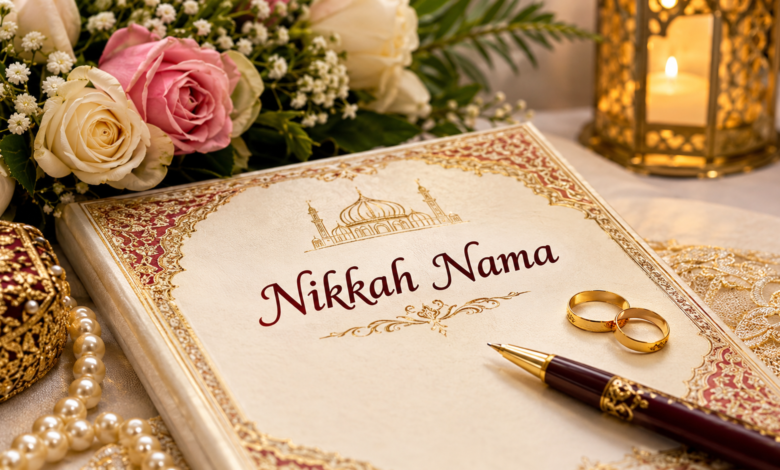
Nikkah Nama? Marriage in Islam is more than a social relationship. It is a serious commitment built on mutual respect, responsibility, trust, and consent. One of the most important documents connected with this commitment is the Nikkah Nama, the marriage contract that records the agreement between a husband and wife. Although many people see it as a formality completed during the wedding ceremony, it can play a much more important role in protecting the rights and responsibilities of both spouses.
A Nikkah Nama generally contains essential information about the bride, groom, witnesses, marriage terms, mahr (dower), and other agreed conditions. Depending on the country and legal system, it may also have official legal significance. This makes it important for couples and their families to understand what they are signing rather than treating the document as simple paperwork.
The details and legal requirements of a Nikkah Nama can vary according to local law, the form being used, and the circumstances of the marriage. In Pakistan, for example, marriage registration and the prescribed Nikkah Nama have particular legal procedures. Islamic principles and local family law should therefore be considered together when preparing or signing the document.
This guide explains the Nikkah Nama in simple language, including its purpose, important sections, mahr, witnesses, conditions, signatures, registration, and common mistakes. The goal is to help readers understand why this document deserves careful attention before the marriage contract is finalized.
What Is a Nikkah Nama?
A Nikkah Nama is the written marriage contract associated with an Islamic marriage. The word “Nikkah” refers to the Islamic marriage contract, while “Nama” generally means a written document or record. Together, Nikkah Nama refers to the document that records important details and terms of the marriage.
At its heart, the Nikkah Nama documents an agreement between two people entering into marriage. It can identify the bride and groom, record the names of witnesses, specify the amount of mahr, and document certain conditions accepted by the parties. The exact format depends on the jurisdiction and the authority conducting or registering the marriage.
The document is important because marriage creates rights as well as responsibilities. A written record can reduce confusion about what was agreed upon at the time of marriage. It can also provide evidence of important details if questions arise later.
For this reason, couples should not sign a Nikkah Nama without reading and understanding it. Even when a family has arranged the paperwork, the bride and groom should have an opportunity to review the terms and ask questions about anything they do not understand.
Why Is the Nikkah Nama Important?
The Nikkah Nama gives the marriage contract a clear written record. Verbal discussions may be forgotten or misunderstood over time, but a properly completed document provides a reference point for important agreements. This can be especially valuable when the marriage involves financial commitments or specific conditions.
Another important function is transparency. Both spouses should know what they are agreeing to before signing the contract. A marriage should begin with informed consent rather than assumptions made by relatives or other people involved in the wedding arrangements.
The Nikkah Nama can also help establish financial rights, particularly through the recording of mahr. Mahr is an important part of an Islamic marriage contract and represents a financial entitlement of the bride. Clearly recording its amount and payment terms can prevent future disagreements.
Its legal importance depends on the country and applicable laws. In places where an official marriage certificate or registration system exists, the Nikkah Nama may form part of the documentation used to establish the marriage. Couples should therefore treat it as an important legal and religious document rather than ordinary wedding paperwork.
What Information Is Usually Included in a Nikkah Nama?
A Nikkah Nama generally records identifying information about the people entering the marriage. This may include the names of the bride and groom, their parents or guardians where required, addresses, ages, identification details, and other information requested by the official form.
The document can also contain information about the marriage itself. This may include the date and place of the Nikkah, details concerning the witnesses, and the name or details of the person who solemnizes or registers the marriage.
One of the most significant sections concerns mahr. The amount or nature of the dower should be clearly recorded, along with information about whether it is payable immediately, later, or according to the agreed arrangement. The wording and categories can differ depending on the official form.
Some Nikkah Nama forms also contain sections dealing with special conditions agreed upon by the parties. These sections should never be ignored. If a condition is important to the couple, it should be discussed carefully and recorded correctly where legally and religiously appropriate.
Understanding Mahr in the Nikkah Nama
Mahr, also known as mehr or dower, is an important financial component of an Islamic marriage. It is given by the husband to the wife as part of the marriage contract. Unlike a customary wedding gift, mahr represents a specific right belonging to the wife.
The amount of mahr should be agreed upon clearly before or during the Nikkah. It can consist of money, property, or another lawful asset, depending on the agreement and applicable religious and legal principles. The important point is that the terms should be understood by both parties.
Mahr may be structured as an amount payable at the time of marriage or an amount that becomes payable later. In some arrangements, it can include both immediate and deferred portions. The Nikkah Nama should accurately reflect whatever arrangement has actually been agreed upon.
Families sometimes focus heavily on the amount without discussing the payment terms. That can create confusion later. A better approach is to discuss not only how much the mahr is but also when and how it will be paid, and then ensure the written document reflects that agreement accurately.
Conditions and Special Clauses in a Nikkah Nama
A Nikkah Nama may include conditions that the spouses agree to as part of their marriage arrangement. These conditions can vary considerably depending on personal circumstances, cultural practices, and the laws of the country where the marriage is registered.
Because conditions can have religious and legal consequences, they should not be added casually. Both spouses should understand exactly what a clause means before signing it. If a proposed condition has significant legal consequences, professional legal advice can be useful.
It is also important to distinguish between a family expectation and a formal contractual condition. Something discussed informally at a family gathering may not have the same status as something properly written into the marriage contract. Clear wording can therefore make a major difference.
Couples should avoid signing blank sections or allowing someone else to complete important clauses without their knowledge. If a section does not apply, it should be handled according to the official procedure rather than simply being left ambiguous.
The Role of Consent in a Nikkah
Consent is a fundamental part of an Islamic marriage. A Nikkah should not be treated as something that can simply be imposed on either spouse. The people entering the marriage need to understand and accept the marriage contract according to applicable Islamic principles and local law.
The Nikkah Nama provides a written record of that marriage arrangement. This makes it particularly important that the bride and groom are given an opportunity to review the document before signing. They should be able to ask questions without unnecessary pressure.
In practical terms, consent also means understanding what is being signed. A person who signs a document without reading it may later discover that it contains information or conditions they did not expect.
Families and marriage officials can help the process, but they should not replace the couple’s own understanding of the agreement. The bride and groom should remain central participants in the preparation and completion of their marriage contract.
Witnesses and the Nikkah Ceremony
Witnesses have an important role in an Islamic marriage, although the precise requirements can differ according to Islamic jurisprudence and local law. Their names and relevant details may be recorded in the Nikkah Nama or associated marriage records.
The presence of witnesses helps establish that the marriage contract was formally entered into. They may also provide testimony about the circumstances surrounding the Nikkah if questions arise later.
The official completing or registering the Nikkah also has an important administrative role. Depending on the jurisdiction, this person may be responsible for ensuring that the prescribed form is completed correctly and submitted through the appropriate registration process.
Couples should therefore make sure that all required signatures and details are completed properly. A missing signature, incorrect identity detail, or incomplete section can create unnecessary administrative problems later.
Nikkah Nama and Legal Marriage Registration
One of the biggest misunderstandings about a Nikkah Nama is assuming that the religious ceremony and government registration are always exactly the same thing. They can be connected, but their requirements may differ depending on the country.
In Pakistan, marriage registration is governed by local family law and administrative procedures. The prescribed Nikkah Nama contains specific fields and is generally connected with the official registration of the marriage. Because procedures can change, people should confirm the current requirements with the relevant local authority or qualified legal professional.
Official registration is particularly important for practical matters involving identity records, family documentation, immigration, inheritance, and other legal processes. A couple should keep their original documents and obtain official copies where appropriate.
People planning a marriage in another country should be even more careful. A Nikkah performed in one country may require additional documentation or registration to be recognized elsewhere. Immigration authorities, courts, and government departments can have their own requirements.
Common Mistakes People Make When Signing a Nikkah Nama
One common mistake is signing the document without reading every section. Wedding days can be busy, emotional, and stressful, so couples sometimes assume that everything has already been completed correctly. That assumption can be risky.
Another mistake is leaving important financial details unclear. Mahr should be discussed openly, and the agreed amount and payment arrangement should be recorded accurately. Vague promises can create disagreements later.
People also sometimes rely entirely on relatives to explain the document. While family members may have good intentions, the bride and groom should understand the contract themselves. If a clause is confusing, asking the Nikkah registrar or a qualified lawyer for clarification is a sensible step.
Finally, couples should avoid signing incomplete documents or agreeing to conditions they have not had time to consider. A few extra minutes spent reviewing the Nikkah Nama can prevent much larger problems in the future.
How Couples Can Prepare Before Signing a Nikkah Nama
Preparation should begin before the wedding day. The couple can discuss important subjects such as mahr, financial responsibilities, living arrangements, and any special conditions they want to consider. These conversations can make the actual signing process much easier.
It is also wise to review the official Nikkah Nama form in advance when possible. This allows the bride and groom to understand the sections rather than seeing them for the first time during the ceremony.
If either person is unsure about the religious implications of a particular clause, they can consult a knowledgeable Islamic scholar. If the concern involves enforceability under local law, a qualified family lawyer is better positioned to provide legal guidance.
Most importantly, both parties should feel comfortable asking questions. A marriage contract is significant enough to deserve careful attention. Taking the time to understand it does not make the marriage less romantic; it shows that both people take their responsibilities seriously.
Nikkah Nama as a Record of Rights and Responsibilities
A well-prepared Nikkah Nama can provide clarity at the beginning of married life. It records important information and can help both spouses understand the commitments associated with the marriage.
For the bride, clearly documented mahr and other lawful contractual terms can provide an important record of her agreed rights. For the groom, the document also provides clarity about the commitments he has accepted.
The value of the document goes beyond financial matters. Marriage involves emotional, social, and practical responsibilities, and a clear agreement can encourage honest communication between spouses.
At the same time, a Nikkah Nama should not be viewed as a replacement for trust. A successful marriage requires kindness, communication, patience, and mutual respect. The document establishes important formal terms, but the relationship itself depends on how the spouses treat one another.
Final Thoughts on the Nikkah Nama
The Nikkah Nama is far more than a piece of paper signed during a wedding ceremony. It is an important written record connected with the Islamic marriage contract and, depending on the jurisdiction, may also have significant legal value.
Understanding the document before signing it is one of the simplest ways for a couple to start their marriage with greater clarity. The bride and groom should review the personal details, mahr, witnesses, special conditions, signatures, and registration requirements carefully.
It is equally important not to rely on assumptions. Islamic requirements can differ according to jurisprudential interpretation, while legal requirements vary between countries and can change over time. When a question involves legal rights or the enforceability of a particular clause, professional advice is appropriate.
Ultimately, the Nikkah Nama represents an important principle: marriage involves both rights and responsibilities. When those commitments are discussed openly and recorded accurately, couples can enter married life with greater confidence, transparency, and mutual understanding.
Frequently Asked Questions About Nikkah Nama
What is a Nikkah Nama?
A Nikkah Nama is a written marriage contract that records important details and agreed terms of an Islamic marriage.
Why is a Nikkah Nama important?
It provides a written record of the marriage, including important information such as mahr, witnesses, and applicable contractual conditions.
What is mahr in a Nikkah Nama?
Mahr is the financial entitlement agreed for the bride as part of the Islamic marriage contract. Its amount and payment terms should be recorded clearly.
Can special conditions be included in a Nikkah Nama?
Depending on Islamic principles and local law, certain lawful conditions may be included. Significant clauses should be understood by both spouses before signing.
Should the bride read the Nikkah Nama before signing?
Yes. Both the bride and groom should read and understand the document before signing it.
Is a Nikkah Nama legally valid?
Its legal status and registration requirements depend on the country and applicable law. In Pakistan and other jurisdictions, couples should follow the relevant official marriage-registration procedure.
Who signs a Nikkah Nama?
The exact signing requirements depend on the applicable form and jurisdiction, but the bride, groom, witnesses, and relevant marriage official may have roles in completing the document.
What should couples do if they do not understand a clause?
They should ask the marriage official, a qualified Islamic scholar, or a family lawyer for clarification before signing.
