Jurassic Coast: A Complete Guide to England’s Ancient Coastline, Fossils, Beaches, and Hidden Gems

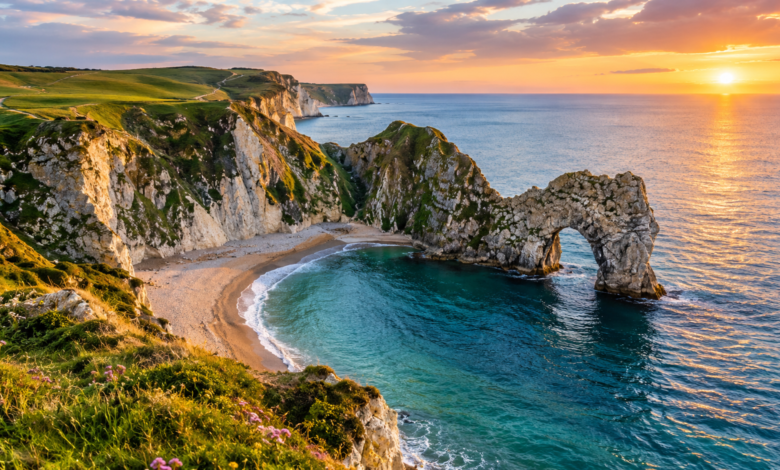
The Jurassic Coast is one of the most fascinating places to visit in England, offering dramatic cliffs, beautiful beaches, historic seaside towns, and extraordinary evidence of life that existed millions of years ago. Located along the southern coast of England, this remarkable destination attracts nature lovers, history enthusiasts, photographers, hikers, families, and travelers searching for a memorable coastal escape.
What makes the Jurassic Coast especially interesting is that it is much more than a scenic stretch of shoreline. Its rocks and fossils preserve an incredible record of Earth’s history, allowing visitors to explore landscapes shaped over approximately 185 million years. From the famous natural arch of Durdle Door to the fossil-rich beaches around Lyme Regis, every section has something different to discover.
The coastline extends between Studland Bay in Dorset and Exmouth in East Devon, covering approximately 95 miles. Officially recognized as the Dorset and East Devon Coast World Heritage Site, it received UNESCO World Heritage status in 2001 because of its exceptional geological importance.
Whether you are planning a weekend trip, researching a natural landmark, or simply curious about prehistoric life, the Jurassic Coast offers plenty of reasons to explore. This guide explains its history, best attractions, fossil-hunting opportunities, outdoor activities, and practical travel tips to help you understand what makes this destination so special.
1. What Is the Jurassic Coast?
The Jurassic Coast is a spectacular stretch of coastline in southern England, mainly associated with Dorset and East Devon. It features towering cliffs, sheltered coves, pebble beaches, chalk formations, natural arches, and unusual rock layers that reveal different stages of Earth’s development. Its combination of natural beauty and scientific importance makes it one of Britain’s most distinctive coastal destinations.
Although the name suggests that the entire coastline belongs to the Jurassic Period, the site actually includes rocks from three geological periods: the Triassic, Jurassic, and Cretaceous. Together, these layers provide evidence of environmental changes that occurred over approximately 185 million years. Visitors can encounter different rock types as they travel along the coast, creating a journey through geological time.
The coastline is internationally famous because scientists can study its exposed rocks and fossils to understand ancient environments. Some areas preserve evidence of creatures that lived in warm prehistoric seas, while others reveal traces of landscapes that once supported different kinds of terrestrial life. These discoveries help researchers investigate how organisms evolved and how environmental conditions changed.
UNESCO recognized the Dorset and East Devon Coast as a World Heritage Site in 2001. This designation reflects the site’s outstanding geological value rather than simply its popularity as a holiday destination. Its formations provide important evidence about Earth’s history and the natural processes responsible for shaping coastlines.
For ordinary visitors, the Jurassic Coast combines education with adventure. You can walk along scenic trails, explore seaside villages, watch waves crash against ancient cliffs, or search the beach for naturally exposed fossils. The landscape feels especially rewarding because its beauty comes with stories that extend far beyond recorded human history.
Another important feature is the coastline’s constantly changing appearance. Waves, weather, erosion, and landslides gradually reshape its cliffs and beaches. These processes expose new geological material while also creating hazards, which means visitors should admire the landscape responsibly and follow local safety advice.
2. The Geological History Behind the Jurassic Coast
Understanding the Jurassic Coast begins with the enormous timescale represented by its rocks. The formations record environmental changes during the Mesozoic Era, which included the Triassic, Jurassic, and Cretaceous periods. Rather than presenting a single snapshot of prehistoric life, the coastline reveals a long sequence of changing environments.
The Triassic Period came first. During this time, parts of the region experienced relatively dry conditions, and rivers, floodplains, and other continental environments influenced the sediments that accumulated. Some exposed rocks contain striking reddish colours associated with iron-bearing minerals. These formations provide evidence of landscapes very different from the coastline visitors see today.
The Jurassic Period followed, bringing major environmental changes to the region. Much of the area that is now Dorset lay beneath shallow seas at various times. Marine organisms lived in these waters, and their remains occasionally became preserved in sediment. Over millions of years, these deposits formed rocks that now contain fossils of ammonites, marine reptiles, and other ancient organisms.
The Cretaceous Period added another important chapter to the geological record. Chalk formations and other sedimentary deposits developed under different marine conditions. The white cliffs and chalk landscapes visible around parts of the eastern Jurassic Coast reflect these ancient processes and create a striking contrast with darker rocks farther west.
These geological layers were not left untouched after their formation. Earth movements, changes in sea level, weathering, and coastal erosion gradually exposed them. The resulting cliffs and beaches allow scientists to examine rocks that would otherwise remain hidden beneath the ground.
One reason the Jurassic Coast is so valuable is that its geology can be studied directly in the landscape. Visitors do not need to imagine every stage of its development from a textbook. Instead, they can see different rock formations, observe their colours and textures, and learn how natural processes transformed the region over immense periods.
The coast also demonstrates that geological history is not simply a story about the distant past. Erosion and landslides continue today, changing the shape of the shoreline and exposing new material. In this way, the Jurassic Coast remains an evolving natural record rather than a landscape frozen in time.
3. Why the Jurassic Coast Is a UNESCO World Heritage Site
UNESCO World Heritage status is awarded to places considered to have exceptional value for humanity. The Jurassic Coast earned this recognition because its geology, fossils, and landforms offer an unusually important record of Earth’s development. It is England’s only natural World Heritage Site, making it especially significant within the country’s protected natural heritage.
The site’s geological record is one of its strongest features. Across the coastline, exposed rocks represent approximately 185 million years of environmental change. Scientists can investigate these layers to understand ancient seas, changing climates, sediment formation, and the evolution of living organisms.
Fossils are another major reason for its international reputation. Remains preserved in the rocks provide evidence of prehistoric marine life and other organisms that inhabited ancient environments. Some discoveries have helped improve scientific understanding of extinct animals and the ecosystems in which they lived.
The coastline also contains excellent examples of natural landforms. Durdle Door, Lulworth Cove, Chesil Beach, and Old Harry Rocks demonstrate how geological structure and coastal processes create different features. These formations make the area valuable not only to palaeontologists but also to geologists and researchers studying landscapes.
World Heritage recognition also encourages responsible management. Protecting the Jurassic Coast involves balancing public access, scientific research, tourism, local communities, and environmental conservation. Visitors play a role in this effort by following safety guidance, respecting signs, and avoiding unnecessary damage to geological features.
However, UNESCO status does not mean every part of the coast is untouched or completely safe. Coastal erosion continues naturally, and popular areas can become crowded during busy periods. Protection focuses on preserving the site’s outstanding value while allowing people to appreciate and learn from it.
For travelers, the designation provides a useful reminder that the Jurassic Coast is not merely a beautiful backdrop for holiday photographs. It is a globally important natural resource that deserves care and respect. Every visit offers an opportunity to enjoy its scenery while recognizing why its rocks, fossils, and landforms matter to future generations.
4. Best Places to Visit Along the Jurassic Coast
One of the best things about the Jurassic Coast is its variety. Some locations are known for dramatic geological formations, while others offer traditional seaside attractions, peaceful beaches, or excellent fossil-hunting opportunities. Exploring more than one area helps visitors appreciate the coastline’s different landscapes.
Durdle Door is among the most recognizable landmarks. This natural limestone arch rises from the sea and creates an unforgettable view, particularly when sunlight reflects off the surrounding water. The nearby cliffs and walking paths provide excellent opportunities for photography, although reaching the beach involves steep paths and steps.
Lulworth Cove is another essential stop. Its curved shoreline, clear water, and surrounding hills make it one of Dorset’s most picturesque coastal locations. The cove formed through a combination of geological structure and erosion, creating a sheltered bay that looks very different from the exposed cliffs nearby.
Lyme Regis is particularly appealing to travelers interested in fossils and maritime history. The town has a traditional seaside atmosphere, independent shops, museums, and a historic harbour known as the Cobb. Its surrounding beaches are closely associated with fossil discoveries and the pioneering work of Mary Anning.
Charmouth is another excellent destination for fossil enthusiasts. Its beaches have produced many important discoveries, and visitors can learn about local geology through educational facilities and guided activities when available. It is a popular place to begin understanding how fossils become exposed through natural erosion.
West Bay offers a different kind of coastal scenery. Its dramatic golden cliffs rise behind a working harbour, creating a distinctive landscape that has attracted photographers and television crews. The area is also a convenient base for coastal walks, beach visits, and exploring nearby Bridport.
Further east, Old Harry Rocks provides spectacular views across white chalk formations and the English Channel. The coastal paths around Studland are popular with walkers, while the surrounding countryside offers opportunities to enjoy wildlife and quieter landscapes. Each destination reveals a different side of the Jurassic Coast, so the best itinerary depends on whether you prefer scenery, history, walking, or prehistoric discoveries.
5. Fossil Hunting on the Jurassic Coast
Fossil hunting is one of the most exciting activities associated with the Jurassic Coast. The region is famous for preserved remains of ancient organisms, and its beaches offer opportunities to see fossils that have been exposed through natural erosion. Even a small discovery can make a visit memorable because it connects the present-day landscape with a world that existed millions of years ago.
Ammonites are among the fossils visitors may encounter. These extinct marine animals had coiled shells and lived in ancient seas. Their fossilized forms can appear as circular or spiral patterns in suitable rocks, making them especially interesting to people learning how to identify prehistoric remains.
Other fossils found in the wider region include shells, fragments of marine reptiles, and various traces of ancient life. Some discoveries are scientifically significant, but most visitors should approach fossil hunting as a way to learn about geology rather than expecting to uncover a spectacular specimen.
Charmouth and Lyme Regis are two of the best-known places for beginners. Local museums, visitor facilities, and guided walks can help people understand what to look for and how to explore responsibly. Joining an organized fossil walk can be particularly useful if you have never searched for fossils before.
Timing matters because coastal erosion gradually releases fossils from the surrounding rocks. Loose material may become visible on beaches after changing weather conditions, although discoveries are never guaranteed. Looking among naturally deposited pebbles and loose beach material is generally more appropriate than attempting to remove fossils directly from cliffs.
Safety must always come first. Cliffs can collapse without warning, and falling rocks are a serious hazard. Keep away from cliff bases, pay attention to warning signs, check tide times, and never enter a section of beach that could become cut off by rising water.
It is also important to respect local rules and conservation guidance. Do not damage geological formations or use heavy tools against the cliffs. If you discover a potentially important fossil, seek advice from a local museum or relevant authority about the appropriate next steps. Responsible fossil hunting protects both visitors and the scientific value of the coastline.
6. The Famous Beaches of the Jurassic Coast
The Jurassic Coast offers much more than fossil-rich shores. Its beaches range from broad sandy stretches to pebbled bays and sheltered coves, making the region appealing to families, photographers, walkers, and anyone who enjoys spending time beside the sea.
Durdle Door Beach is famous for its dramatic setting beneath steep cliffs and beside the natural limestone arch. It is particularly popular with photographers because the combination of rock formations and open water creates striking views. Visitors should remember that the steep access route can be tiring, and the beach is not equally convenient for everyone.
Lulworth Cove provides a more enclosed coastal setting. Its curved shape and surrounding hills create a beautiful natural amphitheatre, while the village nearby offers places to stop for refreshments. During busy periods, arriving early can make it easier to enjoy the scenery before visitor numbers increase.
Charmouth Beach is especially attractive to people interested in geology. Its shoreline is known for fossil discoveries, and the surrounding cliffs reveal layers of sedimentary rock. The beach can be a rewarding place for a family walk, provided everyone stays away from unstable cliff faces.
Chesil Beach is one of the region’s most distinctive coastal features. This long shingle barrier stretches for approximately 18 miles between the Isle of Portland and West Bay. Its immense scale and the lagoon behind it, known as the Fleet, create a remarkable landscape that differs from the coves found elsewhere along the coast.
West Bay is ideal for visitors who enjoy a mixture of coastal scenery and traditional seaside activity. The harbour, surrounding cliffs, and beach create an attractive setting for walking and photography. The nearby town of Bridport also provides additional options for food, accommodation, and exploring local culture.
Kimmeridge Bay offers a rugged atmosphere and is particularly interesting for geology enthusiasts. Its rocky shoreline and exposed formations make it different from the more conventional sandy beaches found elsewhere. As with other sections of the coast, visitors should check local access advice and sea conditions before exploring.
Each beach has its own character, so choosing the right one depends on your plans. Some are best for photography and sightseeing, while others are better suited to fossil hunting or long walks. Checking access arrangements, tide times, and weather conditions before leaving your accommodation can help you choose a suitable destination.
7. Things to Do on the Jurassic Coast Besides Fossil Hunting
Although fossils are a major attraction, the Jurassic Coast has plenty to offer travelers who prefer outdoor adventures or relaxing seaside experiences. The combination of coastal trails, historic towns, wildlife, and unusual rock formations makes it suitable for different interests and travel styles.
Walking is one of the simplest ways to appreciate the landscape. The South West Coast Path passes through much of the region, providing opportunities to see dramatic cliffs, green hills, quiet coves, and open sea views. You can choose a short scenic walk or plan a longer route depending on your fitness and available time.
Photography is another popular activity. Sunrise and sunset can create beautiful lighting across the cliffs, beaches, and natural rock formations. Durdle Door, Old Harry Rocks, and West Bay are particularly appealing locations, although the best conditions depend on the weather, season, and position of the sun.
Water-based activities are also available in suitable locations. Depending on local conditions, visitors may find opportunities for kayaking, paddleboarding, or organized boat trips. Always check local safety guidance, sea conditions, and operator requirements before entering the water.
Wildlife enthusiasts can explore coastal habitats and surrounding countryside. Seabirds, coastal plants, and other wildlife contribute to the area’s natural character. Bringing binoculars can make a walk more interesting, particularly when observing birds from a respectful distance without disturbing their habitats.
Finally, take time to explore the towns and villages along the coast. Independent shops, local markets, museums, cafés, and traditional pubs offer a different perspective on the region. Combining outdoor exploration with local culture makes a Jurassic Coast trip more varied and helps you appreciate the communities that live alongside this remarkable landscape.
8. Mary Anning and the Jurassic Coast’s Scientific Legacy
The story of the Jurassic Coast would be incomplete without Mary Anning, one of the most important early fossil collectors and palaeontologists associated with the region. Born in Lyme Regis in 1799, she became known for discovering and helping document remarkable prehistoric specimens during a period when scientific knowledge of extinct marine reptiles was still developing.
Anning grew up in a coastal community where fossil collecting could provide a source of income. She learned to recognize interesting specimens in the local rocks and developed considerable practical knowledge of the surrounding geology. Her work required patience, close observation, and an understanding of how fossils appeared in exposed rock formations.
Among her most significant discoveries were important remains of ichthyosaurs and plesiosaurs. These extinct marine reptiles helped scientists understand that ancient seas supported animals very different from those alive today. Her discoveries contributed to major changes in the study of prehistoric life.
Anning worked during a time when women faced substantial barriers to formal scientific recognition. Although her discoveries attracted the attention of researchers, she did not receive the same opportunities and recognition as many male scientists of her era. Modern accounts increasingly acknowledge the importance of her contributions to palaeontology.
Today, visitors can learn more about her life and discoveries in Lyme Regis. Local museums and heritage attractions explain the fossil history of the area and show how discoveries made along the coast contributed to scientific understanding. A visit provides useful context before exploring the surrounding beaches.
Her legacy also demonstrates why fossil collecting requires more than luck. Recognizing important specimens, understanding geological context, and preserving discoveries for study can all contribute to scientific progress. Mary Anning’s work remains an inspiring example of how careful observation and curiosity can expand our understanding of the natural world.
9. The Best Time to Visit the Jurassic Coast
The best time to visit the Jurassic Coast depends on what you want to experience. Spring and summer generally appeal to visitors seeking longer daylight hours, coastal walks, and time on the beaches. Autumn and winter can offer quieter landscapes and dramatic sea views, although weather conditions may be more challenging.
Spring is a pleasant season for exploring walking trails and surrounding countryside. Temperatures gradually become milder, and wildflowers can add colour to the coastal landscape. Popular destinations may be less crowded than during the main summer holiday period, making spring attractive for visitors who prefer a calmer atmosphere.
Summer is usually the busiest period. Longer days make it easier to visit several attractions, enjoy coastal walks, and spend time in seaside towns. However, parking areas and famous landmarks can become crowded, particularly during school holidays and warm weekends.
Autumn can be an excellent choice for photographers and walkers. The changing light, cooler temperatures, and reduced visitor numbers often create a more peaceful experience. It is still important to check forecasts because rain, wind, and changing sea conditions can affect outdoor plans.
Winter offers a different view of the Jurassic Coast. Stormy seas and overcast skies can make the cliffs appear especially dramatic, while quieter paths may appeal to experienced walkers. Nevertheless, shorter daylight hours, slippery trails, and severe weather mean that careful planning becomes even more important.
Regardless of the season, check local forecasts, tide times, transport arrangements, and access information before setting out. A beautiful day can change quickly along an exposed coastline, and some paths or beach sections may become unsafe under certain conditions. Flexibility is useful because an alternative town, museum, or sheltered attraction can save a trip when outdoor plans need to change.
10. How to Plan a Trip to the Jurassic Coast
Planning your visit begins with choosing the places that interest you most. The coastline covers a substantial distance, so trying to see every major landmark in a single day can make the experience rushed. It is usually better to select a few nearby destinations and explore them properly.
For a first visit, consider combining Lulworth Cove and Durdle Door. These attractions are close enough to feature in the same outing, although walking between them involves hills and uneven paths. Allow sufficient time for the scenery, photography, and breaks rather than treating the visit as a quick stop.
If fossils are your priority, consider basing your trip around Lyme Regis and Charmouth. Both locations have strong connections with the region’s geological heritage, and local educational attractions can help you understand what you see on the beaches. This combination is particularly useful for families and first-time fossil hunters.
Transport is another important consideration. Some coastal towns have railway connections, while local buses and seasonal services can help visitors reach selected attractions. Driving provides flexibility for exploring several locations, but parking can be limited or busy near popular landmarks during peak periods. Check current timetables and parking arrangements before travelling.
Accommodation options range from hotels and guesthouses to holiday cottages and established campsites. Staying overnight allows you to explore at a slower pace and visit popular locations earlier in the day. During busy holiday periods, booking accommodation in advance can give you more choice.
Pack practical clothing and footwear suitable for changing weather and uneven paths. A waterproof jacket, comfortable walking shoes, drinking water, sunscreen, and a charged phone can make a noticeable difference. If you plan to spend time on the beach, check tide information and bring any additional equipment appropriate for the conditions.
Finally, build some flexibility into your itinerary. Coastal weather, transport disruptions, and temporary access restrictions can affect plans. Having an alternative attraction or walking route means you can still enjoy the area without taking unnecessary risks or rushing from one destination to another.
11. Essential Safety Tips for Visiting the Jurassic Coast
The Jurassic Coast is beautiful, but its natural environment demands respect. High cliffs, unstable rock formations, changing tides, and exposed walking routes can create serious hazards. Taking a few sensible precautions helps you enjoy the landscape without putting yourself or others at risk.
The most important rule is to stay well away from cliff edges and the bases of unstable cliffs. Rockfalls and landslides can occur without warning, even when the weather appears calm. Never climb cliff faces or stand directly beneath overhanging rocks to take photographs or search for fossils.
Check tide times before exploring beaches and coves. Some stretches of shoreline can become inaccessible as the tide rises, potentially leaving visitors trapped against cliffs. If a route appears unsafe or the sea is advancing quickly, turn back and use a safer route rather than trying to continue.
Wear footwear with good grip, especially when walking on steep or muddy paths. Coastal trails can become slippery after rain, and loose stones may move underfoot. Take extra care near exposed viewpoints and avoid approaching the edge simply to get a better photograph.
If you plan to swim, kayak, or take part in other water activities, check local conditions and follow lifeguard or operator guidance where available. Cold water, strong currents, waves, and offshore winds can be dangerous even for confident swimmers. Choose activities appropriate to your experience and the conditions on the day.
Respect warning signs, temporary closures, and instructions from local authorities. These restrictions are designed to address real hazards, and ignoring them can put both visitors and emergency responders at risk. Keep children close in exposed areas and ensure everyone in your group understands the basic safety rules.
Lastly, leave the coastline as you found it. Take your rubbish home, avoid disturbing wildlife, and treat geological features carefully. Responsible behaviour protects the landscape and helps ensure that future visitors can enjoy the same remarkable scenery.
12. Why the Jurassic Coast Deserves a Place on Your Travel List
The Jurassic Coast combines natural beauty, scientific importance, and memorable outdoor experiences in a way few destinations can match. Its cliffs, beaches, and coves are visually impressive, but their deeper appeal comes from the history preserved in the rocks. A visit can be both a relaxing holiday and an opportunity to learn something new.
For nature lovers, the coastline offers changing scenery, wildlife, and long-distance walking opportunities. Photographers can explore dramatic formations and coastal viewpoints, while families can enjoy beach walks and educational attractions. Travelers interested in history can discover traditional seaside towns and learn about pioneering fossil collectors such as Mary Anning.
The variety of destinations also makes the area suitable for different itineraries. You could spend a weekend visiting famous landmarks, arrange a longer walking holiday, or build a trip around fossil hunting and museums. Each approach offers a different way to appreciate the coastline without needing to cover every mile.
Its UNESCO World Heritage status adds another layer of significance. The geological record helps scientists investigate ancient environments and the evolution of life, while the visible landforms demonstrate how natural processes continue to shape the planet. The Jurassic Coast is therefore important both as a visitor destination and as a place for research and education.
Responsible tourism is essential to keeping this landscape special. Following safety advice, respecting local communities, and avoiding damage to cliffs and fossils help preserve its natural value. Visitors who take time to understand the environment often leave with a stronger appreciation of why it deserves protection.
Ultimately, the Jurassic Coast is more than a collection of beautiful beaches. It is a remarkable record of Earth’s history, a home for wildlife, and a place where natural processes remain visible in everyday landscapes. Whether you visit for the fossils, the scenery, the walking trails, or the peaceful seaside atmosphere, it offers an experience that can stay with you long after the journey ends.
Frequently Asked Questions About the Jurassic Coast
1. Where is the Jurassic Coast located?
The Jurassic Coast is on the southern coast of England, stretching between Studland Bay in Dorset and Exmouth in East Devon. It includes famous destinations such as Lyme Regis, Charmouth, West Bay, Lulworth Cove, and Durdle Door.
2. Why is the Jurassic Coast famous?
It is famous for its exceptional geology, fossil discoveries, dramatic cliffs, and distinctive coastal formations. UNESCO recognized the Dorset and East Devon Coast as a World Heritage Site in 2001 because of its international geological importance.
3. How old is the Jurassic Coast?
Its rocks record approximately 185 million years of Earth’s history, covering the Triassic, Jurassic, and Cretaceous periods. Different locations reveal evidence of changing environments and ancient forms of life.
4. Can you find fossils on the Jurassic Coast?
Yes. Beaches around Charmouth and Lyme Regis are well known for fossil hunting. Discoveries are never guaranteed, so follow local guidance, search loose beach material, and stay away from unstable cliffs.
5. Is the Jurassic Coast suitable for families?
Yes. Families can enjoy beaches, scenic walks, museums, seaside towns, and educational fossil activities. However, some paths are steep and uneven, so choose locations appropriate for children’s ages and abilities.
6. What is the best place to visit on the Jurassic Coast?
Durdle Door is famous for its natural arch, Lulworth Cove offers a picturesque sheltered bay, and Lyme Regis is popular for fossils and seaside heritage. The best choice depends on your interests and how much time you have.
7. How long should you spend exploring the Jurassic Coast?
A day is enough to visit a small selection of attractions, while a two- or three-day trip allows more time for walking, museums, beaches, and nearby towns. Longer stays are ideal for visitors who want to explore several sections of the coastline.
8. Is it safe to walk along the Jurassic Coast?
Many marked coastal paths are suitable for walking, but conditions vary. Check weather forecasts, tide times, and local access notices, and stay away from cliff edges and unstable cliff bases.
9. When is the best time to visit the Jurassic Coast?
Late spring and summer are popular for longer daylight hours and beach visits. Spring and autumn can offer quieter trails, while winter appeals to some experienced walkers who are prepared for colder weather and challenging conditions.
10. Why is it called the Jurassic Coast?
The name refers to the Jurassic Period, one of the three geological periods represented in the coastline’s rock record. The site also contains Triassic and Cretaceous formations, so its geological history extends beyond the Jurassic Period alone.
Final Thoughts
The Jurassic Coast is one of England’s most rewarding destinations for anyone who appreciates nature, history, geology, and outdoor exploration. From the striking arch at Durdle Door to the fossil-rich beaches of Charmouth and the historic streets of Lyme Regis, its attractions offer something for almost every type of traveler.
What truly sets it apart is the opportunity to experience an ancient geological record in a living landscape. Its rocks reveal millions of years of environmental change, while its beaches and cliffs continue to evolve through erosion and other natural processes.
Plan your journey around the places that interest you most, allow time to explore at a comfortable pace, and follow local safety guidance. With thoughtful preparation, a visit to the Jurassic Coast can become much more than a seaside trip: it can be an unforgettable journey through Earth’s remarkable past.