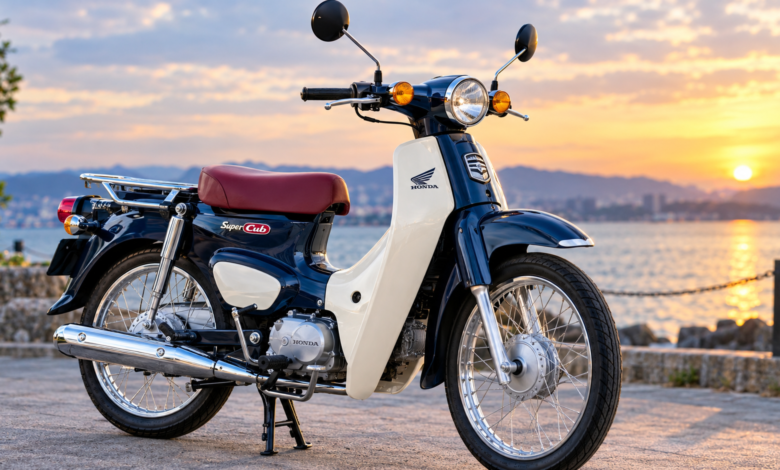
The Honda Cub is one of the most recognizable small motorcycles ever produced. Known for its practical design, approachable riding experience, and impressive everyday usefulness, it has earned a special place in motorcycle history. Whether you are a new rider, a daily commuter, or someone who appreciates classic motorcycles, the Honda Cub offers a refreshing alternative to larger and more complicated bikes.
What makes the Honda Cub interesting is its simplicity. It does not rely on enormous engines, aggressive styling, or expensive performance equipment to attract attention. Instead, it focuses on the things riders need most: easy handling, dependable transportation, economical operation, and a design that works in everyday situations.
Over the decades, the Cub family has evolved to include several versions, including the traditional Super Cub, the premium Super Cub C125, and the more adventure-inspired Cross Cub in selected markets. Each version has its own character, but the basic idea remains consistent: create a lightweight motorcycle that makes riding accessible to a wide range of people.
The Honda Cub is also an important part of the motorcycle industry’s development. Honda’s official history describes the model as a global success, with more than 100 million units produced and a presence in over 160 countries. Its influence extends beyond transportation into popular culture, collecting, and the broader history of motorcycling. Honda’s official Cub history provides additional background on its worldwide significance.
In this guide, we will explore the Honda Cub’s origins, engine and transmission, design, fuel economy, different models, ownership costs, maintenance requirements, and important buying considerations. By the end, you should have a clearer understanding of whether this iconic little motorcycle suits your needs.
1. The History and Evolution of the Honda Cub
The Honda Cub story began with a simple but ambitious idea: build a motorcycle that ordinary people could use comfortably and confidently. During the 1950s, Honda was expanding its motorcycle business and looking for ways to make two-wheeled transportation more accessible. The company wanted a machine that could serve daily needs without demanding the experience or physical effort associated with some traditional motorcycles.
Honda founder Soichiro Honda and business partner Takeo Fujisawa played important roles in developing this concept. According to Honda’s historical account, their travels through Europe in 1956 helped them understand how different countries used small motorcycles and scooters. Those observations contributed to the development of a practical new motorcycle concept. You can explore the company’s account in its official Super Cub history.
The first Honda Super Cub C100 arrived in 1958. It introduced a distinctive combination of a step-through frame, compact engine, protective bodywork, and a clutch system designed to simplify gear changes. Rather than forcing riders to master a conventional hand-operated clutch, the motorcycle used an automatic centrifugal clutch. This helped make the Cub approachable for people who had little or no previous motorcycle experience.
The motorcycle also arrived at an important moment in Japan’s economic development. Affordable personal transportation was becoming increasingly valuable as cities grew and more people needed practical ways to travel to work, school, shops, and other destinations. The Super Cub’s relatively simple design helped it fit naturally into these changing lifestyles.
Honda later expanded the Cub family into international markets. Its combination of practical engineering, recognizable styling, and straightforward operation helped the motorcycle find customers in many different countries. The model became useful for commuting, small businesses, delivery work, and personal transportation, demonstrating that a small motorcycle could serve many purposes without becoming unnecessarily complicated.
Over time, Honda introduced numerous versions and technical updates. Engine sizes, braking systems, lighting, fuel delivery, styling, and convenience features changed according to the model and market. Nevertheless, the original philosophy remained recognizable. The Honda Cub continues to represent a practical approach to motorcycling in which usability matters just as much as mechanical engineering.
2. Honda Cub Design and Everyday Practicality
One of the Honda Cub’s most distinctive features is its step-through frame. Unlike many conventional motorcycles, which require the rider to swing a leg over a relatively high seat and rear bodywork, the Cub provides an open space between the handlebars and seat. This arrangement makes mounting and dismounting convenient for many riders, especially during frequent stops.
The design is particularly useful in busy urban environments. Riders may need to stop repeatedly at traffic signals, shops, workplaces, or delivery locations. A practical step-through layout makes these routines less awkward, while the relatively compact dimensions help the motorcycle fit into smaller parking spaces.
The Cub’s bodywork also contributes to its familiar appearance. Depending on the model, the motorcycle may feature leg shields, rounded panels, a front basket option, and traditional-inspired lighting. These details give it a different personality from aggressive sport bikes or large touring motorcycles. The result is a design that prioritizes usefulness while maintaining a distinctive visual identity.
Seating comfort is another important part of the experience. Many Cub models have an upright riding position that keeps the rider’s back relatively natural and the arms comfortably extended. However, seat design, seat height, and passenger arrangements vary by model. Anyone planning longer rides should test the seating position personally rather than assuming every Cub offers the same level of comfort.
Storage and carrying options can make the Honda Cub more practical. Depending on the version and available accessories, owners may be able to fit a front basket, rear carrier, top box, or other luggage equipment. These additions are especially useful for shopping and commuting, although the motorcycle’s specified load limits must always be respected.
The overall design demonstrates that a motorcycle does not need to be large to be useful. The Honda Cub combines manageable proportions with everyday functionality, making it appealing to people who want straightforward transportation. Its styling also shows how a well-developed design can remain recognizable even as individual components and technology evolve.
3. Honda Cub Engine, Transmission, and Performance
The Honda Cub is generally designed for efficient everyday riding rather than high-speed performance. Many traditional Super Cub versions use a small, air-cooled, four-stroke, single-cylinder engine. The exact displacement and output depend on the model, year, and market, so buyers should check the specifications for the particular motorcycle they are considering.
For example, Honda’s Japanese Super Cub range has included 50cc and 110cc versions, while the Super Cub C125 uses a 124cc engine in relevant markets. The C125’s official specifications describe an air-cooled, single-cylinder, four-stroke engine with electronic fuel injection. These specifications illustrate how the Cub family retains its basic philosophy while offering different levels of performance. See Honda’s published C125 specifications.
A smaller engine has practical advantages. It can provide sufficient power for everyday urban travel without the weight and fuel requirements associated with a large motorcycle. For new riders, the manageable performance of an appropriate Cub model can also make it easier to develop smooth throttle control and improve confidence at lower speeds.
The transmission is another defining feature. Many traditional Super Cub models use a four-speed transmission combined with an automatic centrifugal clutch. This arrangement allows the rider to change gears using a foot-operated control without manually operating a conventional clutch lever. It is not the same as a fully automatic scooter transmission, so riders should understand how the selected model operates before taking it onto the road.
Acceleration is best understood in the context of the motorcycle’s intended purpose. A small-displacement Cub can be convenient when pulling away from traffic lights, moving through neighborhood streets, and maintaining ordinary city speeds. However, acceleration and top speed are limited compared with larger motorcycles, and performance can change noticeably with passenger weight, hills, wind, and road conditions.
Highway suitability depends on the exact version and local road requirements. Some smaller Cub models are best suited to urban and suburban travel, while a larger-displacement version may provide more flexibility. Even with a 125cc model, riders should consider traffic speed, available power, road conditions, and the manufacturer’s guidance before planning sustained high-speed journeys.
4. Honda Cub Fuel Economy and Running Costs
Fuel economy is one of the main reasons riders consider a Honda Cub. Its relatively small engine and lightweight construction can make it an economical option for regular transportation. Compared with many larger motorcycles and cars, a properly maintained small-displacement motorcycle may require substantially less fuel for the same commuting routine.
However, there is no single fuel-economy figure that applies to every Honda Cub. Engine size, production year, fuel system, road conditions, traffic, maintenance, passenger weight, and riding style all influence consumption. Official laboratory or standardized test figures also differ from what an individual rider may achieve in everyday use.
Honda’s published Japanese specifications provide one example of the variation between models. The listed Super Cub 50 and Super Cub 110 figures differ depending on the testing method and conditions. These numbers are useful for comparison, but they should not be treated as a guaranteed result for every rider or a different regional version. Honda’s Super Cub specifications provide further details.
Fuel-tank capacity also affects convenience. Many Cub versions have relatively small tanks because the motorcycle is designed around lightweight, efficient transportation. A modest tank can still provide useful riding range when fuel consumption is low, but owners should calculate range using realistic consumption figures rather than relying entirely on advertising claims.
Maintenance is another important part of the overall cost. Regular oil changes, chain care, tire replacement, brake servicing, and periodic inspections all contribute to reliable operation. These expenses are usually more manageable when the motorcycle is maintained on schedule instead of being left until a problem becomes obvious.
Insurance, registration, taxes, and replacement parts should also be included in the ownership budget. Their costs depend on the country, model, insurance requirements, and local parts supply. A used motorcycle with an attractive purchase price may still require immediate spending on tires, a battery, brakes, or overdue servicing.
For riders who need an economical daily vehicle, the Honda Cub can make considerable financial sense. The key is to assess total ownership costs instead of focusing only on fuel consumption. A clean, well-maintained motorcycle with a documented service history is often a better investment than a cheaper example requiring extensive repairs.
5. Popular Honda Cub Models and Their Differences
The name Honda Cub covers several related motorcycles rather than one identical model sold worldwide. Understanding the main versions can help you avoid comparing motorcycles that have different engines, equipment, prices, and intended uses. Availability also changes according to the country and model year.
The traditional Honda Super Cub 50 is a small-displacement version designed around simple, lightweight transportation. It can appeal to riders who travel short distances and want a compact motorcycle for local trips. Its limited engine capacity makes checking local licensing requirements and road restrictions particularly important before purchasing.
The Honda Super Cub 110 offers a larger engine than the 50cc version. Depending on the generation and market, it can provide more flexibility for ordinary commuting while retaining the step-through design and clutch-assisted gear-changing arrangement. Exact power, braking equipment, and other specifications vary, so buyers should verify the details for the individual year.
The Honda Super Cub C125 presents a more premium interpretation of the classic formula. It combines recognizable styling with features that can include electronic fuel injection, a four-speed transmission, an automatic centrifugal clutch, and modern convenience equipment. Some versions also include smart-key operation and an anti-lock braking system, depending on the model year and market.
The Honda Cross Cub takes the basic concept in a more rugged-looking direction. Its styling and equipment are designed to suggest light adventure use, making it appealing to riders who like the traditional Cub layout but prefer a more outdoors-oriented appearance. It should not automatically be treated as a full off-road motorcycle; actual capability depends on tires, suspension, ground clearance, and the specific version.
The Honda Super Cub Pro versions have also been developed for practical business and delivery applications in certain markets. These motorcycles can include equipment and design details intended to support work-related use. Buyers considering a commercial version should check seating arrangements, carrying capacity, and whether its equipment suits personal transportation.
Choosing between these versions comes down to your priorities. A smaller Cub may be sufficient for local journeys, while a larger or more feature-rich version may better suit your daily routine. Compare engine displacement, braking equipment, seat height, passenger provisions, parts availability, and price before deciding which Honda Cub deserves a place in your garage.
6. Honda Cub Maintenance and Long-Term Reliability
The Honda Cub has a long-standing reputation for practical, uncomplicated transportation, but no motorcycle is maintenance-free. Its long-term reliability depends on regular servicing, appropriate use, riding conditions, and the condition of the individual machine. Even a well-engineered motorcycle can develop expensive problems if basic maintenance is ignored.
Engine oil is one of the first things owners should monitor. Follow the service schedule specified for the exact model, including the recommended oil type and replacement interval. Small engines still need clean oil and proper lubrication, especially when used frequently in traffic or under demanding conditions.
Chain maintenance is equally important on Cub models that use a chain final drive. The chain should be inspected for correct tension, lubrication, corrosion, and excessive wear. An incorrectly adjusted chain can accelerate wear on the drivetrain and may create safety problems, so follow the manufacturer’s instructions or ask a qualified mechanic for assistance.
Tires deserve regular attention because they affect braking, cornering, stability, and overall safety. Check tire pressure when the tires are cold and use the pressures specified for your particular model and load. Inspect the tread and sidewalls for damage, and replace worn or aged tires even if the motorcycle has covered relatively few kilometers.
The braking system should also be inspected periodically. Different Cub models use different brake arrangements, including drum brakes and disc brakes. Check for unusual noises, poor braking response, fluid leaks where applicable, and worn components. If braking performance changes suddenly, have the motorcycle inspected before continuing to ride.
Electrical components and fuel-delivery systems can require attention as well. Depending on the model, the motorcycle may use electronic fuel injection, a battery-powered starting system, LED lighting, and other electrical equipment. A weak battery, damaged wiring, or sensor fault can affect operation, so warning signs should not be ignored.
Keeping maintenance records makes long-term ownership easier. Record oil changes, tire replacements, brake work, chain adjustments, and any significant repairs. These records help you follow upcoming service needs and can improve buyer confidence if you decide to sell the motorcycle later.
7. Buying a New or Used Honda Cub
Before purchasing a Honda Cub, decide whether a new or used motorcycle better fits your budget. A new example may provide a manufacturer’s warranty, fresh components, and the reassurance that it has not been used by previous owners. However, its purchase price may be considerably higher than that of an older motorcycle.
A used Honda Cub can offer excellent value, particularly when you find an example with a complete maintenance history. Older models may also appeal to collectors who appreciate their original styling and historical significance. Nevertheless, condition matters more than age alone, and not every classic Cub is suitable for everyday commuting.
Start by inspecting the motorcycle’s overall condition. Look for corrosion, damaged bodywork, bent controls, worn tires, oil leaks, and signs of poor-quality repairs. Check whether the lights, indicators, horn, brakes, and starting system operate correctly. A clean appearance is encouraging, but it does not replace a mechanical inspection.
Ask the seller for maintenance records and details about previous repairs. Find out when the oil was last changed, whether the chain and sprockets have been serviced, and whether the tires and brakes need replacement. If the motorcycle has been stored for a long time, it may require attention even if its mileage is low.
Documentation is particularly important when buying a used motorcycle. Verify the frame or vehicle identification number where applicable, confirm the seller’s legal ownership, and check registration records according to local procedures. Avoid completing a purchase if important identification details do not match the paperwork or the seller cannot establish a clear right to sell the vehicle.
A test ride, when legally and safely possible, can reveal issues that are difficult to spot while the motorcycle is parked. Listen for unusual engine noises, check the gear changes, and assess the brakes and steering. If you are unfamiliar with motorcycle mechanics, arrange an independent inspection by a qualified technician before agreeing to buy.
Finally, compare the asking price with other examples of the same model and year. Consider condition, originality, service history, local demand, and the cost of any repairs. A well-maintained Honda Cub with clear documentation is generally a more sensible purchase than a neglected motorcycle that happens to be advertised at a lower price.
8. Is the Honda Cub Right for You?
The Honda Cub is especially appealing to riders who value practicality over outright performance. Its compact size, approachable riding position, and distinctive step-through layout can make it an excellent option for short commutes, errands, and routine urban travel. It offers a different experience from a large motorcycle, emphasizing convenience rather than speed.
New riders may appreciate its manageable size and clutch-assisted gear changes. However, the Cub is not completely automatic in the way many scooters are. Riders must still learn the correct gear-changing procedure, braking technique, balance, and road awareness. A recognized motorcycle training course can help beginners develop safe riding habits.
Experienced motorcyclists may enjoy the Cub for different reasons. Some appreciate its historical significance, while others simply want a lightweight motorcycle for short trips. It can also serve as a practical second vehicle for owners who already have a larger motorcycle for touring or recreational riding.
The Cub may be less suitable for riders who regularly travel long distances at highway speeds. Its smaller engine and lightweight design place limits on acceleration and high-speed comfort compared with larger motorcycles. Riders who frequently travel on fast roads should assess the particular model’s capabilities and consider a motorcycle designed for those conditions.
Passenger and luggage needs also matter. Some Cub models provide passenger seating, while others are configured primarily for one rider or commercial use. Even when a passenger seat is available, the rider should verify the approved carrying capacity and consider how additional weight affects acceleration, braking, and handling.
Local conditions can influence whether the Cub is a sensible choice. In areas with heavy traffic, narrow streets, and limited parking, its compact dimensions may be particularly useful. In places with rough roads, steep hills, or fast-moving traffic, suspension condition, tire selection, engine capacity, and ground clearance become more important.
Ultimately, the Honda Cub is best suited to people who want an efficient, distinctive, and practical small motorcycle. It may not satisfy every rider, but its combination of usability and heritage explains why it remains relevant across generations.
9. Frequently Asked Questions About the Honda Cub
What is a Honda Cub?
The Honda Cub is a family of lightweight motorcycles developed for practical everyday transportation. The best-known member is the Honda Super Cub, introduced in 1958. Its distinctive step-through frame, compact engine, and clutch-assisted gear changes helped make it popular worldwide.
Is the Honda Cub fuel-efficient?
Yes, many Honda Cub models are designed to use fuel efficiently. Actual consumption depends on engine size, model year, maintenance, traffic, load, and riding style. Check the official specifications for the exact version and remember that real-world results may differ from standardized test figures.
Does the Honda Cub have an automatic transmission?
Many traditional Honda Super Cub models use a four-speed transmission with an automatic centrifugal clutch. This means the rider changes gears without operating a conventional hand clutch lever. It is different from a typical scooter’s fully automatic continuously variable transmission.
What is the difference between the Super Cub 110 and C125?
The Super Cub 110 is a smaller-displacement model intended for practical everyday transportation. The C125 uses a 125cc-class engine and offers a more premium interpretation of the design, with features that vary by market and model year. Compare the exact specifications before choosing between them.
Is the Honda Cub suitable for beginners?
It can be suitable for beginners who want a manageable small motorcycle, provided they learn the correct riding and gear-changing techniques. Beginners should check licensing requirements, complete appropriate training, wear protective equipment, and select a model that matches their experience and local road conditions.
How fast can a Honda Cub go?
Top speed varies by engine size, model, rider weight, road conditions, and other factors. Smaller-displacement models are generally designed for local transportation rather than high-speed riding. Consult the manufacturer’s information for your specific model instead of relying on a speed figure from a different version.
Is the Honda Cub reliable?
The Cub family has a long history of practical everyday use, but reliability depends on maintenance and the condition of the individual motorcycle. Regular servicing, correct oil, proper chain adjustment, healthy tires, and timely repairs help support dependable operation.
Can I buy a used Honda Cub?
Yes, used Honda Cubs are available in many markets, although selection depends on the country and model. Check the service history, mechanical condition, ownership documents, and parts availability. A professional inspection can help you avoid unexpected repair expenses.
How much does a Honda Cub cost?
The price depends on the model, production year, condition, location, and whether the motorcycle is new or used. Limited editions and well-preserved classic examples may command different prices from ordinary used models. Compare local listings and include registration, insurance, and maintenance costs in your budget.
Conclusion
The Honda Cub is much more than a small motorcycle with a recognizable design. It represents a practical approach to transportation that has remained relevant for generations. Its approachable layout, economical engine options, and everyday usefulness have helped it become one of Honda’s most significant motorcycle families.
Whether you are considering a traditional Super Cub, a Super Cub 110, a premium C125, or a Cross Cub, the most important step is to identify the version that matches your riding habits. Compare specifications, consider local road conditions, and think carefully about passenger needs, maintenance, and ownership costs.
For used models, pay particular attention to service records, mechanical condition, and legal documentation. For new models, compare available equipment, warranty coverage, and the total purchase cost. These steps will help you make a more informed decision.
The Honda Cub may not deliver the speed or power of a large motorcycle, but that is not its main purpose. It focuses on making everyday riding accessible, practical, and enjoyable. For riders who value simplicity, efficiency, and timeless design, the Honda Cub remains a compelling choice.