Silver Price Today: Positive Market Trends, Key Drivers, and What Investors Should Know

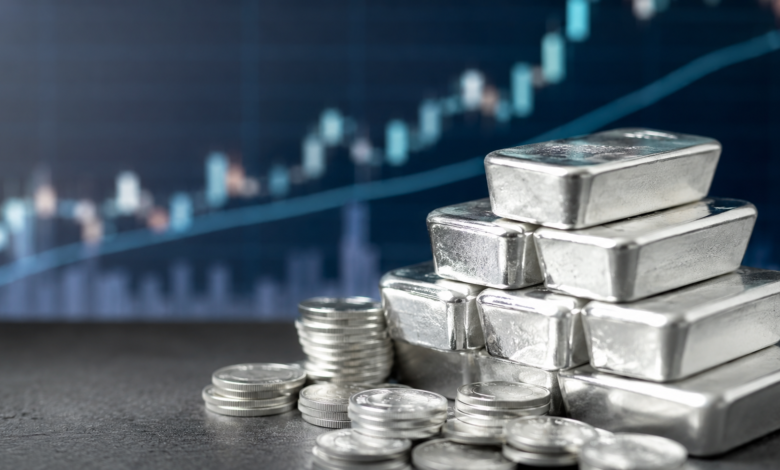
Silver Price Today remains one of the most closely watched precious metals in the global market. Whether you are an investor, trader, jewelry buyer, or simply following commodity markets, checking the silver price today can provide useful insight into broader economic conditions. Silver is unusual because it combines the characteristics of a precious metal with strong industrial demand.
As of August 14, 2026, spot silver is trading around $64.38 per troy ounce, although the exact price changes throughout the trading session. The current XAG/USD market has recently traded between roughly $64.23 and $66.31. Silver futures are also trading near the mid-$60 range per ounce.
Recent trading has been volatile. Silver moved sharply higher earlier in August before experiencing some profit-taking. On August 13, silver futures settled around $64.87 per ounce after declining about 1% during the session.
What Is the Silver Price Today?
The silver price today refers to the current market value of silver, generally quoted in U.S. dollars per troy ounce. Unlike a fixed retail price, the spot price changes continuously while international markets are active. Currency movements, interest-rate expectations, inflation, industrial demand, and investor sentiment can all influence the quotation.
On August 14, 2026, the XAG/USD spot market was around $64.38 per ounce at the latest available market snapshot. The same market showed an intraday range of approximately $64.23 to $66.31, demonstrating how quickly silver can move during active trading.
It is important to understand that the spot price is not necessarily the amount you will pay for physical silver. Dealers normally add premiums, which can cover fabrication, transportation, insurance, inventory, and operating costs. Therefore, coins, bars, and jewelry can have noticeably different prices from the quoted market rate.
Silver Price Today Per Ounce, Gram, and Kilogram
Silver is commonly quoted per troy ounce, but consumers often want to know the equivalent value per gram or kilogram. One troy ounce contains approximately 31.1035 grams. Using a silver price near $64.38 per ounce, the theoretical metal value is roughly $2.07 per gram before dealer premiums, taxes, or other costs.
For a kilogram of pure silver, the equivalent spot value is approximately $2,070 per kilogram at that market level. BullionVault’s latest available market data also places silver close to $64.38 per ounce and around $2.07 per gram.
These conversions are useful when comparing physical silver products. However, buyers should not assume that multiplying the spot price by weight gives the final retail price. A one-ounce investment coin, for example, may cost more than one ounce of raw silver because of its production and distribution premium.
Why Is Silver Price Moving Today?
Silver prices can react to several economic signals at the same time. One major influence is expectations surrounding U.S. monetary policy. When investors expect interest rates to move lower, precious metals can become more attractive because they do not pay interest but may benefit from a lower opportunity cost.
Recent U.S. inflation data has also influenced precious metals. On August 13, gold and silver pulled back as traders took profits after a strong recent advance. Reuters reported that silver declined around 1.2% during that session while investors assessed inflation and Federal Reserve expectations.
Geopolitical uncertainty is another important factor. During periods of financial stress, investors often look toward precious metals for diversification. Silver can react particularly strongly because it is both an investment metal and an industrial commodity. This combination can create larger price swings than many people expect.
Silver Price Today vs. Silver Futures
There is an important difference between the spot silver price and the silver futures price. Spot silver represents the current market value used as a reference for immediate transactions, while futures contracts represent agreements tied to silver delivery at a specified future date.
Silver futures are actively traded on major commodity markets. Current futures data shows silver trading in the mid-$60 range, with September and October 2026 contracts carrying prices close to the spot market.
Futures can sometimes trade above or below spot silver because of expectations about supply, demand, financing costs, inventories, and market positioning. This difference is known as the futures basis. For everyday physical buyers, the spot price is usually the more straightforward starting point.
What Is Driving Silver Demand in 2026?
Silver has a major industrial role that separates it from many traditional precious metals. It is used in electronics, electrical components, solar technology, industrial equipment, and other applications where its conductivity and physical properties are valuable.
The expansion of clean-energy technologies has also kept attention focused on silver demand. Solar panels use silver-containing components, while electrification and advanced electronics create additional applications. Strong industrial demand can therefore support silver prices even when investment demand is temporarily weaker.
At the same time, investors continue to monitor physical supply. Silver production depends heavily on mining operations, many of which produce silver as a byproduct of mining other metals. This can make supply less responsive to sudden changes in silver prices.
Silver Price Today and the U.S. Dollar
The U.S. dollar plays a major role in international silver pricing. Silver is primarily quoted in dollars, so changes in the value of the currency can influence how attractive the metal appears to international buyers.
When the dollar weakens, silver can become relatively cheaper for buyers using other currencies. That can potentially support demand. Conversely, a stronger dollar may place pressure on dollar-denominated commodities because international buyers face higher effective costs.
However, the relationship is not perfectly predictable. Silver also responds to industrial activity, investor positioning, inflation expectations, interest rates, and supply conditions. That is why the dollar should be viewed as one important factor rather than a complete explanation for daily price changes.
Is Silver a Good Investment Right Now?
Whether silver is a good investment depends heavily on an individual’s goals, risk tolerance, and investment timeframe. Silver can provide diversification because its price does not always move in exactly the same way as stocks, bonds, or other assets.
At the same time, silver can be considerably volatile. The recent market provides a good example. Futures data shows that silver has experienced a very wide 52-week trading range, illustrating the potential for both substantial gains and sharp declines.
Investors should therefore avoid treating a rising silver price as a guarantee of future gains. A sensible approach is to understand why the price is moving, consider the risks, and avoid making decisions based solely on a single day’s market movement.
How to Buy Silver at the Current Price
There are several ways people gain exposure to silver. Physical bullion includes coins, rounds, and bars, while financial products can provide exposure without requiring the investor to store the metal personally.
Physical silver can be appealing to buyers who want direct ownership. However, storage and security become important considerations. Investors should also compare dealer premiums, buyback policies, shipping costs, and the purity of the metal before purchasing.
Financial exposure can be more convenient, but different products carry different risks. Silver futures, exchange-traded products, mining companies, and other instruments do not behave exactly like physical silver. Understanding the structure of an investment is therefore just as important as watching the silver price today.
Silver Price Today in Relation to Gold
Silver and gold are often discussed together because both are precious metals. However, their markets are quite different. Gold is more heavily associated with monetary demand and wealth preservation, while silver has a much larger industrial component.
The relationship between the two metals is often measured using the gold-to-silver ratio. A higher ratio means gold is relatively expensive compared with silver, while a lower ratio means silver is relatively stronger compared with gold.
Recent market data placed the gold-to-silver ratio near the high-60s. Investors sometimes use this ratio as one of several indicators when studying relative valuations, although it should not be treated as a guaranteed trading signal.
What Could Happen to Silver Prices Next?
Predicting the exact future price of silver is difficult. Precious metals can respond rapidly to unexpected economic reports, central-bank decisions, geopolitical developments, currency movements, and changes in industrial demand.
Recent forecasts have remained relatively constructive. One August 2026 market analysis cited an RBC-related model assumption of approximately $77.48 per ounce for 2026 and $83.13 for 2027. These are forecasts rather than guaranteed prices, and actual market performance can differ substantially.
The most important factors to watch include U.S. interest-rate expectations, inflation data, the dollar, industrial demand, mine supply, investor positioning, and global economic growth. A combination of strong industrial demand and supportive investment demand could provide a favorable environment, while stronger rates or weaker economic activity could create pressure.
Frequently Asked Questions About Silver Price Today
What is the silver price today?
As of August 14, 2026, spot silver is around $64.38 per troy ounce in the latest available XAG/USD market data. Prices can change throughout the trading day.
What is the silver price per gram today?
At approximately $64.38 per troy ounce, silver’s theoretical spot value is about $2.07 per gram before dealer premiums, taxes, and other costs.
Why does silver price change every day?
Silver changes because of supply and demand, interest-rate expectations, inflation, currency movements, industrial activity, geopolitical developments, and investor sentiment.
Is silver more volatile than gold?
Silver is often more volatile than gold because it combines precious-metal investment demand with significant industrial demand. That combination can amplify both rallies and declines.
Is physical silver the same price as spot silver?
No. The spot price represents the underlying market value of silver, while physical products usually include a dealer premium and potentially other costs.
Final Thoughts on Silver Price Today
The silver price today remains an important market indicator for investors, businesses, manufacturers, and precious-metal buyers. With silver trading around the mid-$60 range per ounce in the latest August 14, 2026 data, the market continues to attract attention after a strong period of price movement.
What makes silver especially interesting is its dual identity. It can act as a precious-metal investment while also serving an important role in modern industry. That means its price can respond to financial-market conditions and real-world manufacturing demand at the same time.
For anyone following silver, the best approach is to look beyond a single daily quote. Track the spot price, futures market, U.S. dollar, interest-rate expectations, industrial demand, and broader economic conditions together. Most importantly, remember that market prices can change quickly, so current quotations should always be checked before making an investment or purchasing decision.