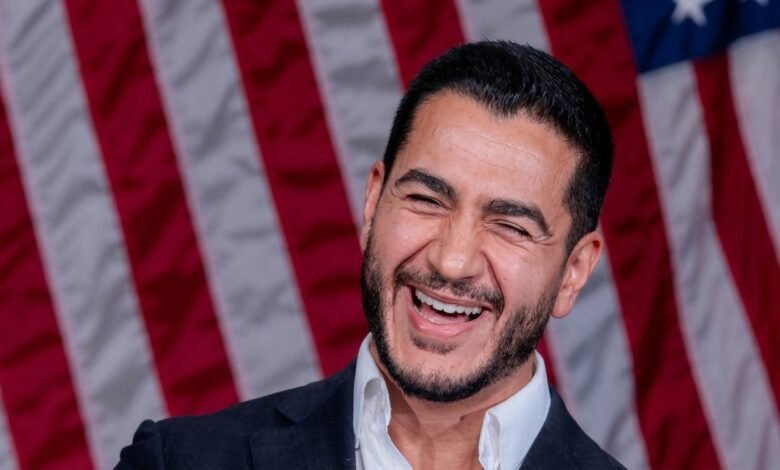
Abdulrahman Mohamed El-Sayed, widely known as Abdulrahman Mohamed El-Sayed, is an American physician, epidemiologist, public health expert, and politician whose career has attracted national attention. His journey from academic research and public health administration to American politics reflects a combination of education, public service, and a strong interest in improving people’s lives.
Born and raised in Michigan to Egyptian immigrant parents, Abdulrahman Mohamed El-Sayed developed an interest in healthcare, science, and community issues at an early age. His academic achievements eventually took him to some of the world’s most respected educational institutions, including the University of Michigan, the University of Oxford, and Columbia University.
However, his professional identity extends beyond academic qualifications. He has worked in public health administration, contributed to political discussions, written books, and advocated for changes to America’s healthcare system. His experience in Detroit also helped shape his understanding of the challenges facing communities with limited resources.
Abdulrahman Mohamed El-Sayed became an especially significant figure in American politics through his 2018 campaign for governor of Michigan and his subsequent political activities. In November 2026, he made history by winning Michigan’s U.S. Senate election, becoming the first Muslim elected to the United States Senate.
His story is about more than political success. It also highlights questions about healthcare access, immigrant families, representation, economic opportunity, and the role of public service in modern American society.
This article explores Abdulrahman Mohamed El-Sayed’s biography, early life, family background, education, professional career, political achievements, personal life, and growing influence in American politics.
1. Who Is Abdulrahman Mohamed El-Sayed?
Abdulrahman Mohamed El-Sayed is an American political figure and public health professional who has built his reputation through education, healthcare administration, research, and progressive political activism. Although his full name is Abdulrahman Mohamed El-Sayed, he is generally recognized as Abdulrahman Mohamed El-Sayed. His professional background gives him a different perspective from politicians whose careers have developed entirely within government or traditional political organizations.
Born on October 31, 1984, in Rochester Hills, Michigan, Abdulrahman Mohamed El-Sayed grew up in the Detroit metropolitan area. His upbringing connected him with both American society and his family’s Egyptian heritage. These experiences became important parts of his public identity and influenced how he approached questions of community, opportunity, and representation.
One of the most interesting aspects of his background is his academic journey. He attended the University of Michigan, where he studied biology and political science. He later received a prestigious Rhodes Scholarship and continued his education at the University of Oxford. He also earned a medical degree from Columbia University, developing an educational foundation that combines medicine, public health, and political understanding.
Rather than concentrating exclusively on treating individual patients, Abdulrahman Mohamed El-Sayed became interested in the larger circumstances that influence people’s health. These include poverty, housing conditions, employment, education, environmental factors, and access to medical services. His interest in these issues eventually guided him toward epidemiology and public health administration.
His professional career included working as an assistant professor of epidemiology at Columbia University and leading the Detroit Health Department. These positions allowed him to combine academic knowledge with practical experience. They also exposed him to the difficulties of managing healthcare programs in communities facing financial and social challenges.
Today, Abdulrahman Mohamed El-Sayed is recognized for bringing public health issues into political conversations. His approach emphasizes the relationship between healthcare and economic security, arguing that medical treatment alone cannot solve every problem affecting people’s well-being. His 2026 Senate victory added another important chapter to his public career. BridgeDetroit+2
2. Early Life and Family Background
Abdulrahman Mohamed El-Sayed was born in Rochester Hills, a community in southeastern Michigan, on October 31, 1984. His childhood took place in the Detroit metropolitan area, where he experienced the opportunities and challenges of growing up in a diverse American community. His early environment helped shape his understanding of education, identity, and the importance of public institutions.
His parents were Egyptian immigrants who established their lives in the United States. His father, Abdulrahman Mohamed El-Sayed, came from Alexandria, Egypt, and moved to America to pursue higher education. He studied mechanical engineering and eventually developed a professional career in academia. His educational journey also helped create an environment in which learning and professional achievement were important family values.
His mother, Fatten El-Komy, worked in healthcare as a nurse practitioner. Her professional background provided another connection to medicine and public service within the family. Although his parents separated when he was young, both family backgrounds contributed to the experiences that shaped his upbringing.
After his parents separated, Abdulrahman Mohamed El-Sayed was raised primarily by his father and stepmother, Jacqueline El-Sayed. His father and stepmother were both connected to engineering, creating a household where education, technical knowledge, and professional responsibility were familiar subjects. His father’s academic career also connected the family to Michigan’s educational institutions.
El-Sayed’s Egyptian-American background became an important part of his personal identity. Growing up with an Arabic cultural heritage in the United States meant navigating different cultural experiences. He has spoken publicly about the significance of his name and the assumptions sometimes attached to Muslim and Arab identities, particularly after the September 11 attacks.
These experiences eventually influenced his understanding of representation and belonging. Rather than treating his background as something separate from his American identity, he has presented both as parts of the same personal story. His public career has therefore included discussions about immigration, religious identity, discrimination, and the importance of allowing people to participate fully in American civic life. Muslim American Leadership Alliance+2
3. Education and Academic Achievements
Education played a central role in Abdulrahman Mohamed El-Sayed professional development. From his early school years through graduate education, he demonstrated an interest in academic achievement and subjects connected to science, healthcare, and society. His educational background later became one of the strongest foundations of his public health and political career.
He attended Bloomfield Hills Andover High School in Michigan, where he participated in several sports. He was involved in football, wrestling, and lacrosse, even serving as a team captain. His involvement in athletics suggests that his high school experience was not limited to classroom activities. Team sports also provided opportunities to develop discipline, cooperation, and leadership.
After graduating from high school in 2003, El-Sayed attended the University of Michigan. He studied biology and political science, combining scientific subjects with an understanding of government and public institutions. This combination was particularly relevant to his later interest in public health, where scientific evidence and political decisions frequently intersect.
He graduated from the University of Michigan in 2007 with high academic distinction. His performance earned him recognition within the university community, and he delivered the commencement address for his graduating class. This achievement reflected both his academic ability and his growing interest in communicating important ideas to wider audiences.
One of the major turning points in his educational journey was receiving a Rhodes Scholarship. The scholarship allowed him to study at the University of Oxford in the United Kingdom. At Oxford, he pursued doctoral research in public health and earned a doctorate, commonly referred to as a DPhil. His research education strengthened his understanding of population health, epidemiology, and the broader conditions affecting human well-being.
Abdulrahman Mohamed El-Sayed later attended Columbia University, where he earned his medical degree in 2014. His medical education complemented his doctorate in public health and gave him a multidisciplinary academic background. Together, his qualifications from Michigan, Oxford, and Columbia established a strong foundation for his work in research, healthcare administration, and public policy. BridgeDetroit+2
4. Professional Career and Work in Public Health
Abdulrahman Mohamed El-Sayed professional career developed around the idea that healthcare should be understood as a public responsibility rather than simply an individual medical service. His education in medicine and epidemiology helped him recognize how social and economic conditions influence health outcomes. This perspective became central to his work as a researcher, administrator, and political advocate.
After completing his medical education at Columbia University, Abdulrahman Mohamed El-Sayed worked in academia as an assistant professor of epidemiology at Columbia’s Mailman School of Public Health. His academic responsibilities involved research, teaching, and examining the factors that influence population health. Working in an academic environment also allowed him to participate in discussions about improving public health systems.
His research interests included the social conditions that influence health differences between communities. Epidemiology is not limited to studying diseases themselves. It also examines patterns, risk factors, and the circumstances that make certain populations more vulnerable to health problems. This broader approach influenced how Abdulrahman Mohamed El-Sayed understood the responsibilities of healthcare institutions.
In 2015, he took an important step away from a primarily academic career when he became executive director of the Detroit Health Department and the city’s health officer. The appointment placed him in a major administrative position while Detroit was dealing with significant economic and institutional challenges. His responsibilities included overseeing public health programs and addressing issues affecting residents across the city.
The Detroit Health Department worked on several important public health priorities. These included maternal and child health, infectious disease prevention, environmental health, emergency preparedness, and improving access to essential services. Managing these responsibilities required cooperation with healthcare providers, government agencies, community organizations, and local residents.
Abdulrahman Mohamed El-Sayed remained in the position until 2017, when he resigned to pursue a campaign for governor of Michigan. His experience in Detroit gave him practical knowledge of how public institutions operate and how policy decisions affect everyday life. It also helped establish his reputation as a public health professional interested in addressing problems at their roots rather than focusing only on their symptoms. The Multimedia Marketplace+2
5. Detroit Health Department and Leadership Experience
Leading the Detroit Health Department was one of the most important professional experiences in Abdulrahman Mohamed El-Sayed career. The position required him to move beyond academic research and take responsibility for real public health services. Instead of simply studying problems, he had to work with teams and institutions to develop practical responses.
Detroit had experienced years of economic difficulty, population changes, and financial pressure on public services. The city needed effective public health leadership that could address immediate problems while also improving long-term institutional capacity. Abdulrahman Mohamed El-Sayed entered this environment with a background in medicine, epidemiology, and public health research.
A major part of the department’s work involved improving public health infrastructure. Local health departments are responsible for services that many residents may not notice until a problem occurs. These responsibilities include disease monitoring, vaccination programs, health education, environmental inspections, and emergency responses. Effective administration is essential because failures can affect entire communities.
Maternal and child health was another important area within the wider public health agenda. Pregnancy outcomes and early childhood development are influenced by several factors, including access to medical care, nutrition, housing, and family support. Public health departments can help improve these outcomes through education, preventive services, and cooperation with healthcare providers.
Abdulrahman Mohamed El-Sayed leadership also reflected his belief that health problems cannot always be separated from social and economic circumstances. For example, a family experiencing unstable housing may struggle to maintain regular medical appointments. Similarly, residents without reliable access to transportation may find it difficult to reach hospitals or clinics. These challenges require more than medical advice; they require coordinated public policy.
His Detroit experience became an important part of his political identity. It gave him examples of how government decisions affect communities and helped explain why he later emphasized universal healthcare, stronger public services, and economic security. Although his administrative record has also been examined and debated, the position remains a defining chapter in his professional development. The Multimedia Marketplace+2
6. Political Journey and the 2018 Michigan Gubernatorial Campaign
Abdulrahman Mohamed El-Sayed transition into electoral politics became widely visible in 2017, when he announced his campaign for governor of Michigan. His decision followed several years of experience in public health administration. He believed that many of the challenges affecting healthcare required broader political and economic changes, not just improvements within medical institutions.
His campaign attracted attention because he presented himself as a progressive candidate with a strong background in public health. Rather than focusing exclusively on traditional campaign issues, he connected healthcare with wages, housing, education, environmental conditions, and economic opportunity. His message appealed to voters interested in addressing the structural causes of inequality.
One of his most recognizable policy positions was support for universal healthcare through a Medicare for All approach. He argued that access to medical services should not depend entirely on employment status or personal financial circumstances. This position placed him within the progressive wing of the Democratic Party and connected his campaign to a broader national debate about healthcare reform.
Abdulrahman Mohamed El-Sayed also attracted support from prominent progressive political figures and organizations. His campaign received national attention because it represented an attempt to build a progressive political movement in a state with a complicated political landscape. His youth, academic background, and experience leading Detroit’s health department made him a distinctive candidate.
However, the campaign also faced considerable challenges. Michigan had a competitive Democratic political environment, and Abdulrahman Mohamed El-Sayed was running against candidates with different political networks and levels of institutional support. Some voters agreed with his policy priorities, while others preferred more moderate approaches to governing and political campaigning.
In the 2018 Democratic gubernatorial primary, Abdulrahman Mohamed El-Sayed finished second behind Gretchen Whitmer. Although he did not win the nomination, the campaign helped establish his name beyond public health circles. It also provided a platform for his ideas and introduced him to a larger audience of voters interested in progressive reform. The Multimedia Marketplace+2
7. Abdulrahman Mohamed El-Sayed Political Views and Policy Priorities
Healthcare is among the most important subjects associated with Abdulrahman Mohamed El-Sayed political philosophy. His medical and public health education has influenced his belief that access to medical treatment should be treated as an essential part of economic and social security. He has consistently supported major reforms designed to make healthcare more accessible and affordable.
Medicare for All is one of the most recognizable elements of his political platform. The proposal aims to establish a broader public healthcare system that would reduce dependence on private insurance arrangements. Supporters believe such a system could improve access and reduce financial barriers, while critics raise questions about taxes, costs, implementation, and the role of private insurance.
Another important issue in his political thinking is economic inequality. Abdulrahman Mohamed El-Sayed has argued that people cannot achieve good health when they face constant financial insecurity. Low wages, expensive housing, unstable employment, and limited access to essential services can create conditions that affect both physical and mental well-being.
He has also emphasized the importance of reducing the influence of wealthy donors and powerful interests in American politics. This position is connected to his broader criticism of political systems that give financially influential groups disproportionate access to decision-makers. His campaigns have presented grassroots participation as an important way to challenge established political structures.
Immigration and civil rights have also played a role in his public advocacy. As an Egyptian-American Muslim, Abdulrahman Mohamed El-Sayed has spoken about the importance of religious freedom, equal treatment, and the ability of people from different backgrounds to participate in American public life. His experience has made questions of identity and representation especially relevant to his political message.
His foreign policy positions, particularly concerning American support for Israel and the war in Gaza, have also attracted significant attention and criticism. He has called for changes to U.S. military assistance and has argued that American public resources should be directed toward domestic needs. These positions have earned support from some voters while generating disagreement among others, making foreign policy one of the more controversial aspects of his political profile. The Wall Street Journal+2
8. The 2026 Senate Election and Historic Political Victory
The 2026 U.S. Senate election became a defining moment in Abdulrahman Mohamed El-Sayed political career. After his earlier gubernatorial campaign and years of political involvement, he entered the race for Michigan’s Senate seat with a message focused on healthcare, economic fairness, and progressive reform. The campaign attracted attention well beyond the state because of his background and political positions.
Abdulrahman Mohamed El-Sayed first had to compete in the Democratic primary. His opponents included established political figures, most notably Congresswoman Haley Stevens. The contest reflected different ideas about the future direction of the Democratic Party. While some Democrats favored a more moderate approach, El-Sayed presented himself as a candidate willing to challenge established political expectations.
His primary campaign was closely followed because Michigan is an important battleground state. The state’s industrial history, large working-class communities, Arab-American population, and diverse electorate make its political environment particularly significant. Winning the Democratic nomination required building support among voters with different priorities and political experiences.
After securing the Democratic nomination, Abdulrahman Mohamed El-Sayed faced Republican candidate Mike Rogers in the general election. The campaign became increasingly competitive as national political figures and organizations became involved. His positions on healthcare, Israel, immigration, and economic policy were debated throughout the election period.
The campaign also involved controversy surrounding his Muslim faith and Egyptian-American heritage. Some political attacks focused on his full name and religious background rather than his policy proposals. Abdulrahman Mohamed El-Sayed responded by emphasizing that his identity was not something he needed to hide to represent Michigan voters. The issue became part of a wider national conversation about religious discrimination and political representation.
On November 4, 2026, Abdulrahman Mohamed El-Sayed won Michigan’s U.S. Senate election, defeating Republican Mike Rogers. His victory made him the first Muslim elected to the United States Senate, a historic milestone in American political representation. He is scheduled to assume office on January 3, 2027. His election represents both a personal achievement and a significant development in the history of Muslim participation in American national politics. AP News+3
9. Family, Marriage, and Personal Life
Although Abdulrahman Mohamed El-Sayed has become a recognizable political figure, his professional career is only one part of his life. His family background, cultural heritage, and personal experiences have influenced how he understands public service and community responsibility. He generally keeps much of his private life separate from his public political activities.
Abdulrahman Mohamed El-Sayed comes from an Egyptian-American family. His father, Mohamed El-Sayed, immigrated from Egypt and pursued an engineering career in the United States. His mother, Fatten El-Komy, worked in healthcare. These different professional backgrounds connected his childhood to both technical education and medical services.
His parents separated when he was young, and he was primarily raised by his father and stepmother, Jacqueline. Growing up in this family environment exposed him to different experiences and perspectives. His father’s academic career also reinforced the importance of education and professional development.
Abdulrahman Mohamed El-Sayed is married to Sarah Jukaku. Their relationship is part of his personal life, although he does not make every detail of their marriage a subject of public discussion. Maintaining a distinction between political responsibilities and family life is understandable, particularly for someone working in a highly visible public position.
The couple have two children. Fatherhood is another important part of his personal identity, even though his public appearances and political campaigns generally focus on policy and community issues. Raising children while managing a demanding professional career can require careful attention to family responsibilities and work commitments.
His family story also reflects the experiences of many immigrant households in America. The combination of cultural heritage, education, professional ambition, and community participation has helped shape the public image he presents. Rather than treating his Egyptian background and American upbringing as competing identities, he has discussed them as connected parts of his life. StarsUnfolded+2
10. Books, Writing, and Media Career
Abdulrahman Mohamed El-Sayed has expanded his influence beyond government administration and electoral politics through writing and media work. His books and public discussions provide opportunities to explain the relationship between healthcare, political decisions, and everyday life. These activities have also helped him reach people who may not regularly follow political campaigns.
One of his best-known books is Healing Politics: A Doctor’s Journey into the Heart of Our Political Epidemic. The book combines personal experiences with broader observations about American political culture. Rather than treating political disagreement as a problem that can be solved through elections alone, Abdulrahman Mohamed El-Sayed examines the social conditions and insecurities that contribute to political division.
The central idea behind Healing Politics is that communities need stronger connections and a greater sense of shared responsibility. Abdulrahman Mohamed El-Sayed uses his experience in medicine and public health to discuss political problems through the language of diagnosis, prevention, and treatment. The book reflects his belief that empathy and cooperation can help improve public life.
He also co-authored Medicare for All: A Citizen’s Guide with Micah Johnson. As its title suggests, the book explains the concept of universal healthcare and the arguments surrounding a Medicare for All system. It addresses a major issue in American politics by making a complicated policy debate more accessible to general readers.
In addition to writing books, Abdulrahman Mohamed El-Sayed has worked in political media. He became the host of America Dissected, a podcast produced by Crooked Media. The program explores connections between public health and current political developments, helping listeners understand how policy decisions influence health and well-being.
His writing and media activities demonstrate that his public influence does not depend exclusively on holding government office. Books, interviews, podcasts, and public discussions allow him to communicate ideas in greater detail than traditional campaign speeches often permit. They also reflect the combination of scientific knowledge and political commentary that defines much of his professional identity. epidemiolog.net+1
11. Public Image, Challenges, and Controversies
Public figures often develop reputations through a combination of professional achievements, political positions, public statements, and criticism. Abdulrahman Mohamed El-Sayed is no exception. His background in public health has earned him recognition, while his progressive political views have also generated disagreement among voters and political commentators.
One of the recurring subjects surrounding his public image is his Muslim identity. Abdulrahman Mohamed El-Sayed has spoken about the experiences of Muslim Americans following the September 11 attacks and the assumptions that can accompany an Arabic or Muslim name. His experiences have become particularly relevant during political campaigns in which opponents have emphasized his full name or religious background.
His 2026 Senate campaign brought these issues into national focus. Some Republican attacks portrayed him as a security or ideological threat, allegations that he rejected. His supporters argued that these messages distracted from discussions about healthcare, housing, wages, and other issues affecting Michigan residents. The controversy also highlighted the continuing debate about religious inclusion in American politics. The Wall Street Journal+2
His position on Israel and American foreign policy has been another source of disagreement. Abdulrahman Mohamed El-Sayed has criticized U.S. military assistance to Israel and called for a different approach to the conflict involving Palestinians. These views have resonated with some Arab-American and progressive voters but have also drawn criticism from voters and organizations that disagree with his approach.
His administrative record has also attracted scrutiny. Critics have raised questions about his management experience, particularly concerning the challenges associated with public institutions and his previous work in Detroit. Supporters, meanwhile, point to his experience leading a major city’s health department and his academic qualifications as evidence of his ability to understand complex policy problems.
The disagreement surrounding his politics demonstrates how difficult it can be to build a broad coalition in a politically divided state. Different communities may support the same candidate for entirely different reasons, while disagreeing strongly about specific issues. Abdulrahman Mohamed El-Sayed political career illustrates the challenges of balancing progressive policy goals, local concerns, national debates, and public expectations.
Despite these disagreements, his election victory shows that his political message attracted enough support to win a major statewide contest. His public image will continue to develop as he moves from campaigning and advocacy into the responsibilities of serving in the United States Senate. AP News+2
12. Achievements and Lasting Influence
Abdul El-Sayed’s career includes achievements in education, public health, research, writing, and politics. His professional development demonstrates how academic knowledge can be applied to practical challenges affecting communities. Rather than following a single career path, he has moved between institutions and fields that share an interest in improving public well-being.
His academic achievements are among the strongest parts of his professional record. Graduating with high distinction from the University of Michigan, receiving a Rhodes Scholarship, earning a doctorate from Oxford, and completing medical education at Columbia represent significant milestones. These qualifications gave him a foundation for working across medicine, epidemiology, and public policy.
His leadership of the Detroit Health Department was another major achievement. The role provided experience managing public health responsibilities in a city dealing with serious economic and institutional challenges. It also demonstrated how healthcare administration requires cooperation between government departments, medical professionals, and community organizations.
His 2018 gubernatorial campaign helped establish him as a progressive political voice in Michigan. Although he did not win the Democratic nomination, the campaign introduced his policy ideas to a broader audience. It also helped build connections with voters and organizations interested in healthcare reform and economic equality.
His books and podcast work represent a different kind of achievement. By discussing public health through writing and media, he has helped bring complicated subjects into wider conversations. His work encourages readers and listeners to consider how political decisions, economic conditions, and public institutions influence health outcomes.
His 2026 Senate victory represents the most historically significant achievement of his political career so far. Becoming the first Muslim elected to the United States Senate creates an important milestone for representation in American government. However, his longer-term influence will ultimately depend on his legislative work, relationships with colleagues, policy decisions, and ability to represent Michigan’s diverse population. epidemiolog.net+3
13. What Makes Abdul El-Sayed’s Story Important?
There are several reasons why Abdul El-Sayed’s story attracts attention beyond ordinary political coverage. His professional journey connects medicine, public administration, education, and electoral politics. This combination makes his career interesting to people who want to understand how expertise in one field can influence decisions in another.
His background also highlights the experiences of children of immigrants who grow up balancing family heritage with American society. El-Sayed has discussed the importance of his Egyptian roots while presenting himself as a Michigan native whose life and career developed in the United States. His story illustrates how cultural identity can become part of public leadership.
Another important element is his approach to healthcare. Many politicians discuss healthcare primarily through insurance costs, government spending, or hospital access. El-Sayed’s public health background encourages a wider discussion that includes housing, employment, education, environmental conditions, and economic stability.
His career also demonstrates that political success does not always follow a traditional route. He worked in academia, led a public health department, wrote books, hosted a podcast, and participated in electoral politics. Each experience contributed something different to his professional development.
His historic Senate victory is particularly meaningful because Muslim Americans have historically faced barriers and stereotypes in American public life. His election does not eliminate discrimination or resolve every question surrounding political representation, but it establishes an important precedent for future candidates from underrepresented communities.
Ultimately, El-Sayed’s story remains a developing political journey. His earlier achievements explain how he reached this position, but his responsibilities as a senator will provide a new measure of his leadership. The policies he supports, the legislation he helps shape, and the communities he serves will determine how future generations evaluate his political legacy.
14. Frequently Asked Questions About Abdulrahman Mohamed El-Sayed
1. What is Abdulrahman Mohamed El-Sayed’s full name?
His full name is Abdulrahman Mohamed El-Sayed. He is commonly known as Abdul El-Sayed, which is the name he generally uses in his professional and political activities.
2. When was Abdul El-Sayed born?
Abdul El-Sayed was born on October 31, 1984, in Rochester Hills, Michigan, United States.
3. What is Abdul El-Sayed’s educational background?
He studied biology and political science at the University of Michigan, earned a doctorate in public health from the University of Oxford as a Rhodes Scholar, and received his medical degree from Columbia University.
4. Who are Abdul El-Sayed’s parents?
His father is Mohamed El-Sayed, an Egyptian immigrant and mechanical engineer. His mother is Fatten El-Komy, who worked as a nurse practitioner. He was primarily raised by his father and stepmother after his parents separated.
5. Is Abdul El-Sayed married?
Yes. Abdul El-Sayed is married to Sarah Jukaku, and they have two children.
6. What political party does Abdul El-Sayed belong to?
He is a member of the Democratic Party and is associated with its progressive wing.
7. What did Abdul El-Sayed do before entering politics?
Before becoming widely involved in electoral politics, he worked in academia as an assistant professor of epidemiology at Columbia University. He also served as executive director of the Detroit Health Department from 2015 to 2017.
8. Did Abdul El-Sayed win the 2026 Michigan Senate election?
Yes. He defeated Republican Mike Rogers in the November 4, 2026, election. His victory made him the first Muslim elected to the United States Senate.
9. What books has Abdul El-Sayed written?
His notable books include Healing Politics: A Doctor’s Journey into the Heart of Our Political Epidemic and Medicare for All: A Citizen’s Guide, which he co-authored with Micah Johnson.
10. What is Abdul El-Sayed known for politically?
He is known for supporting universal healthcare, economic fairness, stronger public services, and progressive political reforms. He has also attracted attention for his positions on U.S. foreign policy, particularly American support for Israel.
Conclusion
Abdulrahman Mohamed El-Sayed has developed an unusual and influential career that connects education, medicine, public health, writing, and American politics. His journey from Rochester Hills to the national political stage reflects years of academic work, public service, and political involvement.
His Egyptian-American family background and educational experiences have influenced how he approaches questions of identity, opportunity, and representation. His professional work has also demonstrated his interest in understanding the social and economic conditions that affect people’s health.
From leading the Detroit Health Department to campaigning for governor and eventually winning a U.S. Senate seat, El-Sayed has experienced several important stages of public life. Each stage has contributed to his reputation as a politician with a strong public health background.
His November 2026 election victory is particularly significant because it makes him the first Muslim elected to the United States Senate. It represents an important moment in American political history and creates new opportunities for discussions about representation and inclusion.
Nevertheless, his most important responsibilities are still ahead. His performance in the Senate, his legislative priorities, and his ability to work with different communities will help determine his long-term political influence.
Ultimately, Abdul El-Sayed’s story is about education, public service, political ambition, and the changing face of American leadership. His next chapter will show how effectively he can turn his professional experience and campaign promises into meaningful results for the people he represents.